

Revolutionize the energy economy with advanced lithium-ion battery technology—lower costs, reduce heat, and accelerate sustainable development.
 Explore all product lines
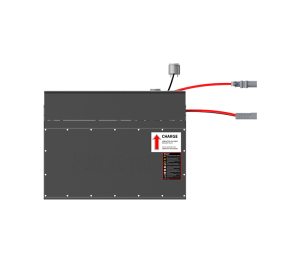









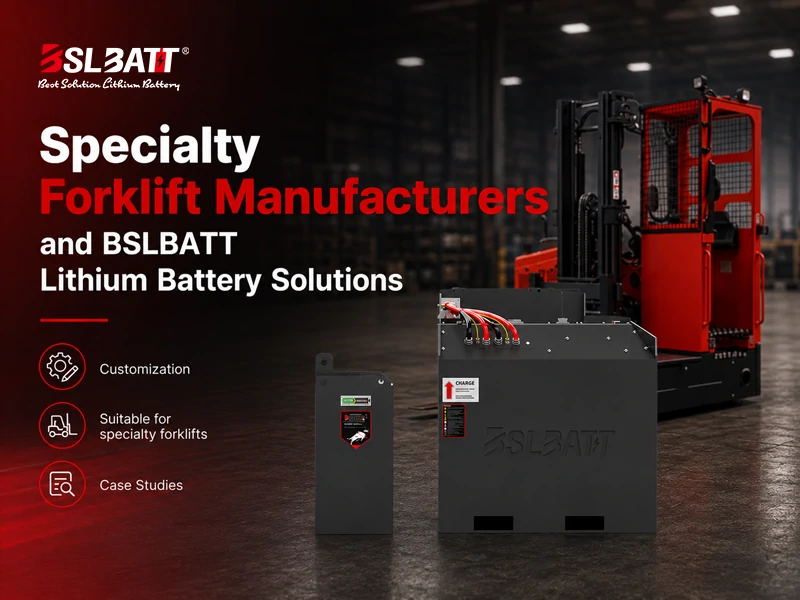
- Specialty Forklift Manufacturers and BSLBATT Lithium Battery Solutions
- The first lithium forklift battery that is UL 2580 certified and ISO9001 certified in the industry is BSLBATT® Battery – Industrial
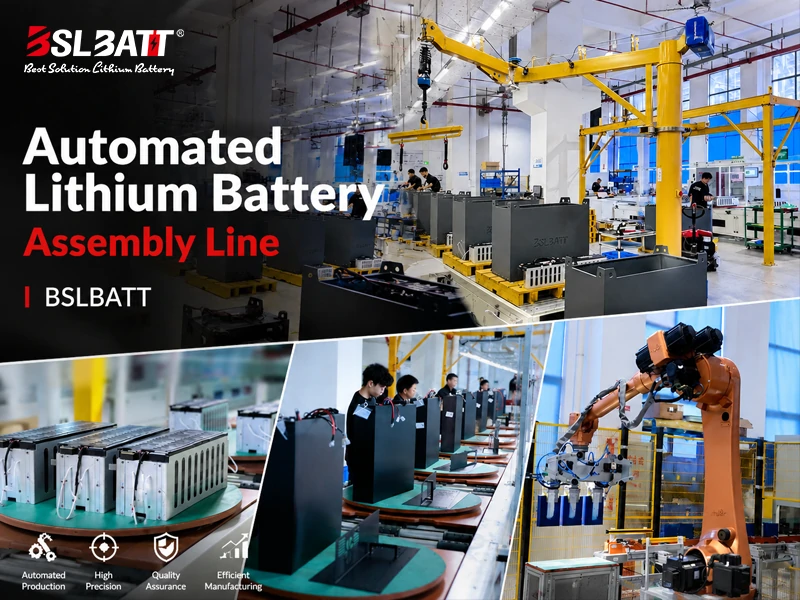
- Automated Lithium Battery Assembly Line | BSLBATT Smart Factory
- Time to Retire Lead-Acid: Why Your Warehouse Needs Lithium-Ion Power
- Lithium Forklift Battery Maintenance Guide 2026
- Industrial Lithium Batteries: Initial Price vs. Long-Term Costs

Golf Carts
Lithium Golf Cart Batteries: 48V vs 36V vs 72V Complete Buying Guide
Table of contents
- The Quick Answer: 36V vs 48V vs 72V
- First, Confirm What Voltage Your Cart Runs Now
- 36 Volt Golf Cart Batteries: The Drop-In for Older Fleets
- 48V Lithium Golf Cart Battery Packs: The Default Choice
- 72V Golf Cart Battery Packs: For Hills, Lifts and Heavy Loads
- LiFePO4 vs Lead-Acid in a Golf Cart
- Do You Need a New Charger?
- How to Size the Pack: Ah to Miles
- What Lithium Does Not Fix
- Buying Checklist Before You Order
- Get a Pack Matched to Your Cart
- Frequently Asked Questions
The Quick Answer: 36V vs 48V vs 72V
All three systems are available as single-pack LiFePO4 replacements. The difference shows up in range, uphill punch and what your controller can accept.
| System | LiFePO4 nominal voltage | Pack options (BSLBATT GC series) | Pack energy | Flat-road range* | Best for |
|---|---|---|---|---|---|
| 36V | 38.4V (12 cells) | 105Ah / 168Ah | 4.0 to 6.5 kWh | 30 to 64 miles | Older fleets that want a drop-in swap |
| 48V | 51.2V (16 cells) | 72Ah to 230Ah | 3.7 to 11.8 kWh | 30 to 100 miles | Most Club Car, EZGO and Yamaha carts |
| 72V | 73.6V (23 cells) | 105Ah / 168Ah | 7.7 to 12.4 kWh | 50 to 100 miles | Lifted carts, hilly routes, heavy payloads |
One definition before we go further: nominal voltage is the pack’s average working voltage, not its peak. A “48V” LiFePO4 pack reads 51.2V on the datasheet because it stacks 16 cells at 3.2V each. The same logic gives 38.4V for 36V systems and 73.6V for 72V systems. Your charger profile must match the chemistry, not just the label.
First, Confirm What Voltage Your Cart Runs Now
Do not skip this step. Buying the best golf cart batteries for someone else’s voltage is the most common conversion mistake. Two ways to check:
- Count the batteries and read their labels. Six 6V batteries wired in series means 36V. Six 8V or eight 6V means 48V. Six 12V means 72V.
- Read the controller or charger plate. Both state system voltage directly. When the two methods disagree, trust the controller.
If your cart is a 2020 or newer Club Car Onward, EZGO Express or Yamaha Drive2, it is almost certainly 48V. Pre-2010 fleets lean 36V. Factory 72V carts are rare; most 72V projects are conversions of street-legal low-speed vehicles and lifted builds.
36 Volt Golf Cart Batteries: The Drop-In for Older Fleets
A “36V” LiFePO4 pack runs at 38.4V nominal, slightly above the old lead-acid resting voltage, which most 36V controllers accept without modification. The swap replaces all six batteries with one pack and one set of main leads.
Two capacities cover this class:
- B-LFP36-105GC (105Ah, 4.0 kWh): about 40 kg (88 lb), 105A continuous discharge, rated for 30 to 40 miles.
- B-LFP36-168GC (168Ah, 6.5 kWh): about 58 kg (128 lb), 168A continuous, rated for 48 to 64 miles.
Choose 36V when the fleet already runs 36V chargers you plan to keep, or when the controller is known to be 36V-only. If you are replacing a charger anyway, price the 48V conversion too. On newer carts it is often the same labor for a system with more capacity options.
48V Lithium Golf Cart Battery Packs: The Default Choice
This is where most buyers land. The 48V class has the widest capacity ladder in BSLBATT’s GC series, from a 72Ah weekend pack to a 230Ah fleet pack. All models below carry a smart BMS with Bluetooth monitoring as standard.
| Model | Capacity | Pack energy | Weight | Continuous / peak current | Rated range* |
|---|---|---|---|---|---|
| B-LFP48-72GC | 72Ah | 3.7 kWh | 39 kg (86 lb) | 72A / 150A | 30 to 42 miles |
| B-LFP48-105GC | 105Ah | 5.4 kWh | 49 to 49.5 kg (108 to 109 lb) | 105A / 210A | 40 to 60 miles |
| B-LFP48-168GC | 168Ah | 8.6 kWh | 72 kg (159 lb) | 168A / 336A | 75 to 86 miles |
| B-LFP48-205GC | 205Ah | 10.5 kWh | 86 kg (190 lb) | 200A / 410A | 80 to 90 miles |
| B-LFP48-230GC | 230Ah | 11.8 kWh | 88 kg (194 lb) | 200A / 410A | 90 to 100 miles |
Every model in the table is rated for at least 4,500 cycles at 80% depth of discharge. The 48V 105Ah golf cart battery is the volume seller: it matches the runtime of a healthy lead-acid set while cutting roughly 250 lb of weight off the cart.
How to read the capacity ladder: a 105Ah pack suits private owners who drive 10 to 20 miles a day and charge nightly. Resorts, campgrounds and rental fleets that run carts all day without charging breaks should start at 168Ah.
72V Golf Cart Battery Packs: For Hills, Lifts and Heavy Loads
A “72V” LiFePO4 pack runs at 73.6V nominal. Higher voltage delivers the same power at lower current, which reduces heat in the controller and motor on long climbs. This is the system for lifted carts with oversized tires, six-seat limo configurations and resort campuses with real elevation.
- B-LFP72-105GC (105Ah, 7.7 kWh): about 70 kg (153 lb), 105A continuous, rated for 50 to 60 miles.
- B-LFP72-168GC (168Ah, 12.4 kWh): about 106 kg (234 lb), 168A continuous, rated for 85 to 100 miles. See the 72V 168Ah LiFePO4 pack for the full datasheet.
The honest caveat: 72V only pays off if your drivetrain is already 72V or you are doing a full conversion with a matching controller and motor. Dropping a 72V pack into a 48V cart does nothing but trip protection circuits. If your hill problem is modest, a 168Ah or 205Ah 48V pack usually solves it for less money.
LiFePO4 vs Lead-Acid in a Golf Cart
The chemistry math is where lithium wins decisively. Numbers below come from BSLBATT’s comparison testing of its LiFePO4 cells against flooded, AGM and gel lead-acid of the same size class.
| Factor | Lead-acid (FLA / AGM / gel) | LiFePO4 (BSLBATT GC series) |
|---|---|---|
| Cycle life | Roughly 500 deep cycles | 4,500+ cycles at 80% DoD |
| Usable depth of discharge | 50% or less before lifespan suffers | 80 to 100% |
| Full recharge time | 8 to 10 hours | About 2 hours |
| Self-discharge in storage | 10 to 20% per month | 1 to 3% per month |
| Maintenance | Watering, equalizing, terminal cleaning | None |
| Weight, 48V 105Ah class | Roughly 300 to 400 lb across six batteries | About 108 lb, single pack |
Depth of discharge, or DoD, is the share of rated capacity you can pull per cycle without shortening life. Lead-acid wants you home at 50%. LiFePO4 shrugs at 80%. That single difference means a 105Ah lithium pack delivers roughly the same usable energy as a 200Ah lead-acid set.
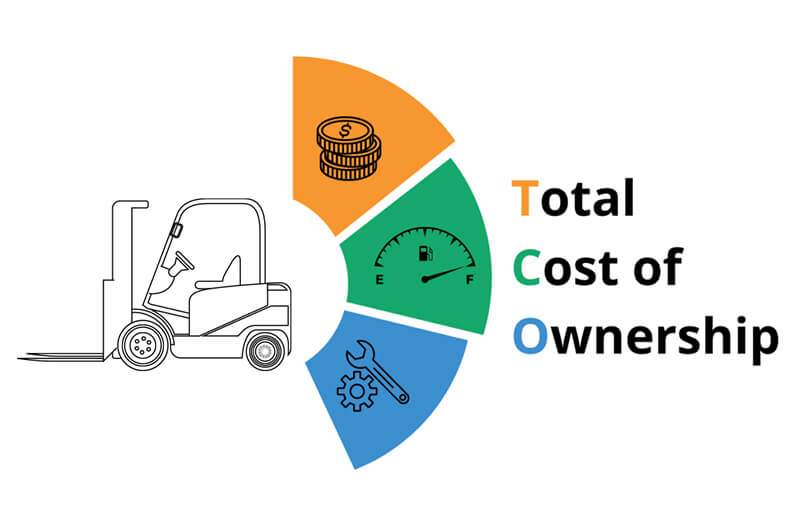
Over a five-year horizon, BSLBATT’s total cost of ownership analysis puts LiFePO4 up to 70% below lead-acid once you count replacements, watering labor and charging losses. The savings arrive in years two and three, not on day one. We covered the full pros and cons in our earlier lithium ion batteries for golf cart guide.
Do You Need a New Charger?
Often no, and this surprises people. BSLBATT’s GC series carries official compatibility with SPE and Delta-Q chargers, the two brands factory-installed on most Club Car, EZGO and Yamaha carts. If your cart carries one of those, the existing charger typically works after a profile check. No new charger investment.
If your charger is a basic tapered lead-acid unit, plan on a lithium-profile charger. The wrong profile causes two failure modes: the charger never terminates and the BMS disconnects mid-charge, or the cart undercharges and you lose range. Either way the pack is fine; the charger is the mismatch. Our charger matching page walks through the compatibility check model by model.
One temperature rule applies to every setup: charge between 0°C and 55°C (32°F to 131°F). Below freezing, the BMS blocks charging to prevent lithium plating on the cells. Discharge works down to -20°C, so winter morning rounds are fine; just bring the pack above 0°C before plugging in.
How to Size the Pack: Ah to Miles
From the brochure’s test data, BSLBATT GC packs deliver roughly 7 to 10 miles per kWh on flat ground with two passengers. The rule breaks down like this:
- Estimate your daily miles honestly, including the return trip.
- Divide miles by 9 to get the kWh you need.
- Add 30% headroom for hills, passengers and pack aging.
Example: 25 miles a day needs about 2.8 kWh, plus 30% headroom lands near 3.6 kWh. That fits a 72Ah 48V pack. A resort running 45 miles per shift needs about 6.9 kWh with headroom, which points to the 168Ah model. Cold weather, four passengers and knobby tires each pull the real number toward the pessimistic end.
What Lithium Does Not Fix
Sales pages skip this part. Three limits you should price in before ordering:
- Upfront cost stays real. A single GC pack costs two to three times a full lead-acid set. The payback comes from not buying replacement batteries in years three to five, not from the first invoice.
- Voltage must match the drivetrain. The pack, controller and motor all need to agree. A 72V pack on a 48V controller is a non-starter, and some 36V controllers reject 38.4V nominal. Confirm before you buy.
- Check the current budget. Match the pack’s continuous rating (72A to 200A across the GC line) against your controller’s peak draw, especially on lifted builds with aggressive controllers. Also confirm how your cart makes 12V for lights and accessories; some builds need a DC-DC converter when the lead-acid tap battery is gone.
Buying Checklist Before You Order
- Confirm system voltage by counting batteries and reading the controller plate.
- Measure the battery bay. GC packs run from 495 × 330 × 230 mm up to 900 × 408 × 235 mm for the largest 72V model.
- Size capacity from daily miles using the 7 to 10 miles per kWh rule, then add 30%.
- Identify your charger brand. SPE and Delta-Q are officially supported; anything else needs a profile check.
- Compare controller peak current against the pack’s continuous rating.
- Decide which telematics you want. Bluetooth is standard; 4G connectivity and GPS tracking are options for rental and fleet operators.
- Get cycle life and warranty terms in writing on the quotation, not from a web page.
Get a Pack Matched to Your Cart
Send BSLBATT your cart model, battery count and charger brand, and the team will confirm voltage compatibility, recommend a capacity, and quote lead time. Requests go through the contact page, and OEM configurations are available for fleets above 50 units.
Frequently Asked Questions


Related Product Recommendations
-
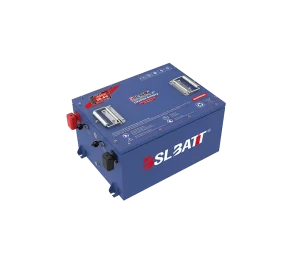
38.4V 105AH Lithium Golf Cart Battery
36V Lithium Golf Cart Battery 105Ah >4500 Cycles pack | BSLBATT
Learn More -
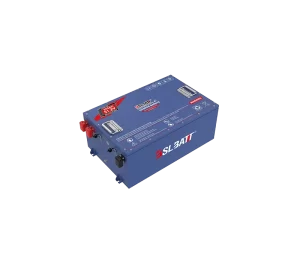
51.2V 205AH Lithium Golf Cart Battery
48 Volt Lithium Golf Cart Batteries 205Ah | BSLBATT
Learn More -
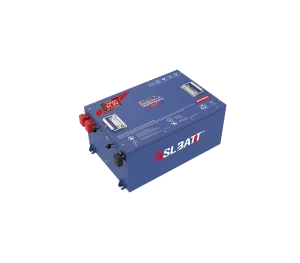
51.2V 168AH Lithium Golf Cart Battery
48V Golf Cart Batteries 168Ah 10 Years Warranty | BSLBATT
Learn More -
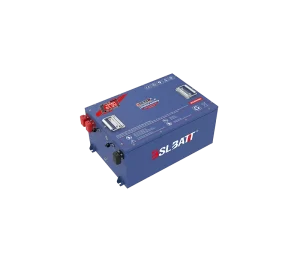
51.2V 150AH Lithium Golf Cart Battery
48V Lithium Golf Cart Battery 150Ah | BSLBATT
Learn More -
73.6V 168AH Lithium Golf Cart Battery
72V Golf Cart Battery 168Ah LiFePO4 | BSLBATT
Learn More
-
51.2V 205AH Lithium Golf Cart Battery
48 Volt Lithium Golf Cart Batteries 205Ah | BSLBATT
Learn More -
38.4V 105AH Lithium Golf Cart Battery
36V Lithium Golf Cart Battery 105Ah >4500 Cycles pack | BSLBATT
Learn More -
51.2V 168AH Lithium Golf Cart Battery
48V Golf Cart Batteries 168Ah 10 Years Warranty | BSLBATT
Learn More -
73.6V 205AH Lithium Golf Cart Battery
72 Volt Golf Cart Battery 205Ah Lithium Pack | BSLBATT
Learn More -
73.6V 168AH Lithium Golf Cart Battery
72V Golf Cart Battery 168Ah LiFePO4 | BSLBATT
Learn More