Revolutionize the energy economy with advanced lithium-ion battery technology—lower costs, reduce heat, and accelerate sustainable development.
 Explore all product lines
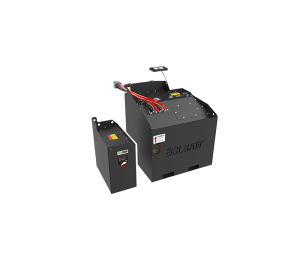
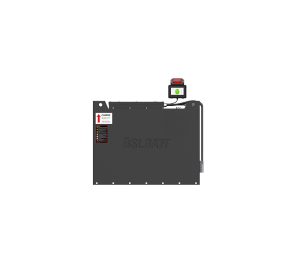
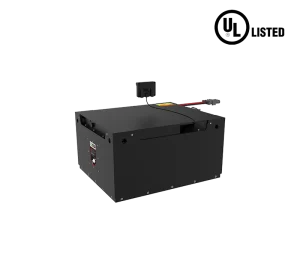
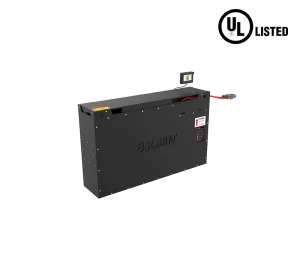
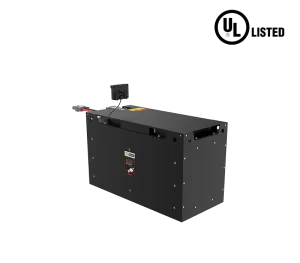
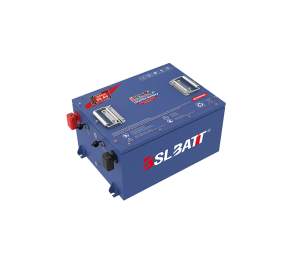
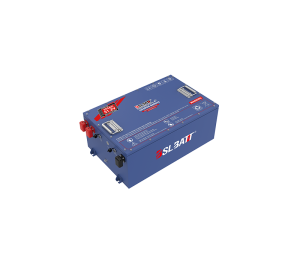
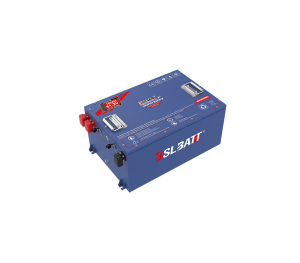
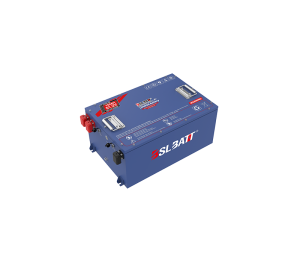
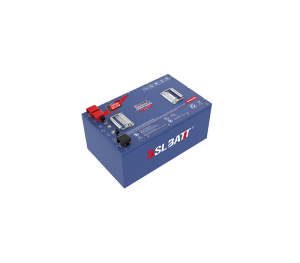
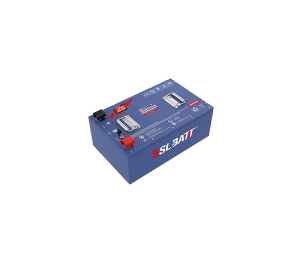
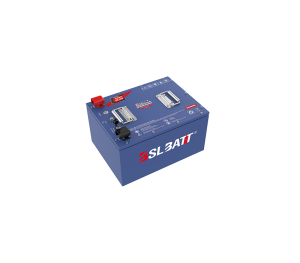
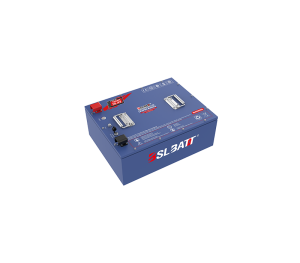







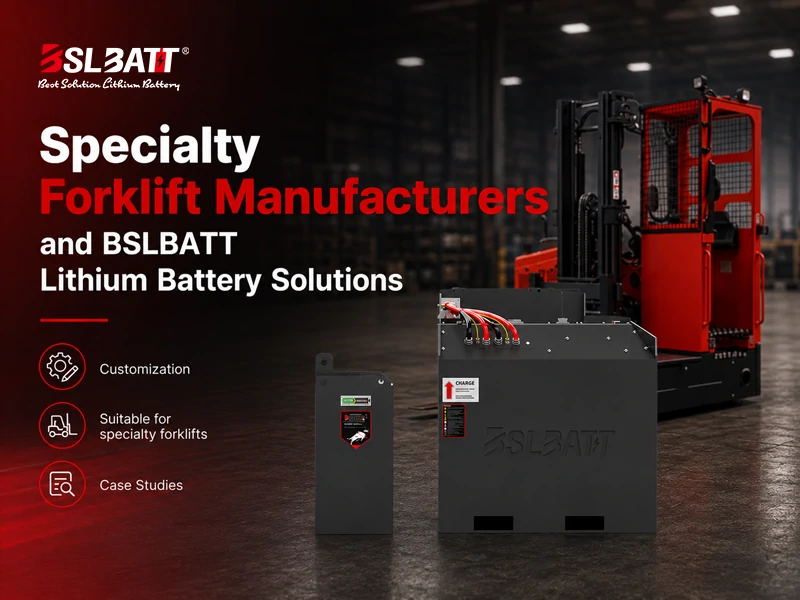
- Specialty Forklift Manufacturers and BSLBATT Lithium Battery Solutions
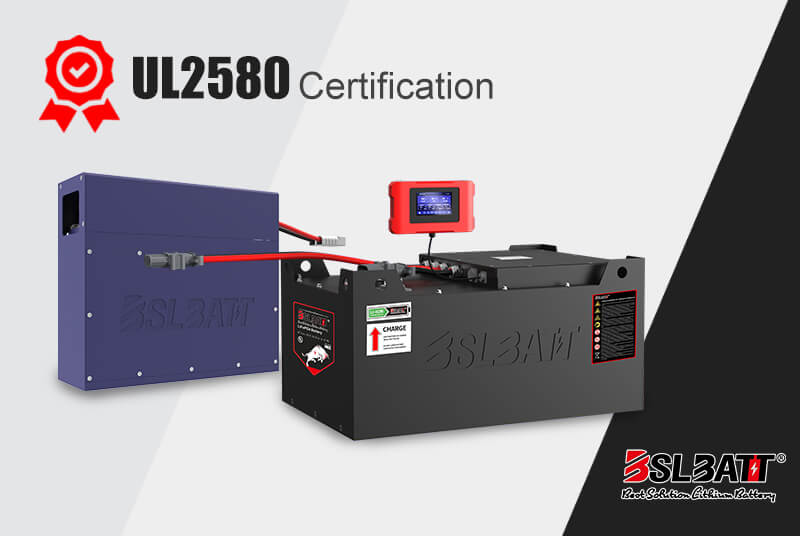
- The first lithium forklift battery that is UL 2580 certified and ISO9001 certified in the industry is BSLBATT® Battery – Industrial
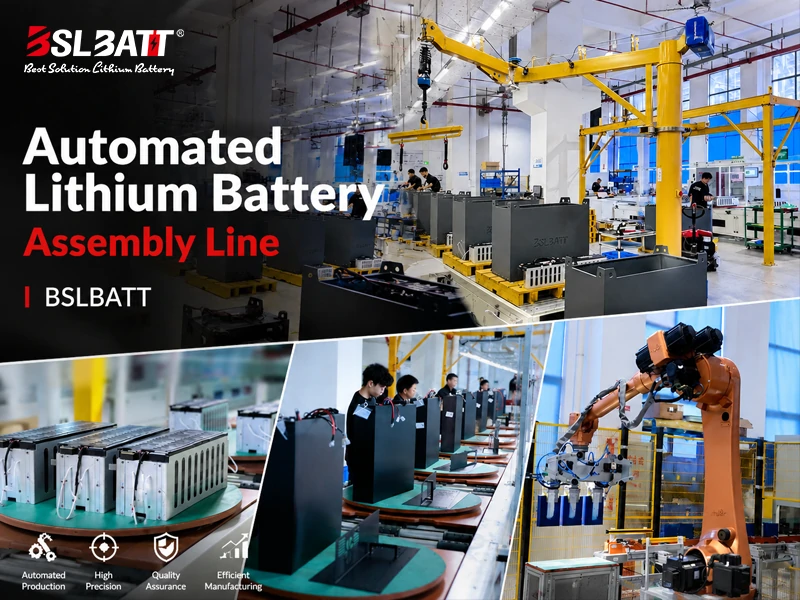
- Automated Lithium Battery Assembly Line | BSLBATT Smart Factory
- Time to Retire Lead-Acid: Why Your Warehouse Needs Lithium-Ion Power
- Lithium Forklift Battery Maintenance Guide 2026
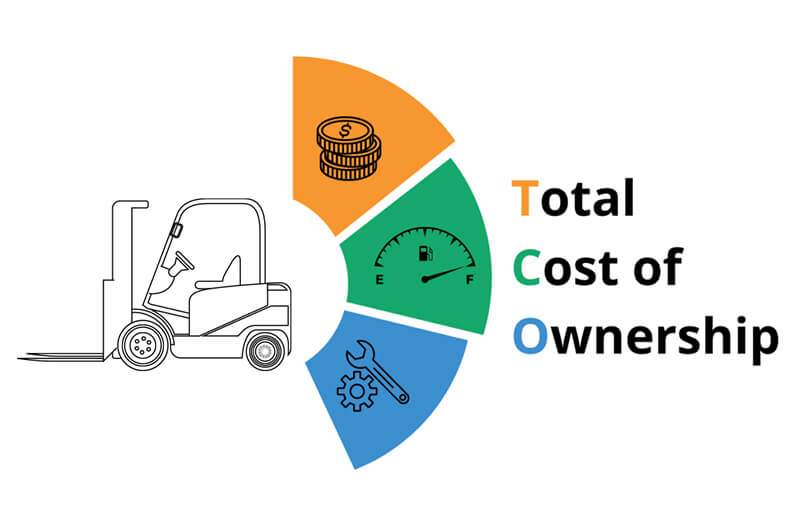
- Industrial Lithium Batteries: Initial Price vs. Long-Term Costs
Port Machinery
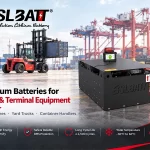
Lithium Batteries for Port & Terminal Equipment: RTG Cranes, Yard Trucks & Container Handlers
Table of contents

- Why Ports Are Electrifying Cargo-Handling Equipment First
- The Regulatory Driver: IMO Targets and Port-Level Rules
- Three Equipment Types, Three Different Duty Cycles
- RTG cranes: the regeneration opportunity
- Straddle carriers: total energy is the constraint
- Yard trucks: stop-start punishing, charging windows generous
- Diesel vs. Lithium: What Actually Changes in the Yard
- What a Heavy-Duty Port Battery System Includes
- Sizing the Battery: Work With Duty Cycle, Not Vehicle Weight
- Available BSLBATT High-Voltage Platforms
- Charging Infrastructure in a Constrained Yard
- What Buyers Should Verify Before Committing
- FAQ
- Can lithium batteries really power an RTG crane?
- How much energy does an electric yard truck or container handler need?
- What are the IMO 2030 and 2050 targets, and why should a terminal care?
- Can yard trucks use opportunity charging instead of battery swaps?
- How long do lithium batteries last in port equipment?
- Planning a Terminal Electrification Project?
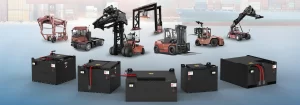
Ports are electrifying cargo-handling equipment to meet IMO decarbonization checkpoints and cut diesel costs. RTG cranes, straddle carriers, and yard trucks need high-voltage LiFePO4 packs sized by duty cycle: typically 80V-class for yard trucks and container handlers, and multi-hundred-kWh systems for crane conversions.
Why Ports Are Electrifying Cargo-Handling Equipment First
A container terminal concentrates three pressures that most industrial sites face only one at a time: emissions regulation, fuel cost, and round-the-clock utilization. Diesel RTGs and yard tractors idle for much of their operating day, burning fuel while stacked in queue. Community air-quality complaints, port authority decarbonization roadmaps, and now binding international shipping targets are converging on the same piece of yard infrastructure — and battery-electric conversion has become the fastest lever a terminal operator can pull.
This guide covers the three equipment categories where lithium conversion is moving fastest — rubber-tyred gantry (RTG) cranes, yard trucks (terminal tractors), and container handlers including reach stackers and empty container handlers — and how to size and specify a lithium system for each.
The Regulatory Driver: IMO Targets and Port-Level Rules
The International Maritime Organization’s 2023 GHG Strategy set the clock for the whole maritime chain. While the targets formally apply to ships, they cascade into terminals through fuel standards, carbon pricing, and port authority procurement policies.
| IMO 2023 GHG Strategy Checkpoint | Target (vs. 2008) |
|---|---|
| Carbon intensity of international shipping (2030) | At least 40% reduction |
| Total annual GHG emissions (2030) | At least 20%, striving for 30% reduction |
| Total annual GHG emissions (2040) | At least 70%, striving for 80% reduction |
| Net-zero GHG emissions | By or around 2050 |
| Zero/near-zero GHG energy sources (2030) | At least 5%, striving for 10% of shipping energy |
Source: IMO 2023 Strategy on Reduction of GHG Emissions from Ships (MEPC 80, July 2023).
For terminals, three practical consequences follow:
- Shore power and zero-emission yard equipment are becoming procurement requirements. Ports investing in cold-ironing increasingly pair it with battery-electric yard fleets, because a vessel connected to shore power while a diesel RTG stacks containers beside it defeats the purpose.
- Carbon pricing reaches the yard. Mid-term IMO measures — a GHG fuel standard and an emissions pricing mechanism — raise the cost of every diesel hour inside the gate, not just at sea.
- Local air-quality rules bite harder than global ones. Terminal communities have pushed many port authorities to commit to zero-emission cargo-handling equipment ahead of any IMO deadline. An electric RTG eliminates diesel particulates in the exact place where longshoremen work.
Three Equipment Types, Three Different Duty Cycles
The most common sizing mistake in port electrification is treating the yard as one fleet. An RTG, a straddle carrier, and a yard truck do different work with different energy profiles.
| Equipment | Primary Job | Energy Profile | Key Battery Requirement |
|---|---|---|---|
| RTG crane | Stacking containers in yard blocks | High peak power during hoist; regenerative braking potential during lowering | High C-rate acceptance, energy recovery compatibility, thermal management for continuous cycling |
| Straddle carrier | Transporting containers quay-to-yard | Continuous travel + lift cycles, long distances at speed | High total energy (kWh), opportunity charging windows between ship moves |
| Yard truck / terminal tractor | Moving containers between yard and gate | Frequent stop-start, long idle periods in queue | Cycle life under constant stop-start, fast opportunity charging during driver breaks |
| Reach stacker / container handler | Lifting and stacking in rail and truck areas | Heavy lifts with long holds, intermittent travel | High continuous discharge for hydraulics, stable voltage under peak load |
RTG cranes: the regeneration opportunity
A diesel-electric RTG burns most of its fuel at idle and during hoist peaks. Converting the power pack to lithium addresses both: the battery absorbs the hoist peak without a generator spinning, and — where the drive system supports it — energy recovered when lowering a container goes back into the pack instead of a resistor bank. Because RTG work is cyclic rather than continuous, the battery is sized on cycles per hour and peak hoist power, not on daily energy alone.
Straddle carriers: total energy is the constraint
A straddle carrier covers more ground than any other yard machine and lifts at both ends of every trip. Battery sizing must follow the working cycle — rated load, travel distance, lifts per hour, and available charging windows between vessel moves. An undersized pack forces mid-shift charging interruptions; an oversized one adds weight and cost without productivity.
Yard trucks: stop-start punishing, charging windows generous
Terminal tractors idle through queues — exactly the pattern that wrecks diesel engines and leads to the highest fuel waste per productive hour. Lithium handles stop-start duty without degradation, and opportunity charging during driver breaks and shift changes keeps a truck running across multiple shifts without a battery swap.
Diesel vs. Lithium: What Actually Changes in the Yard
| Factor | Diesel / Diesel-Hybrid | Lithium (LiFePO4) |
|---|---|---|
| Emissions at operating point | Exhaust, particulates, noise in the work zone | Zero local emissions, drastically lower noise |
| Fuel/energy cost exposure | Tied to diesel price and future carbon pricing | Tied to electricity; predictable per-move cost |
| Maintenance | Engine servicing, DPF/regen cycles, oil, filters | No watering, no equalization, no engine service |
| Idle behavior | Engine idles and burns fuel in queues | No idle penalty; power drawn only when working |
| Refuel/recharge | Fast diesel fill, but fuel logistics on site | Opportunity charging during breaks; DC fast charge options |
| Data visibility | Limited without teatics retrofit | BMS telemetry: SOC, SOH, energy per move, fault history |
What a Heavy-Duty Port Battery System Includes
Yard equipment runs at power levels far beyond a warehouse forklift, and a battery swap is not enough — the supporting system changes too. A purpose-built high-voltage lithium system for port machinery integrates:
- High-voltage LiFePO4 battery packs — modular building blocks that scale from tens to hundreds of kWh
- Smart BMS — cell-level monitoring, protection cutoffs, and CAN communication with the machine controller
- Liquid cooling — thermal management sized for continuous heavy cycling in ambient heat, where air cooling falls short
- Power Distribution Unit (PDU) — safe routing between pack, drive, and auxiliary systems
- Fast DC charging — high-power charging compatible with terminal electrical infrastructure
- Battery heating — for terminals operating through cold winters, pre-heating before charge and discharge
- Remote monitoring — fleet-level SOC/SOH visibility for terminal operations planning
BSLBATT builds these systems as an integrated package rather than a pack alone — the same architecture principle described in our lithium battery technology overview. Configuration for specific port machinery is an engineering project: voltage platform, cooling, and charger power are matched to the machine’s duty cycle. (Contact our engineering team for port-specific system design.)
Sizing the Battery: Work With Duty Cycle, Not Vehicle Weight
Across all three equipment types, the sizing logic is the same as it is for heavy forklifts — calculate energy per working cycle, multiply by operating hours, then add a charging-strategy margin:
- Measure energy per cycle. For a yard truck: average kWh per gate-to-yard round trip including idle recovery. For an RTG: kWh per stacking move including hoist peaks.
- Multiply by daily moves. Two-shift operations typically double the daily energy demand — this is where opportunity charging earns its place.
- Apply the charging window. If breaks and shift changes give you 30–60 minutes of plug time per shift, the pack can be smaller — provided the charger and battery accept high C-rate charging. Our charger matching guide covers the CAN handshake rules that make high-rate charging safe.
- Check the thermal budget. Continuous heavy cycling in summer heat is a cooling problem before it is a capacity problem. This is where liquid cooling separates heavy-duty systems from repurposed forklift packs.
Available BSLBATT High-Voltage Platforms
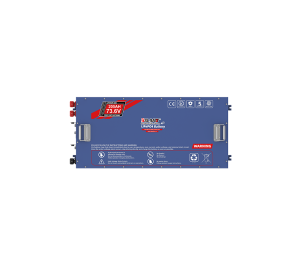
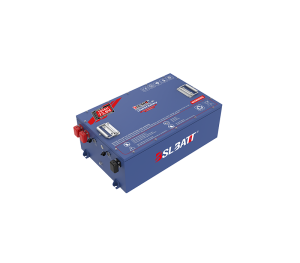
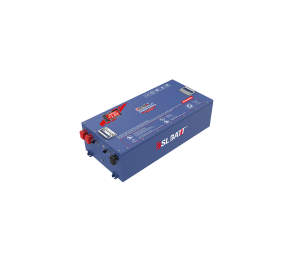
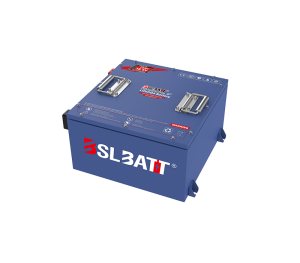
For terminal tractors, container handlers, and as modular building blocks in larger crane systems, BSLBATT’s heavy-duty forklift platforms are the entry point:
| Model | Voltage | Capacity | Approx. Energy | Typical Port Role |
|---|---|---|---|---|
| B-LFP80-410MH | 80V | 410Ah | ~33 kWh | Yard trucks, terminal tractors, smaller handlers |
| B-LFP80-560MH | 80V | 560Ah | ~45 kWh | Heavy yard trucks, reach stacker auxiliaries |
| B-LFP83.2-690MH | 83.2V | 690Ah | ~57 kWh | Heavy-duty container handlers; modular blocks for larger systems |
Energy values are nominal (voltage × capacity); confirm final system energy and configuration with engineering. These platforms also serve mining-style heavy-duty applications — see our heavy-duty electric fork truck batteries.
RTG and straddle carrier conversions typically require system-level engineering above these pack voltages — multiple packs in series/parallel with liquid cooling and a PDU. That work starts from a duty-cycle study, not from a product catalog.
Charging Infrastructure in a Constrained Yard
Port yards are space-constrained, so charging strategy matters as much as battery capacity:
- Opportunity charging at driver points. Yard trucks charge during shift changes and breaks — no dedicated battery room, no swap crew.
- Fast DC charging between vessel moves. Straddle carriers and RTGs charge at designated bays with high-power DC chargers sized to the terminal’s electrical supply.
- Grid capacity planning. Converting a dozen diesel machines adds significant electrical load; terminals should sequence charger installation with their utility upgrade path.
What Buyers Should Verify Before Committing
- Duty-cycle study, not brochure math. Ask any supplier to model your actual moves-per-hour data before quoting a pack size.
- Thermal management specification. Confirm whether the proposal includes liquid cooling or only air cooling — and ask for the continuous cycling test basis.
- BMS integration scope. Who writes the CAN integration with the machine’s original controller — the battery supplier or the OEM? Get it in writing.
- Charging hardware compatibility. Verify connector standard, charger power class, and communication handshake as a matched pair (see charger matching).
- Safety certification. Pack-level certification for industrial vehicles (see our UL 2580 overview) and cell-level transport approval for shipping.
- Warranty and support terms. BSLBATT backs industrial systems with an 8-year warranty; confirm the term applies to your duty class.
- Regeneration handling. For RTGs, confirm the system accepts regenerative energy from lowering cycles — not every pack does.
- Fleet telemetry. If terminal operations planning depends on energy-per-move data, confirm remote monitoring is included, not an add-on.
FAQ
Can lithium batteries really power an RTG crane?
Yes — battery-electric and battery-hybrid RTG conversions are in commercial operation at terminals worldwide. The battery replaces the diesel genset as the energy source, and sizing is driven by hoist peak power, cycles per hour, and whether the drive system returns braking energy to the pack. RTG conversion is a system engineering project involving the pack, thermal management, charger, and machine controller integration.
How much energy does an electric yard truck or container handler need?
It depends on the working cycle, not the vehicle. A terminal tractor running gate-to-yard loops typically lands in the tens of kWh per shift with opportunity charging filling the gaps; heavy container handlers with continuous lifting need substantially more. The right method is to measure energy per move from your fleet data and size the pack on your busiest day plus a charging-window margin.
What are the IMO 2030 and 2050 targets, and why should a terminal care?
The IMO’s 2023 GHG Strategy targets at least a 40% carbon-intensity reduction by 2030, 20–30% total emission cuts by 2030, 70–80% by 2040, and net-zero by or around 2050, versus 2008. Terminals are affected indirectly but firmly: carbon pricing raises diesel costs inside the gate, port authorities procure zero-emission equipment to support the shipping transition, and local air-quality rules often demand action earlier than IMO deadlines.
Can yard trucks use opportunity charging instead of battery swaps?
Yes — and it is usually the better model. Lithium chemistry accepts high-rate partial charging without the memory effects that made opportunity charging impractical for lead-acid. Yard trucks plug in during breaks and shift changes, eliminating the swap crew, battery room, and ventilation infrastructure that lead-acid fleets require. The pack and charger must be specified for high C-rate acceptance; see our charger matching guide.
How long do lithium batteries last in port equipment?
LiFePO4 chemistry delivers 3,000–5,000+ charge cycles in industrial service, several times the usable life of lead-acid under equivalent duty. Actual life in port equipment depends on depth of discharge, thermal management quality, and charging practice — which is why BMS telemetry and proper cooling matter more in a terminal than in a warehouse. Cycle-life terms should be confirmed for your specific duty class before purchase.
Planning a Terminal Electrification Project?
BSLBATT builds high-voltage LiFePO4 systems for heavy-duty industrial equipment — packs, smart BMS, liquid cooling, PDU, fast charging, and remote monitoring as one integrated package. Send us your duty-cycle data and our engineers will size the system.
Contact BSLBATT Engineering · Read the TCO Guide · Explore the Technology


Related Product Recommendations
-
83.2V 1380AH
80V Forklift Battery 1380Ah for Heavy-Duty Use | BSLBATT
Learn More -
51.2V 840AH
Forklift Trucks Lithium Ion Battery for Custom Shapes | BSLBATT
Learn More -
83.2V 690AH
High-Performance Electric Fork Truck Batteries 690Ah lithium | BSLBATT
Learn More -
83.2V 612AH
83.2V Forklift Truck Batteries for Sale 612Ah Lithium | BSLBATT
Learn More -
80V 560AH
Fork Truck Batteries for Sale 80V 560Ah High-Performance Lithium | BSLBATT
Learn More