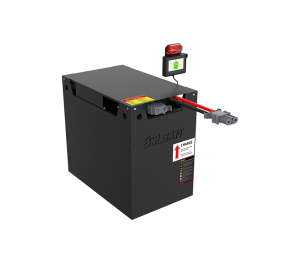
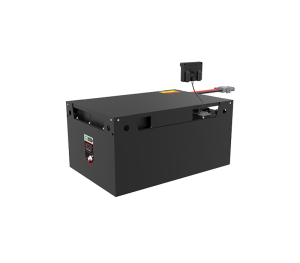
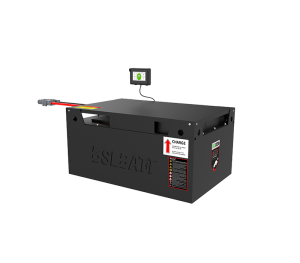
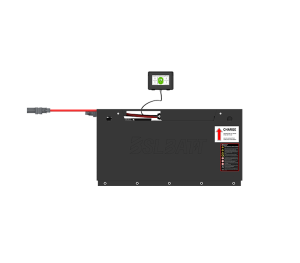
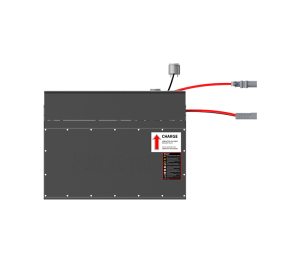
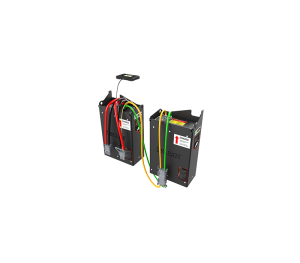
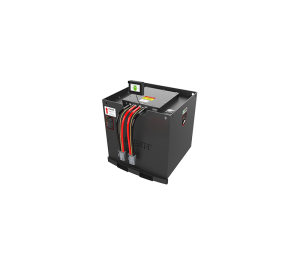
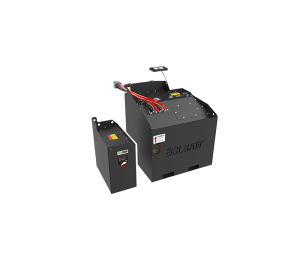
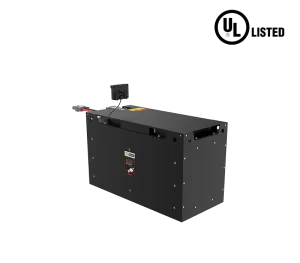
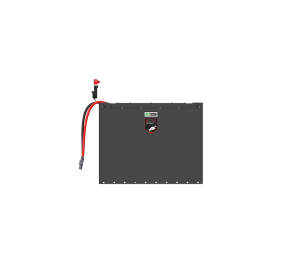
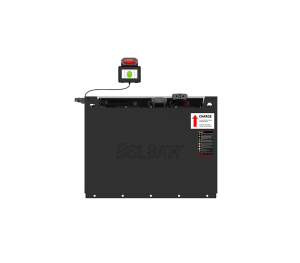
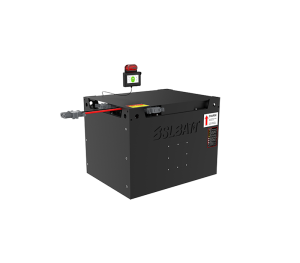
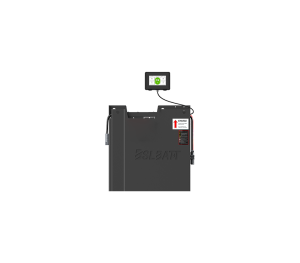
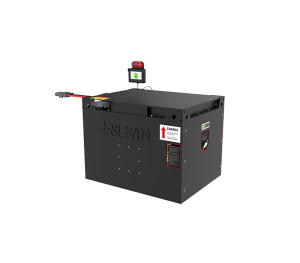
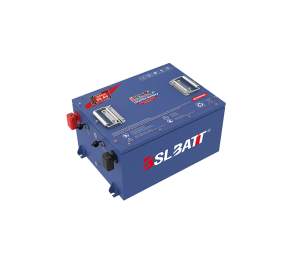
A lithium forklift battery charges in under two hours at its rated charger current, and can be topped up during breaks without damaging the cells. Matching a charger takes four checks: voltage window, current rating, connector type, and CAN communication with the battery’s BMS.
Charging is where most first-time lithium conversions go wrong. The battery gets specified carefully — voltage, amp-hour capacity, compartment dimensions — and then the charger is treated as an afterthought. Six weeks later the fleet is calling about a pack that “won’t take a charge,” and the cause is almost always the same: the charger and the battery never agreed on how to talk to each other.
This guide covers the three things buyers actually ask about — how long charging takes, whether you should top up or charge full, and what makes a charger compatible — using the specification data published on BSLBATT forklift battery product pages.
How Long Does a Lithium Forklift Battery Take to Charge?
A full charge takes roughly one to two hours at the rated charger current, versus the eight-hour overnight cycle plus cool-down that lead-acid requires. The difference is not chemistry magic — it is that LiFePO4 accepts current at a much higher rate without gassing or overheating, so you can push far more energy into the pack per hour.
The theoretical floor is simple arithmetic. Divide the pack’s stored energy by the charger’s output power:
Charge time (h) ≈ Stored energy (kWh) ÷ [Charger voltage (V) × Charger current (A) ÷ 1000]
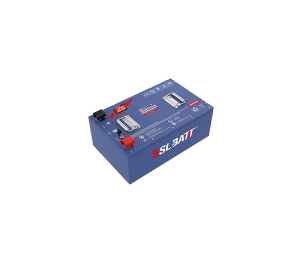
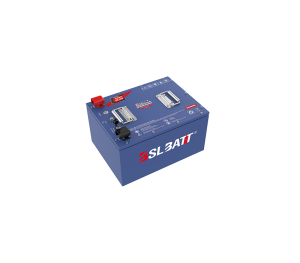
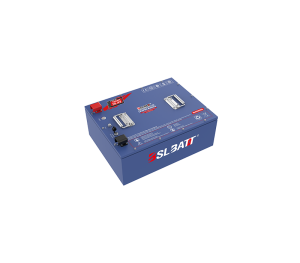
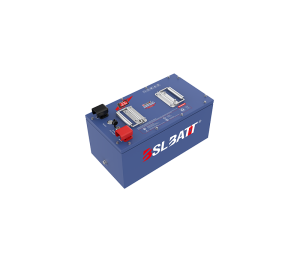
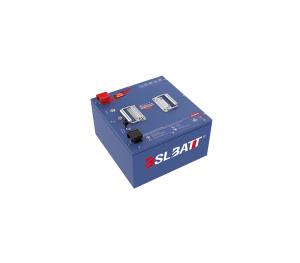
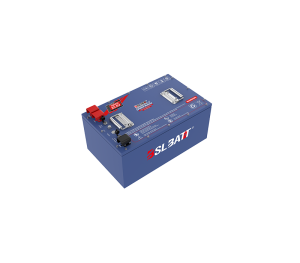
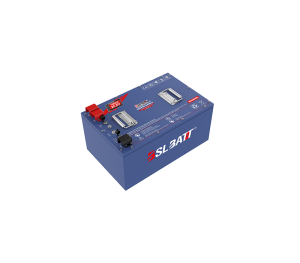
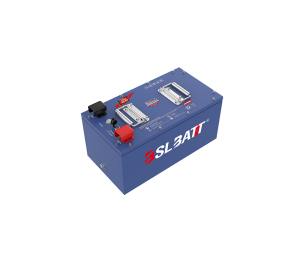
Applying that to three BSLBATT models with their published matched chargers:
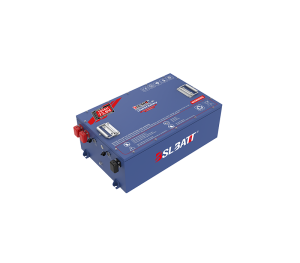
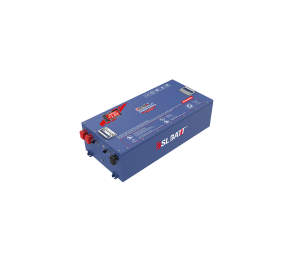
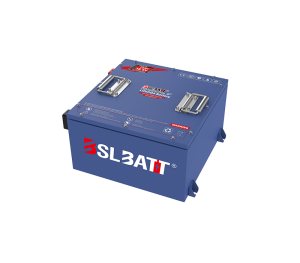
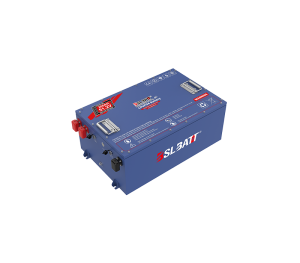
| Battery model | Pack | Stored energy | Matched charger | Charger output power | Theoretical full charge |
|---|
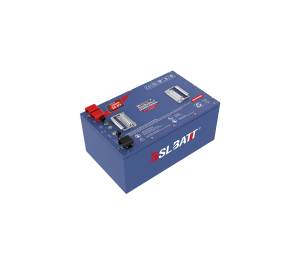
| B-LFP24-230MH | 25.6V / 230Ah | 5.89 kWh | 24V 150A | ~3.8 kW | ~1.6 h |
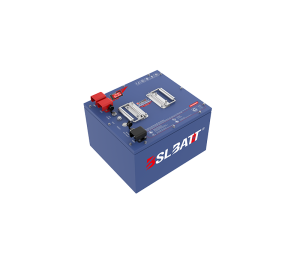
| B-LFP48-410MH | 51.2V / 410Ah | 20.99 kWh | 48V 200A | ~10.2 kW | ~2.1 h |
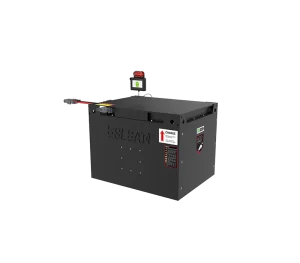
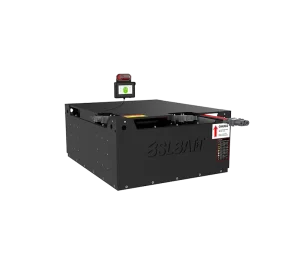
| B-LFP83.2-690MH | 83.2V / 690Ah | 57.40 kWh | 80V 300A | ~25.0 kW | ~2.3 h |
Read these as floors, not promises. The figures above are derived from published pack energy and charger ratings, and assume the charger runs at full rated output for the whole session. In practice the constant-voltage taper phase near the top of charge, cell temperature, and BMS current derating all extend real-world time. BSLBATT publishes “< 2 hours” for the 24V 230Ah, 48V 410Ah and 83.2V 690Ah models. Confirm the expected time for your specific model and charger pairing before you commit to a shift schedule — engineering confirmation required before publishing exact figures.
Two things drive the number more than anything else: how empty the pack is and how much current the charger can deliver. A pack plugged in at 30% state of charge will be ready far sooner than one drained to 5%. And a 100A charger takes roughly twice as long as a 200A charger on the same pack — which is why current rating is the single most consequential line on a charger spec sheet.
Opportunity Charging vs Full Charge: Which Should You Run?
Both work, and most fleets end up running a hybrid. The distinction matters because lead-acid habits die hard: decades of “never interrupt a charge cycle” training has to be unlearned.
| | Opportunity charging | Full charge |
|---|
| What it is | Short top-ups during breaks, shift changes, or downtime — typically 15–45 minutes | Complete charge from low SOC to 100%, usually overnight or between shifts |
| When it fits | Multi-shift operations, high-throughput DCs, anywhere a spare battery and swap-out would otherwise be needed | Single-shift operations, or any fleet with a long natural gap between shifts |
| Effect on the pack | No penalty — LiFePO4 has no memory effect and partial cycles are gentler than deep ones | Needed periodically for cell balancing and SOC calibration accuracy |
| Infrastructure | Charging points near the work area; no battery room, no swap crane, no spare packs | Central charging area; fewer charge points needed |
| Main risk | Operators unplugging early and creating a queue at the charger | Sizing the fleet as if a battery can only run one shift per day |
The operational argument for opportunity charging is straightforward. BSLBATT’s own technology page describes it as plugging in “during lunch breaks or shift changes,” which “eliminates the need for 8-hour charge cycles and dedicated battery rooms.” For the 83.2V 690Ah pack the product page goes further, describing charging during 15-minute breaks as a way to keep a 24/7 workflow running on a single unit instead of multiple lead-acid spares.
The one thing opportunity charging does not replace is a periodic full charge. Cell balancing happens most effectively near the top of charge, and the BMS recalibrates its state-of-charge estimate there too. A pack that only ever sees 40%–70% will slowly drift in its SOC accuracy and in cell-to-cell consistency.
Practical rhythm: opportunity charge as much as the operation wants during the week, then schedule one full uninterrupted charge — weekly or biweekly depending on intensity — to let balancing complete.
Charger Matching: The Four Rules
A charger is not a commodity. Four parameters have to line up with the battery, and a mismatch on any one of them either prevents charging or damages the pack.
- Voltage window. The charger’s output voltage range must contain the pack’s full charge voltage. A 24V LiFePO4 pack (25.6V nominal) needs a charger covering roughly 16–32 VDC; a 48V pack (51.2V nominal) needs roughly 18–60 VDC. A charger that tops out below the pack’s absorption voltage will simply never finish.Current rating. Match the current to how fast you need the pack back. Doubling current roughly halves charge time, but only up to what the cells and BMS will accept — the BMS caps charge current regardless of what the charger can supply, so over-sizing the charger buys nothing past that ceiling.
- Connector and pinout. Physical compatibility is not optional. BSLBATT forklift packs publish their interfaces: REMA320 charging connector on the 48V 410Ah and 83.2V 690Ah models, REMA160 on the 24V 230Ah, with Anderson 350 discharge connectors on the larger packs and Anderson 175 on the 24V. Wrong connector means an adapter — and adapters are where interlock and sense lines get lost.
- Communication protocol. The most commonly missed requirement. BSLBATT packs expose CANbus / RS485, stated as compatible with communication protocols from Toyota, Hyster, Yale and others. If the charger cannot speak to the BMS, the BMS will not authorise charge current.
What “matched” looks like in practice
The cleanest approach is to use the charger specified on the battery’s own datasheet. BSLBATT publishes a “Chargers” line per model — 24V150A for the 230Ah pack, 48V200A for the 410Ah, 80V300A for the 690Ah. Those pairings already account for voltage window, current ceiling, connector and protocol.
BSLBATT’s published charger range includes models across the voltage and current spectrum — for example 50A and 100A units on single-phase 220VAC input, and 150A and 200A units on 380VAC three-phase input. Note the infrastructure implication: high-current chargers at 150A and above move to three-phase supply, which is a facilities project, not a plug-in purchase.
Checklist item most buyers miss: confirm the site’s available supply before specifying charger current. A 200A three-phase charger specified for a facility with only single-phase outlets at the charging location turns into a costly electrical retrofit.
The CAN Handshake: What Actually Happens Between BMS and Charger
This is the part that separates lithium charging from lead-acid charging, and it is worth understanding even if you never touch a protocol analyser.
With lead-acid, the charger is in charge. It applies a voltage, watches the current taper, and decides on its own when to stop. The battery is passive.
With lithium, that relationship inverts. The BMS is the master and the charger is the slave. The BMS continuously measures cell voltages, pack temperature and state of charge, then tells the charger what it is permitted to do — maximum voltage, and the exact current it wants right now. The charger’s job is to deliver precisely that and nothing more.
The handshake sequence
- Connection and identification. Plug in; the charger’s interlock confirms a secure connection before any current flows. This is a safety feature — it prevents arcing at the connector.
- BMS broadcasts its limits. Over CAN, the BMS sends the maximum permissible charge voltage and its initial current demand, along with pack status.
- Charger acknowledges. The charger confirms it received valid data and reports its own status back — output capability, fault flags, ready state.
- Closed-loop regulation. Charging begins, but the BMS keeps updating its current demand. As the highest cell approaches its voltage ceiling, or if temperature rises, the BMS derates — throttling current down rather than shutting off. This is why lithium charging tapers smoothly instead of terminating abruptly.
- Heartbeat watchdog. A rolling counter runs continuously in both directions. If the BMS stops hearing from the charger — or vice versa — the session aborts. This is the failsafe that stops a charger from blindly pushing current into a pack whose BMS has gone offline.
- Termination. The BMS commands end of charge when cells reach target voltage and current falls to the shutoff threshold.
Why this matters commercially: a BMS that loses CAN communication does not “try anyway.” It stops. So when a lithium pack refuses to charge and the charger shows a communication fault, the fix is almost never the battery — it is a protocol mismatch, a wiring or pinout problem in the cable, or a charger that was never CAN-capable in the first place.
BSLBATT’s product documentation describes the BMS as monitoring cell voltage, current and temperature “so that any movement outside the normal range disconnects the cell or the entire battery,” and frames BMS software as existing “to communicate well between the charger, battery and users.” Practically, that means the charging decision always sits with the battery.
Diagnosing a failed handshake
| Symptom | Most likely cause | What to check |
|---|
| Charger powers on, no current delivered | No valid CAN session | Protocol compatibility; CAN wiring and termination; connector pinout |
| Charging starts then stops after seconds | Heartbeat timeout or BMS protection trip | Cell temperature; whether BMS logged an over-temperature or over-voltage event |
| Charges but stops well short of full | BMS derating due to temperature or cell imbalance | Ambient temperature at the charge point; run a full balance charge |
| Works on one truck, not another | Pinout or adapter difference between trucks | Compare connector wiring; confirm sense/interlock lines are present |
| Charger never reaches rated current | Input supply limit or BMS current ceiling | Supply voltage and phase at the outlet; BMS charge current limit |
Can You Reuse Your Existing Lead-Acid Charger?
Usually no, and this is the question that costs fleets the most money when it is answered optimistically. Four reasons:
| Lead-acid charger behaviour | Why it is wrong for LiFePO4 |
|---|
| Equalisation / desulphation modes applying sustained overvoltage | LiFePO4 cells have effectively no overcharge tolerance. Sustained overvoltage drives electrolyte decomposition and permanent capacity loss. |
| Termination based on voltage plateau or dV/dt inflection | The LiFePO4 discharge/charge curve is flat. A lead-acid algorithm looking for an inflection point will mis-terminate. |
| No CAN or temperature feedback from the pack | Without BMS input the charger cannot derate for cell temperature or imbalance — it has no idea what the battery is experiencing. |
| Gassing assumed during charge | Lithium packs are sealed and maintenance-free; the ventilation and watering routines built around lead-acid are unnecessary, and the charge profile built around gassing is wrong. |
There is a narrow exception: some modern industrial chargers are multi-chemistry units with a selectable LiFePO4 profile and CAN interface. If yours has both, it may work — but verify the profile, the connector, and that CAN negotiation actually completes before putting it into service. If it has neither a lithium profile nor CAN, budget for a replacement as part of the conversion.
Safety note: if a charger ever applies voltage without a completed CAN session, treat it as a fault, not a convenience. That is precisely the condition the handshake exists to prevent.
Charging Best Practices
- Charge within the pack’s temperature window. Charging a cold LiFePO4 cell is the fastest way to cause permanent plating damage. Where packs are specified with a heating function, the BMS will warm the cells before accepting current — confirm whether your model includes this. Exact low-temperature charging limits: engineering confirmation required.
- Top up early rather than deep-cycle. Partial, shallower cycles are easier on the pack than repeated deep discharge. BSLBATT packs alarm below roughly 10% state of charge — treat that alarm as the floor, not a target.
- Run one full charge periodically for cell balancing and SOC calibration, as described above.
- Keep connectors clean and seated. The interlock and sense lines run through the same connector as power. Contamination causes communication faults as often as it causes voltage drop.
- Do not interrupt using the emergency stop as routine. Charge interlock exists for safe disconnect; using it as a normal stop wears the connector and can log faults.
- Size the number of charge points to the shift pattern, not to the number of trucks. Opportunity charging works only if operators can actually reach a free charger.
- Use telemetry. BSLBATT packs support remote monitoring via GPRS or Wi-Fi with SOC, health and location data. Charge-session data is the fastest way to spot a failing charger before it strands a truck.
- Ventilation is no longer the constraint it was, but keep the charging area clear, dry and unobstructed. Lithium needs less infrastructure than lead-acid — not none.
Before You Buy a Charger: Seven Questions
1. What output voltage range does it cover, and does it contain my pack’s full-charge voltage?
2. What is the rated output current — and what is my pack’s BMS charge current ceiling? Buying beyond that ceiling is wasted spend.
3. Which connector, and does the pinout carry interlock and sense lines or power only?
4. Does it support CAN communication, and with which protocol set? Ask for confirmation against your truck brands.
5. What input supply does it need — single-phase or three-phase, and is that available where the charger will sit?
6. What is the shutoff behaviour, and what protections are built in? Look for over-temperature, reverse polarity, short-circuit and no-load protection as a baseline.
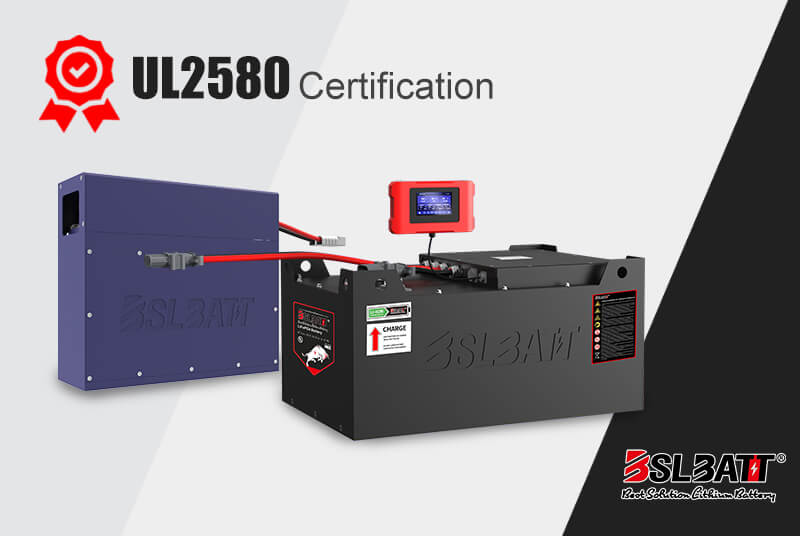
7. Is it certified for your market? Charger-side safety standards are separate from battery-side standards such as UL 2580.
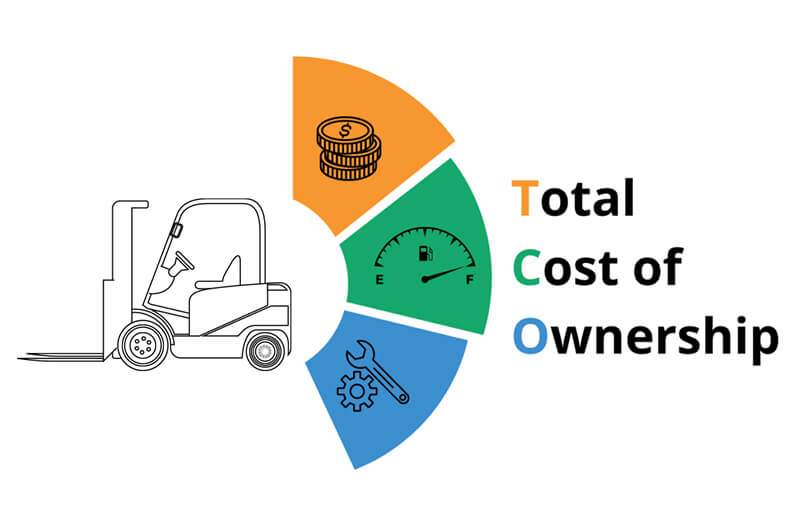
Charging infrastructure is a capital line that is easy to under-budget and expensive to retrofit. It is also where the total cost of ownership case for lithium is either realised or quietly lost — the maintenance savings only land if uptime actually improves.
Frequently Asked Questions
How long does a lithium forklift battery take to charge?
A full charge takes roughly one to two hours at the rated charger current, compared with about eight hours plus cool-down for lead-acid. The exact time depends on pack capacity, charger current, and how deeply the pack was discharged. BSLBATT publishes “< 2 hours” for several forklift models including the 24V 230Ah, 48V 410Ah and 83.2V 690Ah. Confirm the figure for your specific battery-and-charger pairing before finalising shift schedules.
Can I opportunity charge a lithium forklift battery?
Yes. LiFePO4 has no memory effect, so partial top-ups during breaks or shift changes cause no damage and are in fact gentler on the pack than repeated deep cycles. The main requirements are a CAN-capable charger the BMS will authorise, and enough charge points that operators are not queuing. Schedule one full uninterrupted charge periodically so cell balancing and SOC calibration can complete.
Can I use my existing lead-acid charger on a lithium forklift battery?
Generally no. Lead-acid chargers use equalisation and desulphation modes that apply sustained overvoltage, and they terminate based on voltage inflection points that a flat LiFePO4 curve does not produce. Most critically, they have no CAN communication with the BMS, so they cannot receive voltage and current limits or temperature derating commands. Multi-chemistry chargers with a genuine LiFePO4 profile and working CAN may be reusable — verify both before relying on one.
What does CAN communication do in forklift battery charging?
CAN is the digital link that lets the battery’s BMS direct the charger in real time. The BMS acts as master, continuously sending the maximum permitted voltage and the current it wants at that moment, based on live cell voltages and temperatures. The charger acts as a controlled source, delivering exactly that. A rolling heartbeat runs in both directions, and if either side stops responding the session aborts — which is why a communication fault shows up as a pack that simply will not charge.
Why does my lithium forklift battery stop charging before it is full?
The most common causes are BMS current derating in response to temperature or cell imbalance, an incomplete CAN session, or an input supply that cannot sustain the charger’s rated output. Check ambient temperature at the charge point first, then whether the BMS logged a protection event, then whether the supply voltage at the outlet is holding up under load.
Do lithium forklift batteries need a battery room or ventilation?
No — lithium packs are sealed and maintenance-free, with no watering, no acid handling and no hazardous fumes during charging. That removes the dedicated battery room, swap crane and spare battery inventory that lead-acid operations require. You still need a clear, dry, unobstructed charging area with adequate electrical supply.
Can I charge a lithium forklift battery in a cold warehouse or freezer?
Charging a cold LiFePO4 cell risks permanent damage, so the BMS will typically block or limit charge current until cells are within their safe window. Packs specified with an integrated heating function warm the cells before accepting charge current. This is a specification question to resolve at purchase time — confirm whether low-temperature charging is supported on the exact model you are buying.
Matching a charger to your fleet?
Send us your battery model, truck brands and shift pattern, and we will confirm the right charger specification — voltage window, current rating, connector and CAN protocol — before you place an order.
Request a charger specification check.


 Explore all product lines