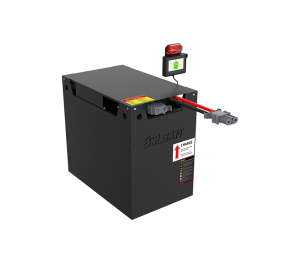
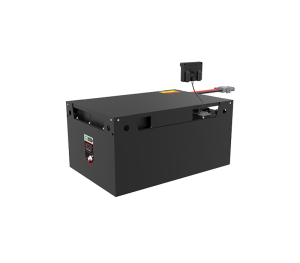
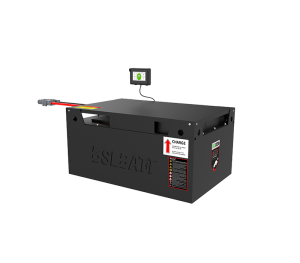
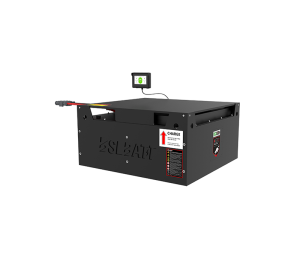
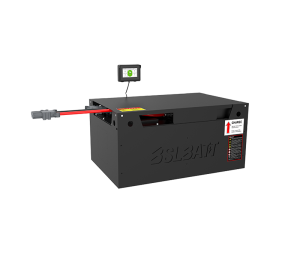
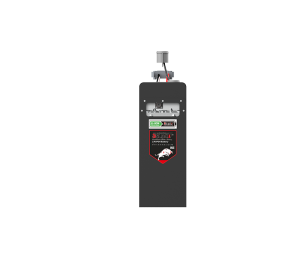
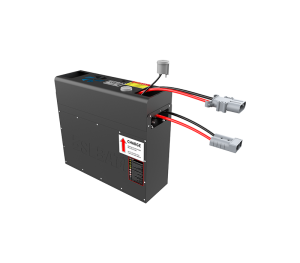
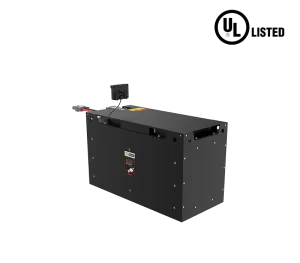
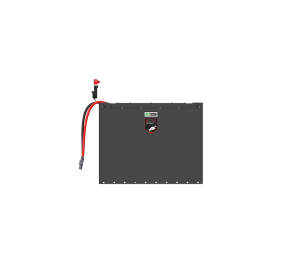
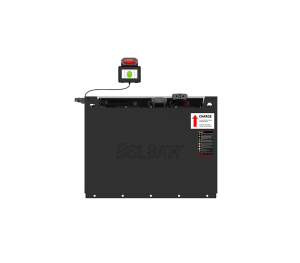
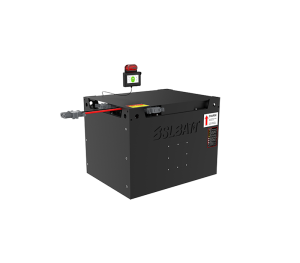
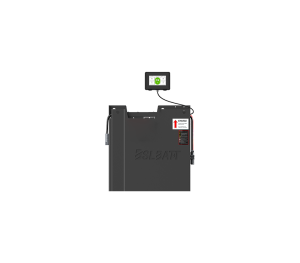
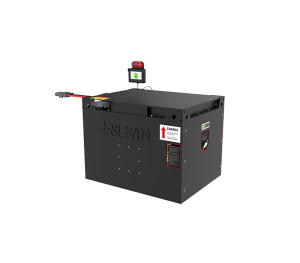
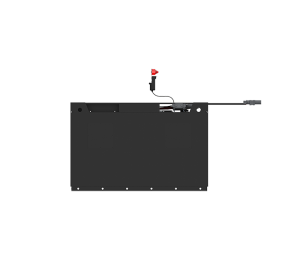
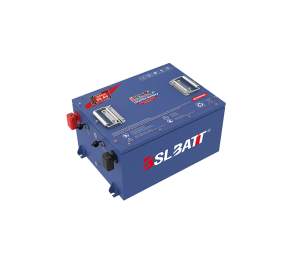
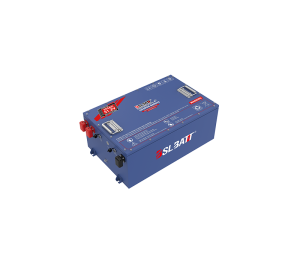
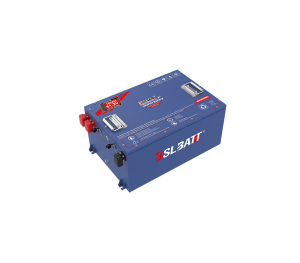
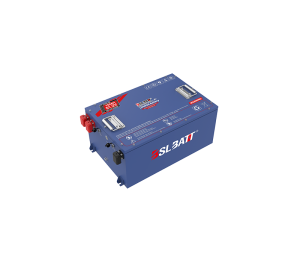
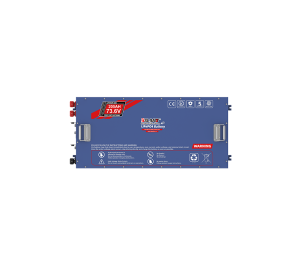
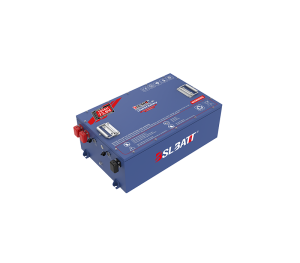
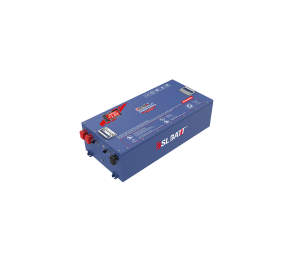
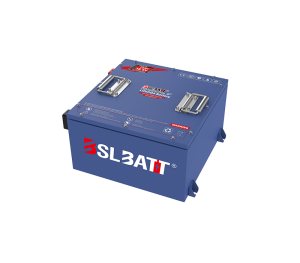
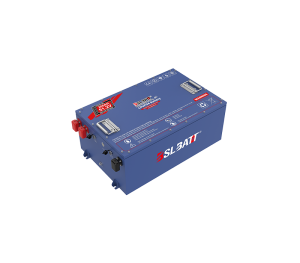
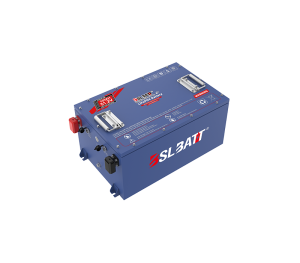
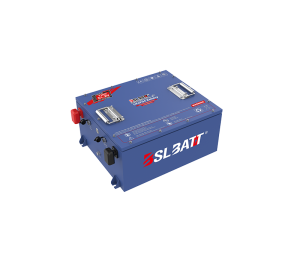
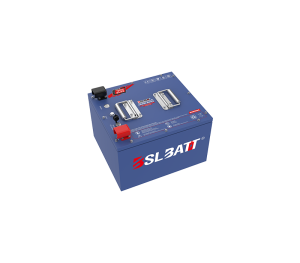
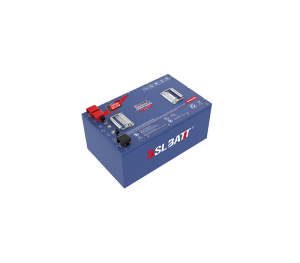
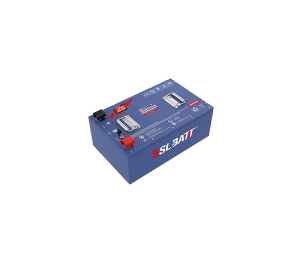
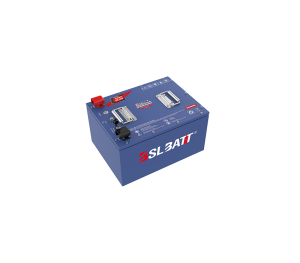
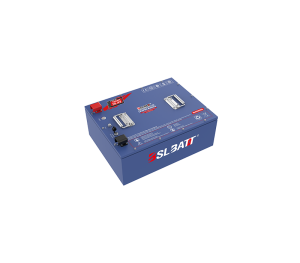
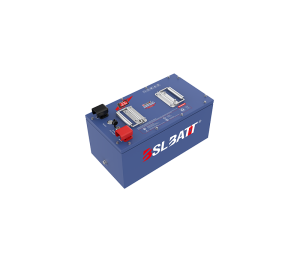
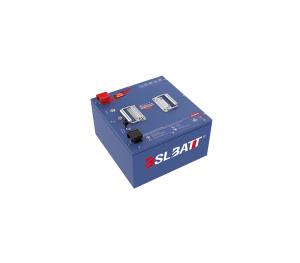
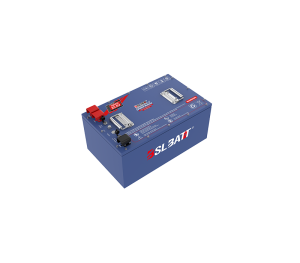
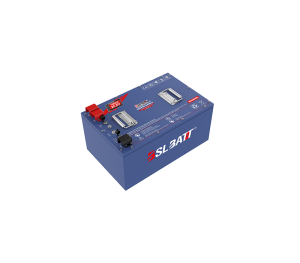
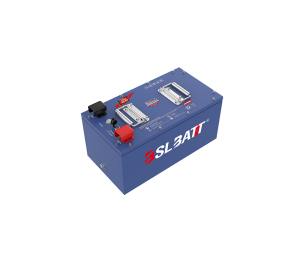
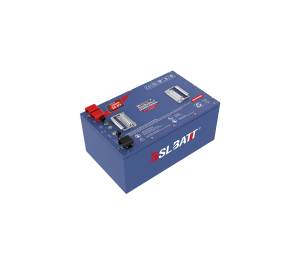
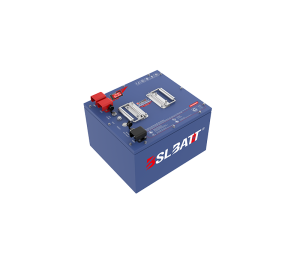
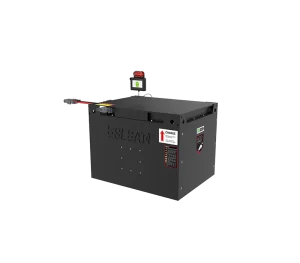
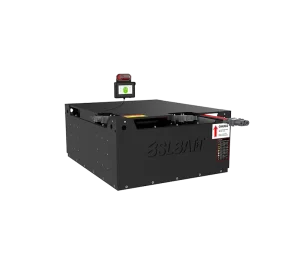
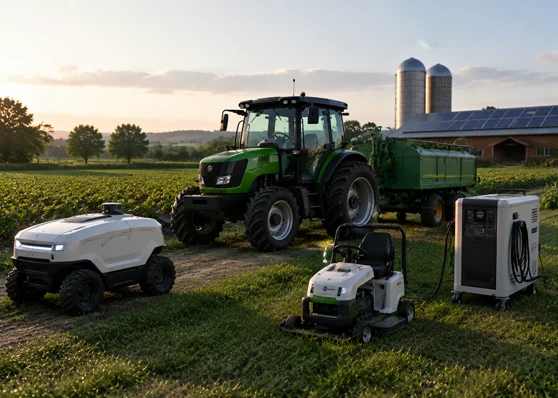
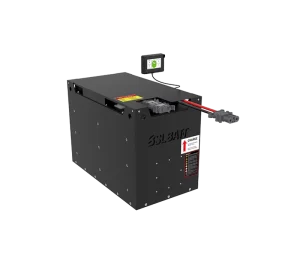
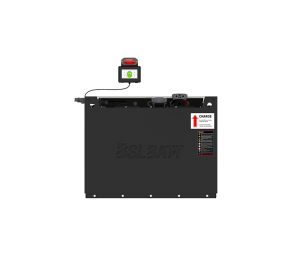
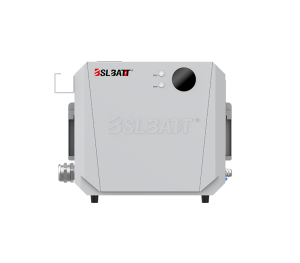
Farm machinery is going electric for three reasons: tightening emission rules on diesel, lower running cost per hour, and a duty cycle that suits lithium. Lithium charges four times faster than lead-acid, needs no watering, holds voltage on long field days, and sits idle through the off-season without damage.
Why Farm Equipment Is Electrifying Now
Electric tractors were a curiosity a decade ago. Today most major OEMs have one in development or on the market, and the reason is not novelty — it is arithmetic. Three forces converged, and they all point the same direction.
1. Emission rules are tightening on diesel
Off-road diesel engines face progressively stricter emission standards, with compliance costs passed straight into machine price and servicing. Beyond the machine itself, where you can run it is narrowing: indoor livestock buildings, greenhouses, and enclosed packing sheds all require ventilation for diesel exhaust, and some jurisdictions restrict combustion equipment near produce entirely. An electric machine removes that constraint — no exhaust, no ventilation requirement, and no acid fumes during charging.
There is also a market dimension. Food buyers and retailers increasingly ask suppliers for documented emissions reductions, and electrifying the yard fleet is one of the easier line items to evidence.
2. Cost per hour, not cost per pack
Lead-acid wins on sticker price and loses on everything else. Its real cost shows up in labour — watering, terminal cleaning, equalisation charges — and in downtime, because an eight-hour charge plus a cooling period removes a machine from the next day’s work. Lithium removes the labour entirely and lets a machine top up during a break.
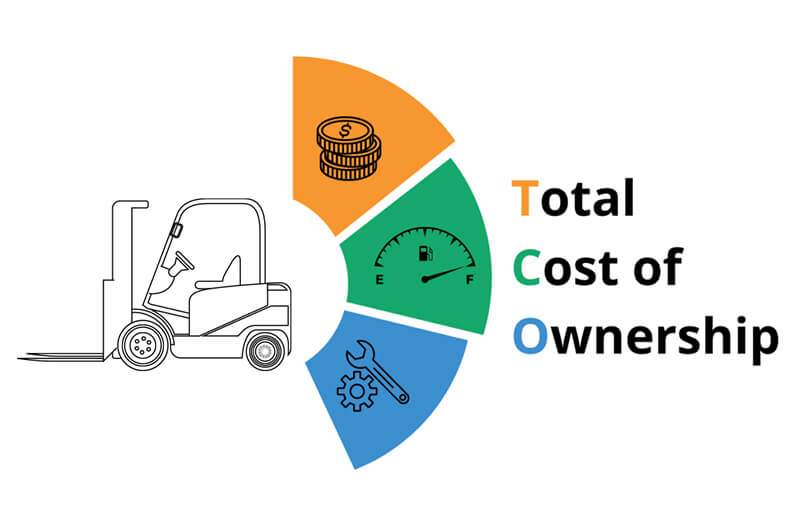
The comparison that matters is energy and maintenance cost per operating hour over the pack’s life, not purchase price. A pack lasting several times longer than lead-acid, with no scheduled maintenance, typically lands materially lower on that measure. See our total cost of ownership breakdown for how the components stack up.
3. Lithium simply fits farm work better
Three properties make LiFePO4 unusually well matched to agriculture:
- Flat discharge curve — a tractor or telehandler performs the same at 20% state of charge as at 100%, rather than slowing as the pack drains.
- Opportunity charging — a top-up during a meal break adds hours of work without consuming a full cycle, which is exactly how harvest days actually run.
- Clean operation — no watering, no acid residue, no gassing. This matters in barns, milking parlours, and anywhere feed or produce is handled.
| Factor | Diesel | Lead-acid | LiFePO4 lithium |
|---|
| Exhaust emissions | High — needs ventilation | Zero at point of use | Zero at point of use |
| Indoor / livestock building use | Ventilation required | Gassing during charge | Suitable |
| Noise | High | Low | Lowest |
| Power consistency | Engine governed | Sags as it drains | Flat to end of charge |
| Routine maintenance | Engine service | Watering, cleaning | None |
| Refuel / recharge | Fast | ~8 h + cooling | Break-time top-up |
| Off-season storage | Fuel stabilisation | Sulphation risk | Low self-discharge |
| Exposure to regulation | Increasing | Low | Low |
The Seasonal Duty Cycle: Farming’s Defining Constraint
This is where agricultural electrification differs from almost every other sector. A warehouse forklift works roughly the same hours every week of the year. A farm does not. Sizing a farm pack without accounting for the seasonal curve is the most common spec mistake.
Peak season (planting, harvest). Machines run 12–16 hours a day for weeks, often with two operators. Energy demand is extreme, but so is the value of uptime — a breakdown during a narrow harvest window costs far more than the battery. This is where opportunity charging earns its keep: a 30–45 minute top-up during a shift change keeps a machine working rather than waiting.
Shoulder season (spraying, spreading, feeding). Intermittent, moderate duty with variable loads — sprayer pumps, augers, hydraulic lifts. Capacity demand is lower, but peak currents still spike. A pack sized only for average draw will trip.
Off-season (winter, fallow). The machine sits for months. For lead-acid this is destructive — self-discharge leads to sulphation and permanent capacity loss. For LiFePO4 it is largely benign, provided the pack is stored at a sensible state of charge and within its storage temperature window. The BMS continues to draw a small quiescent current, so a very long idle period can still drain a pack below safe limits if it is never checked.
| Season | Duty pattern | What the battery must do | Spec priority |
|---|
| Peak — planting / harvest | 12–16 h/day, weeks on end | Accept fast top-ups without cycle penalty | Opportunity charge rate, thermal design |
| Shoulder — spraying, feeding | Intermittent, spiky loads | Deliver peak current on demand | Peak discharge, voltage stability |
| Off-season — storage | Idle for months | Hold charge, survive temperature swings | Low self-discharge, storage SOC window |
| Cold start — winter work | Short bursts in freezing conditions | Accept charge and deliver power when cold | Self-heating, low-temp discharge rating |
Match the Battery to the Machine
Four machine types account for most agricultural electrification enquiries, and each prioritises a different spec.
Tractors: sustained power over long days
Fieldwork — ploughing, tilling, mowing — is a sustained high-current draw, not a spiky one. Capacity and thermal endurance dominate. A tractor that loses power at hour nine of a harvest day is worse than useless, so the flat LiFePO4 discharge curve is the practical advantage here, not a specification-sheet curiosity.
Telehandlers: lift consistency and all-day stability
Telehandlers cycle between lifting and travel all day. The common complaint with lead-acid is energy loss and slowing lift speed as the pack drains, which becomes a safety and productivity issue when moving bales or feed at height. Lithium holds lift speed consistent from full to near-empty.
Feed mixers: continuous run, minimal downtime
Mixing is long-duration, continuous rotation — often twice daily, year-round, including in winter. Thermal management and cycle life matter most, and because these machines work every day rather than seasonally, the cycle-life figure translates directly into replacement interval.
Skid-steer loaders: compact envelope, rough ground
Skid steers work in tight, dirty spaces on uneven ground. Here the constraints are physical: the pack must fit a small battery bay, survive constant vibration, and be sealed against dust and washdown. Compact lithium has a clear edge over bulky lead-acid in the same envelope.
| Machine | Duty profile | Priority spec | Sizing direction |
|---|
| Tractor | Sustained draw, long field days | Capacity, thermal endurance | Size for the longest harvest day, not the average |
| Telehandler | Repeated lift + travel cycles | Voltage stability, cycle life | Prioritise flat discharge over headline Ah |
| Feed mixer | Continuous rotation, year-round | Cycle life, thermal design | Confirm cycles at a stated depth of discharge |
| Skid-steer loader | Tight space, rough terrain | Envelope fit, vibration, sealing | Measure the bay first; sealing is non-negotiable |
| Sprayer / spreader | Intermittent pump load | Peak current, chemical resistance | Check enclosure against fertiliser corrosion |
Contact BSLBATT’s engineering team to customize a solution based on your machine model and find a practical solution for your busy farming season.
Four Specs That Decide Farm Battery Life
| Spec | Why it matters on a farm | What to verify |
|---|
| IP rating | Dust, mud, pressure washing, fertiliser | IP65 minimum for field machines; confirm it is the shipped rating |
| Vibration resistance | Rough terrain is continuous shock | Automotive-grade bracing; steel case; ask for the standard |
| Temperature range | Winter starts, summer field heat | Separate charge and discharge limits; is self-heating included? |
| Cycle life | Drives replacement interval | Cycles at a stated depth of discharge — never a bare number |
Sealing is not optional
Agriculture combines the two things that kill batteries: fine abrasive dust and high-pressure washing. IP65 protects against dust ingress and low-pressure water jets. For machines that are hosed down daily — mixers, loaders, anything handling slurry or feed — treat effective sealing as the single spec most likely to determine whether the pack reaches its rated life.
Cold mornings are a charging problem, not just a starting problem
Most cold-weather battery failures are charging failures. A pack may discharge fine at low temperature but will not safely accept charge until it warms. If you operate through winter — feeding livestock, clearing snow, greenhouse work — confirm whether the model includes self-heating, or you will have machines that run but cannot be recharged on the coldest mornings. Optional heating and fire suppression systems are offered for all-season agricultural use.
Off-Season Storage: What Most Buyers Forget to Ask
Ask any supplier these three questions before a pack goes into winter storage:
At what state of charge should the pack be stored? Full charge is not the answer for long idle periods, and neither is empty.
What is the storage temperature window, and does it differ between one month and one year? These are usually two separate specifications.
What is the BMS quiescent draw, and how long can the pack sit unattended before it needs a check? A pack parked for five months with a small constant drain can arrive at spring below a safe level.
Handled correctly, off-season storage is where lithium’s low self-discharge gives agriculture a genuine advantage over lead-acid. Handled casually, it is still the most common way a good pack is damaged before its first real season.
Charging Where the Field Has No Outlet
Field charging is the practical blocker more often than battery capability. Workable answers, in order of increasing infrastructure:
- Opportunity charging at the yard — top up during meal breaks and operator changes. No new infrastructure, and it fits how harvest days are already structured.
- Fast charging — dramatically shorter charge windows than lead-acid, so a machine returns to work within a break rather than overnight.
- On-site generation — farm solar paired with storage is a natural fit: the machine’s idle season is when generation is often surplus, and the working season’s demand is predictable.
Whichever route you take, confirm charger compatibility before delivery — voltage platform, connector, and BMS handshake. Our charger matching guide covers the checks.
Buyer’s Checklist: Seven Questions Before You Order
- Is the IP rating the shipped rating on this exact model? “Up to” is not a specification.
- What vibration standard is the pack qualified to? Rough terrain is continuous shock.
- What are the separate charge and discharge temperature limits — and is self-heating included?
- At what depth of discharge is the cycle life quoted? A bare number is not comparable.
- What state of charge and temperature should the pack be stored at off-season? Get it in writing.
- What is the BMS quiescent draw over a five-month idle? This determines whether spring startup is routine or a problem.
- Does the pack physically fit the existing battery bay? Measure before ordering — especially for skid steers and retrofits.
Frequently Asked Questions
Why is agricultural machinery moving to lithium batteries?
Three drivers: tightening emission rules on off-road diesel make combustion machines costlier to buy and run; lithium lowers cost per operating hour once maintenance and replacement intervals are counted; and the farm duty cycle — long peak-season days with break-time top-ups, then months of idle storage — suits LiFePO4 far better than lead-acid, which degrades when left standing.
Can lithium batteries handle the seasonal workload of farming?
Yes, provided the pack is specified for the seasonal curve rather than the average day. Size capacity for the longest harvest day, confirm the pack accepts opportunity charging without cycle penalty during peak weeks, and follow the manufacturer’s state-of-charge and temperature guidance for off-season storage. Lithium’s low self-discharge is a major advantage over lead-acid during idle months.
What voltage do electric tractors and farm machines use?
It varies widely by machine size and function — from low-voltage packs for compact utility machines to high-voltage systems for full-size electric tractors. BSLBATT supplies custom voltage options across a wide range, with capacities from small auxiliary packs to several hundred amp-hours. The right voltage is determined by the machine’s existing platform or OEM design, not chosen independently.
How long does an agricultural lithium battery last?
Cycle life must be quoted at a stated depth of discharge to be meaningful. BSLBATT agricultural LiFePO4 packs are specified with cycle life measured under defined DOD conditions and designed for multi-year service. Real-world life depends most on how deeply the pack is discharged during peak season, vibration exposure, and whether off-season storage guidance is followed.
Do lithium batteries work in cold farm winters?
Discharge and charge limits differ, and charging is usually the constraint. A pack may discharge at low temperature but refuse charge until warmed, which is why self-heating matters for winter work. Confirm whether heating is included on your model, and check the storage temperature window separately — the one-month and one-year figures are typically different.


 Explore all product lines