What Counts as a Traction Battery
A traction battery does one job: it feeds the electric motor that moves the machine. That single purpose separates it from the two batteries people confuse it with.
| Battery type | What it does | Design consequence |
|---|
| SLI (starting, lighting, ignition) | Short bursts of high current, then float | Thin plates, high surface area, fails fast under deep discharge |
| Traction | Repeated deep discharge across a shift | Thick tubular plates or LFP cells, rated for cycling |
| Stationary | Float duty or daily solar cycling at a fixed site | Weight barely matters, cycle count rules |
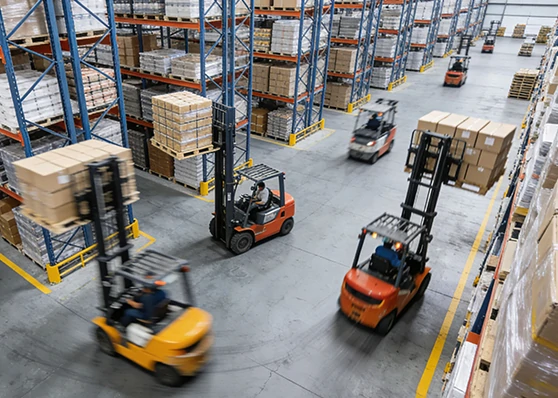
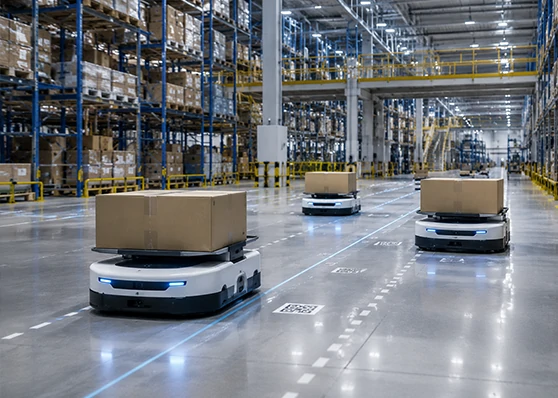
In a plant or a port, traction battery almost always means the 24V to 80V pack in a forklift, pallet truck, tow tractor, AGV, airport tug or mine locomotive. In automotive writing the same phrase means the main EV pack. Same function, very different spec sheet.
Capacity is quoted in amp-hours at a defined discharge rate. Industrial traction cells use the 5-hour rate, written C5. A 625Ah cell at C5 gives you 625Ah when emptied over five hours. Pull the same energy out in one hour and you get fewer Ah and less usable energy, because the internal resistance eats the difference. Compare quotes only at the same rate, and only at the same end voltage.
The Four Types You Will Actually Be Quoted
Nearly every industrial quote lands in one of these four buckets. The chemistry decides the cycle life, the labour and the charging infrastructure that comes with it.
1. Flooded tubular lead-acid (PzS)
Two-volt cells bolted into a steel tray. The positive plate is a row of tubes wrapped in a woven gauntlet, and that construction is what lets it survive 1,000 to 1,500 deep cycles rather than a few hundred. It is still the default in counterbalance forklifts, and it is the cheapest traction battery per nameplate kilowatt-hour on the invoice.
The costs it hides are physical. Watering every 5 to 10 charge cycles, or a watering system that does it for you. A ventilated charging room, because the pack releases hydrogen at the end of the charge. Six to eight hours for a full charge plus a cooling period, which means a two-shift operation buys two packs per truck and a transfer carriage to move them. Round-trip efficiency runs near 75%, against roughly 96% for lithium, per BSLBATT’s TCO comparison.
2. Semi-traction (flat plate)
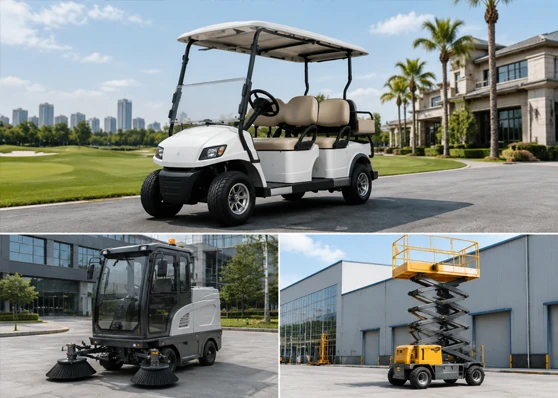
Flat-plate cells built for light cycling, sometimes sold as dual-purpose. You pay roughly half of a tubular pack at the same nameplate capacity, you get roughly half the cycle life, and the cells tolerate being run flat far less gracefully. A semi traction battery belongs in floor scrubbers, aerial lifts, small site vehicles and the cheaper end of the pallet truck market. It is the right answer for a machine that works 20 hours a week. It is the wrong answer for one that works 20 hours a day.
3. AGM and gel (VRLA)
Sealed, maintenance-free, no watering and no gas. Cycle life sits between flat plate and tubular, and heat is what kills them: every 10 °C above 25 °C roughly halves service life. They make sense in indoor cleaning machines and in facilities where an acid spill or a watering rota is unacceptable, not in heavy counterbalance duty.
4. Lithium iron phosphate (LiFePO4)
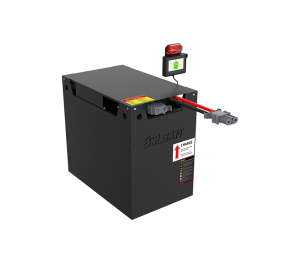
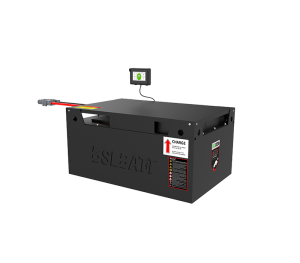
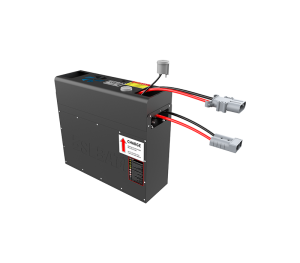
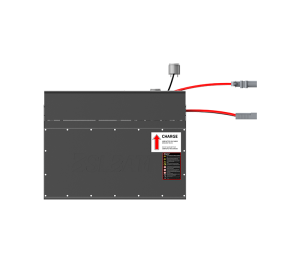
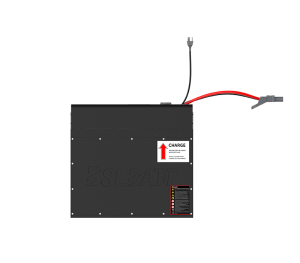
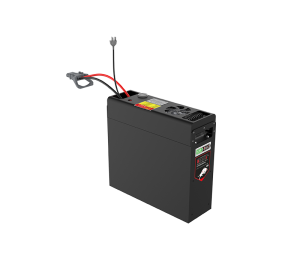
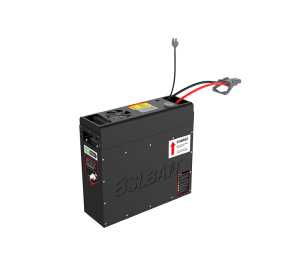
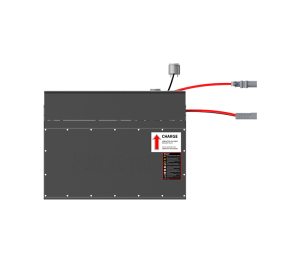
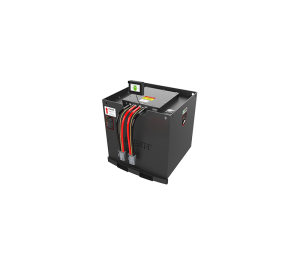
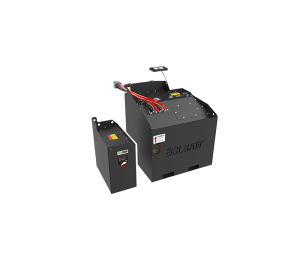
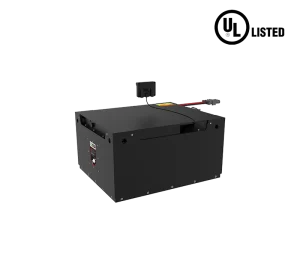
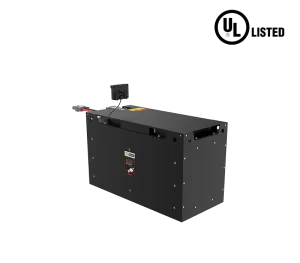
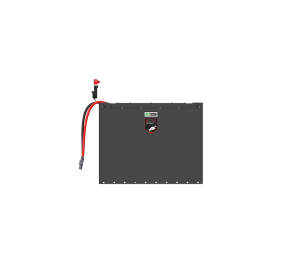
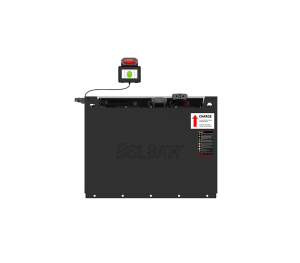
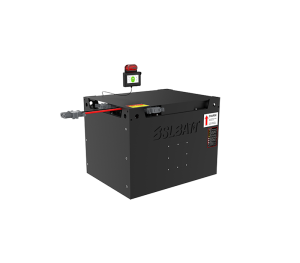
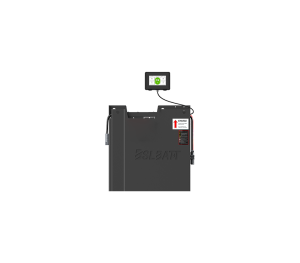
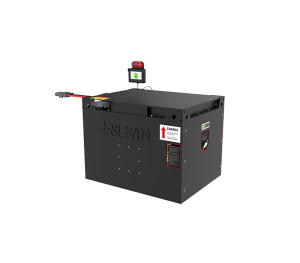
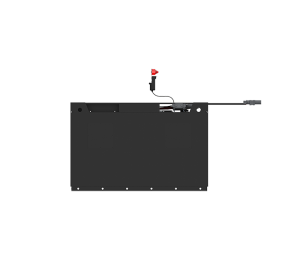
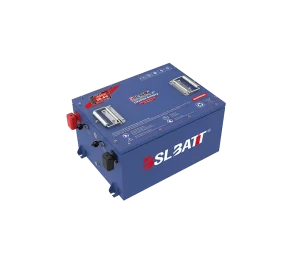
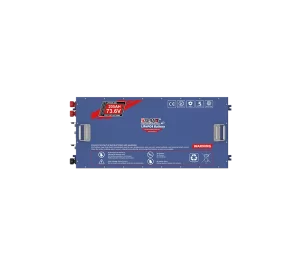
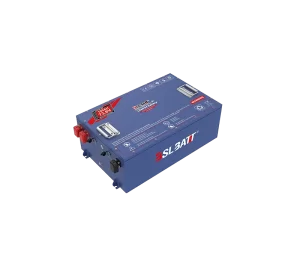
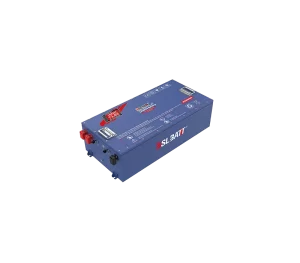
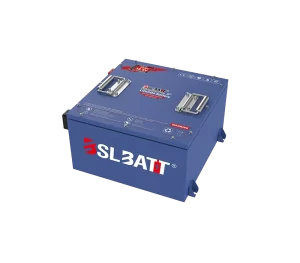
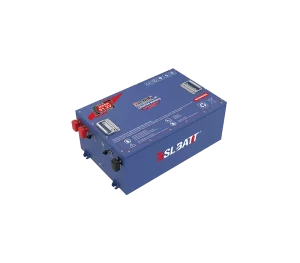
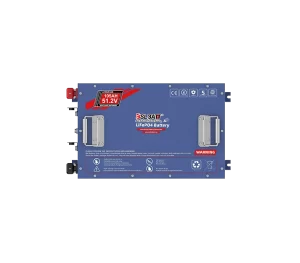
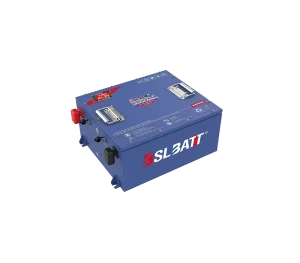
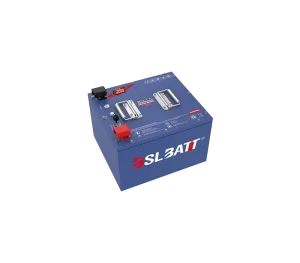
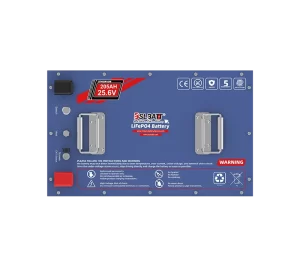
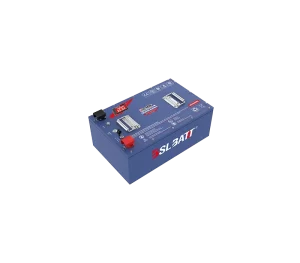
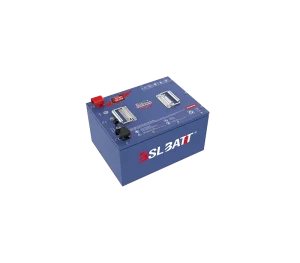
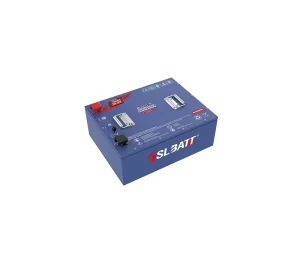
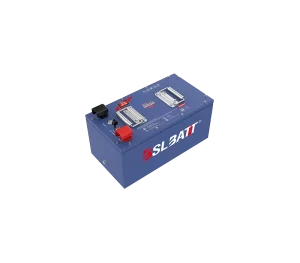
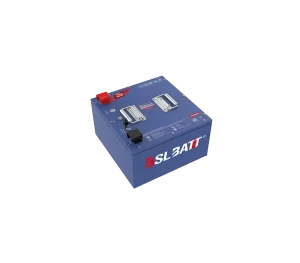
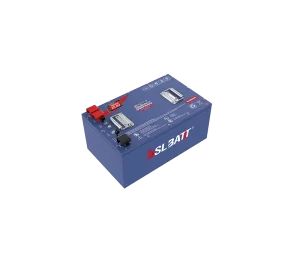
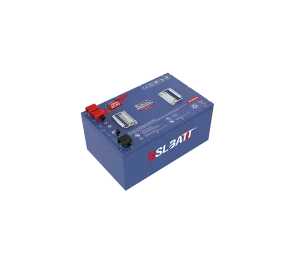
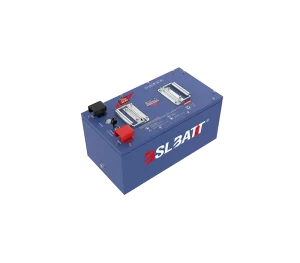
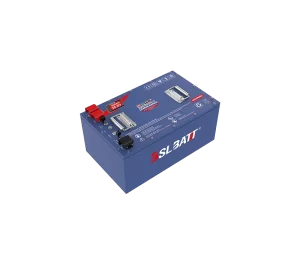
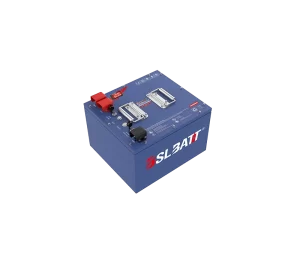
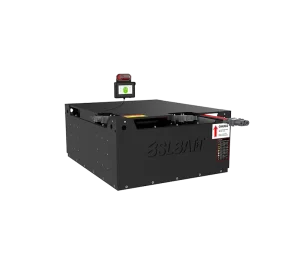
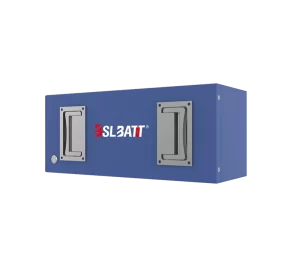
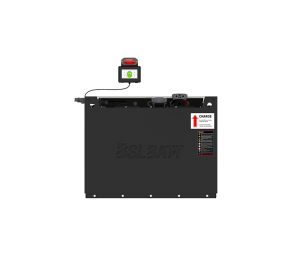
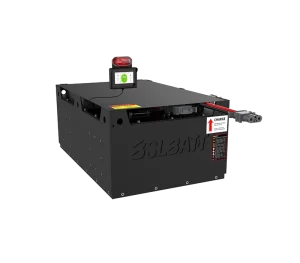
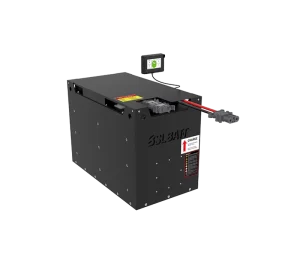
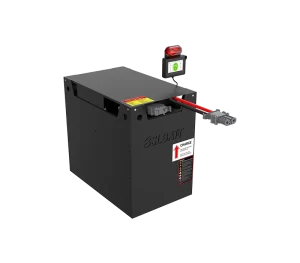
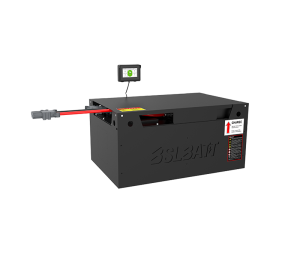
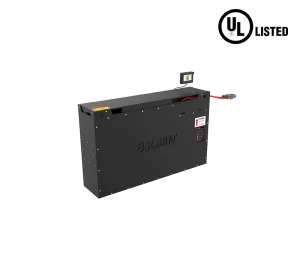
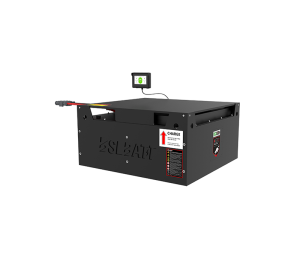
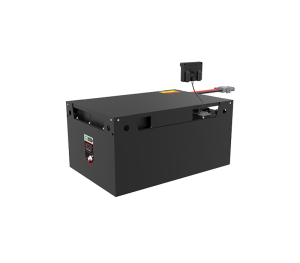
Prismatic LFP cells, a battery management system, and a 51.2V nominal pack that drops into the compartment previously occupied by a 48V lead-acid tray. Sixteen cells at 3.2V give 51.2V, which sits inside the voltage window a 48V truck expects. BSLBATT rates its forklift packs above 3,500 cycles at 80% depth of discharge; the 48V 410Ah model carries 21 kWh, charges in under two hours on a 200A charger, and needs no watering, no gas extraction and no separate charging room. The cell, BMS and thermal design behind it is covered separately.
| | Flooded tubular | Semi-traction | AGM / gel | LiFePO4 |
|---|
| Cycles at 80% DOD | 1,000-1,500 | 500-1,000 | 400-800 | 3,500+ |
| Round-trip efficiency | ~75% | ~75% | ~80% | ~96% |
| Full charge time | 6-8 h + cooling | 8-10 h | 8-10 h | under 2 h |
| Routine labour | Watering, terminal care | Watering | None | None |
| Weight, 48V class | Heaviest, doubles as counterweight | Heavy | Heavy | About one third |
| Up-front price per kWh | Lowest | Lowest | Middle | Highest |
How to Read a Traction Battery Label
A European traction cell might read 5 PzS 625. Decode it left to right: 5 is the number of cells in the block, PzS is the plate design (tubular positive plate, liquid electrolyte, heavy cycling duty), and 625 is the rated capacity in Ah at the 5-hour rate.
Multiply the cell count by 2.0V and you have the block voltage. Five cells make a 10V block. A 48V battery is 24 cells in series, which is why a 48V tray is physically 24 cells long, and an 80V truck uses 40. That arithmetic is the fastest way to sanity-check a quote that looks too cheap.
| What you see on the label | What it tells you | Voltage |
|---|
| 5 PzS 625 | 5 cells, tubular plate, 625Ah at C5 | 10V block |
| 24 × PzS 625 | 24 cells in one tray, 30 kWh nameplate | 48V string |
| PzV or PzB | Low-maintenance variants of the same tubular design | Ask for the watering interval rather than decoding the letters |
| 51.2V 410Ah LFP | 16 LFP cells, 21 kWh, 48V-class replacement | 51.2V nominal |
If you are cross-shopping an exide traction battery against a European PzS line, expect the cells to follow the same DIN footprint. A like-for-like quote should match cell count, Ah at C5 and tray dimensions. The real differences sit in plate alloy, warranty terms and service coverage, not in the shape of the box. Measure your compartment first: length, width, height and the position of the terminal posts.
What a Traction Battery Price Actually Covers
The lead acid traction battery still wins the invoice comparison, and the lithium pack wins the life comparison. Lead and freight move these numbers quarterly, so treat the bands below as illustrative for new equipment in North America and Europe, not as quotes.
| Pack | Nameplate energy | Illustrative price | Per nameplate kWh |
|---|
| 48V 625Ah flooded tubular (24 cells) | 30 kWh | $6,500-$9,500 | $215-$315 |
| 48V 170Ah semi-traction (6 × 8V) | 8.2 kWh | $1,200-$2,000 | $145-$245 |
| 48V 200Ah AGM | 9.6 kWh | $1,800-$3,000 | $190-$310 |
| 48V 410Ah LiFePO4 (B-LFP48-410MH) | 21 kWh | $7,000-$11,000 | $330-$520 |
Ask for a traction battery price that itemises cells, tray, charger and commissioning. A single number hides where the difference sits. Price per nameplate kWh flatters lead-acid twice. You can only use part of the capacity, and you replace the pack sooner. The figure that decides the purchase is cost per kilowatt-hour delivered:
cost per kWh delivered = purchase price ÷ (usable kWh × cycle life)
Run it on the 48V class:
- Tubular lead-acid: $8,000 ÷ (30 kWh × 0.8 × 1,200) = about $0.28 per kWh delivered
- Semi-traction: $1,500 ÷ (8.2 kWh × 0.5 × 600) = about $0.61
- LiFePO4: $9,000 ÷ (21 kWh × 0.9 × 3,500) = about $0.14
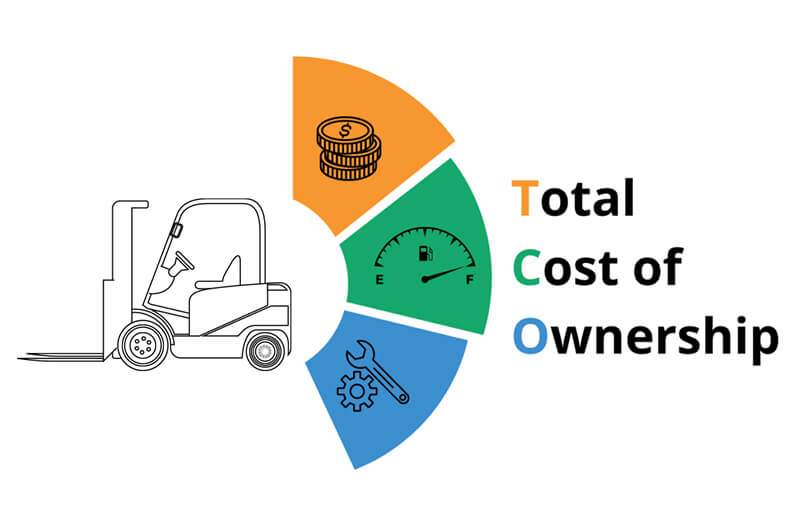
Energy and labour sit on top of that. The full TCO model carries those lines. Four things move a traction battery quote more than anything else:
- Cell count and Ah. Doubling capacity roughly doubles cell cost.
- Plate design. Tubular costs more than flat plate at the same Ah, and lasts longer.
- Lead price. LME lead swings, which is why traction quotes are usually valid 7 to 30 days.
- What comes with it. Lead-acid needs a charger, stands, a transfer carriage and ventilation. Lithium needs a charger with the right CAN profile, and sometimes a supply upgrade.
Why Lithium Costs More Up Front
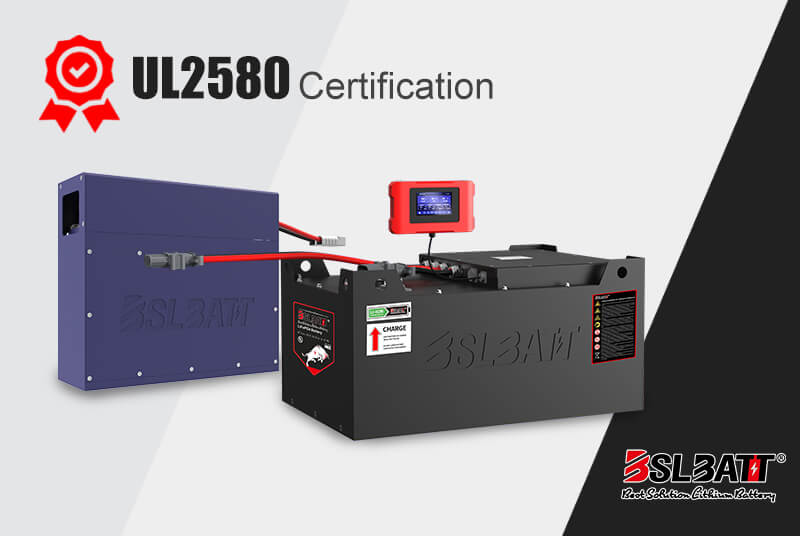
Three cost centres explain the gap. Cells: LFP prismatic cells cost more per kWh than cast lead plates. Electronics: a BMS with contactors, current sensing and CAN is a real bill of materials. Certification: abuse testing to UL 2580 and IEC 62619 costs money per model, and the regime is not gentle. BSLBATT’s pack carries UL 2580 and IEC 62619 marks, and the test sequence includes short circuit, crush, drop and fire spread. Volume explains the rest. A PzS line sells into every warehouse on the planet; an industrial LFP pack sells into a replacement market that is still growing.
Where Lithium Wins, and Where It Does Not
Lithium wins when the machine works hard enough that a second lead-acid pack would otherwise be needed. Three shifts, short breaks, opportunity charging during lunch, no swap, no charging room, no watering rota. It also wins where energy is expensive, because 96% round-trip against 75% is a straight multiplier on every kilowatt-hour you buy. Cold stores tip the same way: a heated LFP pack can charge below zero, while a flooded pack loses capacity and should not be charged below 0 °C at all.
It does not win everywhere. A single-shift machine with low hours and a capex-first procurement rule is better served by a tubular pack at half the price. Trucks that use battery mass as counterweight, including some three-wheel and reach models, need ballast plates when the pack gets lighter, and that eats part of the gain. Above roughly 45 °C ambient, ask for the derating curve instead of assuming the rating holds. And an old lead-acid charger will not fully charge an LFP pack, so reuse the cables and the connector, not the charger.
The Switch Checklist
- Energy audit. Measure kWh per shift for two weeks. Hour-meter data beats a supplier’s estimate.
- Voltage and connector. Truck class, connector type (REMA, Anderson, DIN) and whether the truck reads battery data over CAN.
- Compartment. Length, width, height, terminal position, and the minimum battery weight the truck needs for stability.
- Duty cycle. Shifts per day, break length, charging window. This sizes the pack more than any other input.
- Charger. Current that refills the pack inside the window, correct charge profile, and supply capacity at the wall. The charger matching guide covers the voltage and protocol side.
- Environment. Ambient range, wash-down, dust, IP rating required.
- Certification and service. UL 2580 or IEC 62619 for your market, plus who services the pack and where the spares sit.
- Cost per kWh delivered. Run both options through the formula above before you look at the invoice total.
Start with the duty cycle, not the price list. Measure what the machine draws in a shift, then size the pack to that number and to the charging window you can actually give it. Lead-acid still wins a single shift with time to spare. Lithium wins the moment the machine works hard enough that a second pack would otherwise be needed. If you want a cross-reference against your current tray, send us the label and the compartment dimensions.
FAQ


 Explore all product lines