

Revolutionize the energy economy with advanced lithium-ion battery technology—lower costs, reduce heat, and accelerate sustainable development.
 Explore all product lines
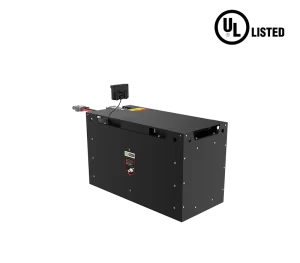
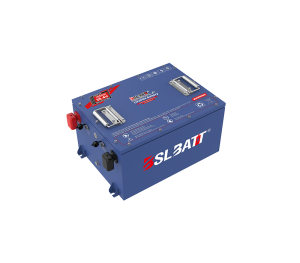
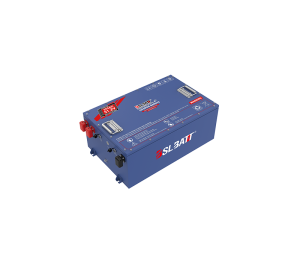
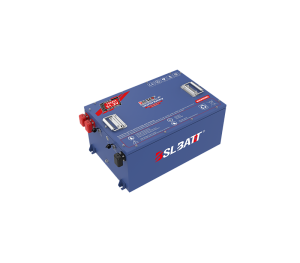
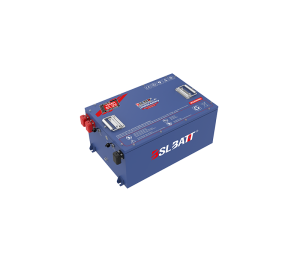
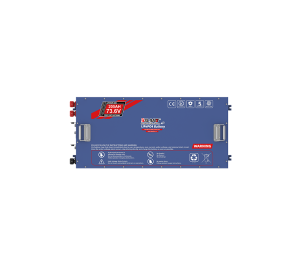


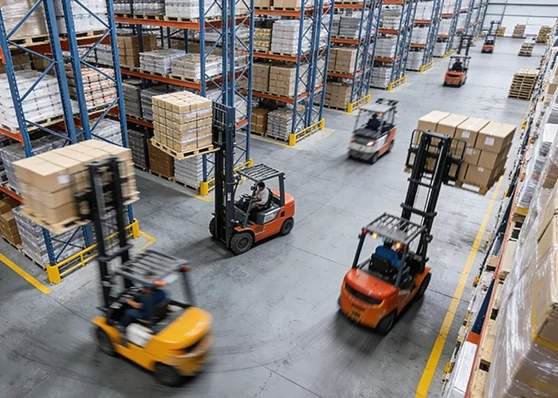
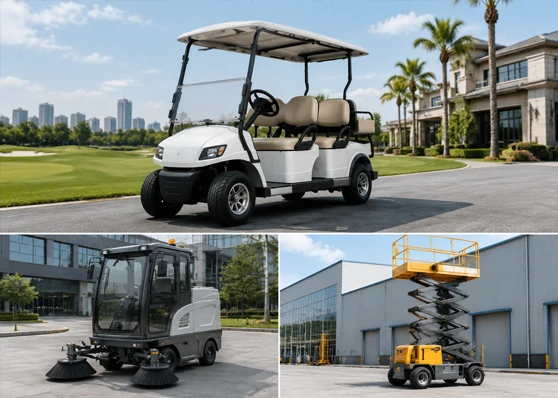


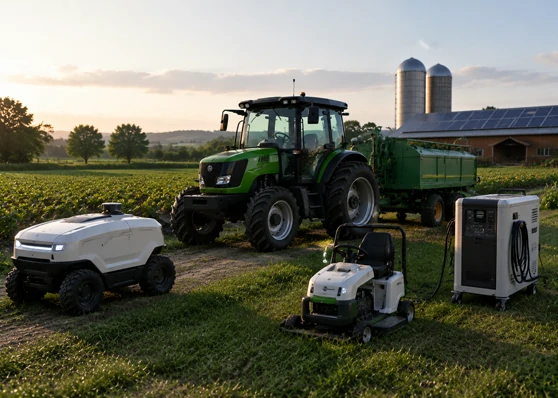





- Specialty Forklift Manufacturers and BSLBATT Lithium Battery Solutions
- The first lithium forklift battery that is UL 2580 certified and ISO9001 certified in the industry is BSLBATT® Battery – Industrial
- Automated Lithium Battery Assembly Line | BSLBATT Smart Factory
- Time to Retire Lead-Acid: Why Your Warehouse Needs Lithium-Ion Power
- Lithium Forklift Battery Maintenance Guide 2026
- Industrial Lithium Batteries: Initial Price vs. Long-Term Costs
Port Machinery
Lithium Battery for Port Forklifts: The Complete Guide for Port Operators and Fleet Managers
Table of contents
- What Is a Port Forklift?
- Types of Forklifts Used in Port Operations
- Why Port Operating Conditions Create Demanding Battery Requirements
- Why Choose a Lithium Battery for Port Forklifts?
- Lithium Battery vs. Lead-Acid Battery for Port Forklifts
- What Specifications Matter When Choosing a Lithium Battery for Port Forklifts?
- Battery Voltage
- Battery Capacity
- Power and Discharge Capability
- Battery Dimensions and Weight
- BMS — The Battery Management System
- Thermal Management
- IP Protection
- Safety and Fire Protection
- Charger Compatibility
- How to Choose the Right Lithium Battery for a Port Forklift
- Charging a Lithium Battery for Port Forklifts
- Lithium Battery Safety for Port Forklifts
- How Much Does a Lithium Battery for a Port Forklift Cost?
- Total Cost of Ownership of a Lithium Battery for Port Forklifts
- BSLBATT Lithium Battery Solutions for Port Forklifts
- Frequently Asked Questions
- The Bottom Line
- Talk to BSLBATT About Your Port Fleet
Ports run on tight schedules, heavy loads, and equipment that cannot afford unplanned downtime. At the center of that equation sits a component that rarely gets attention until it fails: the battery. Choosing the wrong battery for a port forklift doesn’t just shorten runtime — it can quietly erode productivity, safety, and total operating cost over the life of the fleet.
This guide is designed as a complete reference for anyone responsible for specifying, buying, or maintaining battery-powered forklifts in a port or terminal environment — port operators, fleet managers, procurement teams, dealers, and equipment engineers. We’ll walk through what port forklifts are, why port conditions push batteries harder than almost any other application, how lithium and lead-acid technologies compare, and what actually matters when selecting a battery. Where a topic deserves a deeper dive, we’ll point you to a dedicated article so you can go further without wading through everything here.
What Is a Port Forklift?
A port forklift is a piece of material handling equipment used to load, unload, stack, and move cargo — most commonly containers — within a port, container terminal, or intermodal yard. Unlike a standard warehouse forklift, a port forklift typically operates outdoors, handles heavier and larger loads, and runs for extended shifts, often around the clock.
“Port forklift” is sometimes used loosely to describe a whole category of specialized lift equipment, including:
- Container handlers (laden and empty)
- Reach stackers
- Heavy-duty counterbalance forklifts (10–45+ tons)
- Terminal tractors and yard trucks (adjacent equipment, often grouped with the same fleet)
If you’re trying to understand how these machines differ from the forklifts used in general warehousing, our companion article on Port Forklift vs. Warehouse Forklift breaks down the operational and design differences in more detail.

Types of Forklifts Used in Port Operations
Port and terminal operators typically rely on a mix of equipment types, each suited to a different task in the container flow:
- Empty Container Handlers (ECH) — designed to stack and move empty containers quickly, often in multi-tier configurations
- Laden Container Handlers — built for full, heavier containers, with reinforced masts and higher lift capacities
- Reach Stackers — highly maneuverable machines that can stack containers several rows deep and multiple tiers high
- Heavy-Duty Forklifts (10–45 ton class) — used for general cargo, machinery, and non-containerized heavy loads
- Side Loaders — used where long or awkward loads need to be handled from the side
Each of these equipment types has different duty cycles, lift heights, and power demands — which directly affects battery sizing and configuration. We cover this in depth in Types of Port Forklifts, and application-specific battery guidance is available in Lithium Batteries for Reach Stackers and Lithium Batteries for Empty Container Handlers.
Why Port Operating Conditions Create Demanding Battery Requirements
Because a port combines the worst of several worlds at once: heavier loads and longer run hours than warehouse duty, multi-shift schedules that leave no room for 8-hour charging cycles, and an outdoor salt-air environment that attacks batteries electrically and mechanically. Each of these translates directly into a specific requirement for the battery you buy.
Here’s the honest breakdown, and what each condition does to a battery:
Heavy loads, frequent lifting, constant travel. A port truck lifts near its rated capacity regularly, and it moves — across container yards measured in hectares, over rail crossings and cracked pavement. Electrically, that means the battery must deliver high continuous current (travel + lift + steering at the same time) without its voltage sagging or the BMS current-limiting the truck. Mechanically, vibration works busbars and cell interconnects loose over thousands of hours. A pack whose modules are clamped and torque-checked survives; one that isn’t develops intermittent faults that eat maintenance budgets.
Multi-shift operation. Terminals work nights, weekends and holidays. A lead-acid battery needs roughly 8 hours of charge plus cool-down after each shift, which forces the classic model: one battery in the truck, one on the charger, a battery-change room, and a swap every shift. In a port, that swap is not just labor — it’s a truck out of service at the exact moment berth productivity is measured. A lithium battery for port forklifts removes this constraint through opportunity charging, but only if the battery is genuinely sized and rated for it.
Rain, salt fog, and washdown. Salt is aggressively corrosive to copper busbars, terminals and connectors. Corrosion raises contact resistance; resistance creates heat; heat accelerates failure. Meanwhile the same truck may get rain on the apron and washdown on a RoRo deck. The battery needs real ingress protection — IP54 as a floor for anything working outdoors, IP65 preferred for exposed quay duty — plus sealed connectors and hardware chosen for salt-fog exposure.
Temperature extremes. Terminals in the Gulf and equatorial Southeast Asia see 40 °C+ ambient with sun baking a steel battery bay well above that. Northern ports see –20 °C in winter. Heat shortens lithium calendar life; charging below 0 °C plating-damages LFP cells unless the pack manages it. Ports span both ends of that problem, sometimes with the same fleet seasonally.
Downtime pressure. In a warehouse, a truck down for an hour is an inconvenience. On a quay, a truck down for an hour during vessel operations is measured against the cost of the vessel’s time at berth. Battery reliability carries a different price tag in a port, which shifts the economics toward batteries engineered above the minimum.
The pattern to notice: every port condition maps to a battery requirement — current capability, cycle life, IP rating, thermal management, mechanical validation, opportunity-charge tolerance. That mapping is the checklist you’ll use in the specification section later, and it’s also why the same lithium battery that works well indoors can disappoint badly on the quay. The difference between port duty and warehouse duty is exactly the difference between a warehouse battery and a port battery.
Why Choose a Lithium Battery for Port Forklifts?
Because the things lithium does well — opportunity charging, zero maintenance, consistent power through the whole discharge, long cycle life — happen to be exactly the things multi-shift port operations struggle with most. The advantages aren’t generic lithium benefits; they answer port problems specifically.
Opportunity charging fits the port’s natural rhythm. Ports have built-in pauses: driver changes, meal breaks, waiting time at the crane, gate queues. A lithium battery can take a fast partial charge during any of these. Fifteen minutes on a properly matched charger can restore a meaningful share of capacity, and there’s no cool-down period afterward — the truck goes straight back to work. Over a shift, those short top-ups mean the truck never leaves the operation to charge at all. That’s the operational model change: instead of one battery in the truck and one on the charger, one battery stays in the truck. The battery room, the spare batteries, and the multi-hundred-kilogram battery swap disappear from your daily operation.
No maintenance labor — at port labor rates. Lead-acid demands watering, terminal cleaning and equalization charges, every week, forever. Multiply even 15 minutes of battery attention per truck per day by a fleet of 30 trucks by port labor rates, and the annual number gets uncomfortable. An LFP battery is sealed and maintenance-free: no watering, no acid, no equalization. The only routine task is keeping connectors clean.
Consistent power all shift. Lead-acid voltage sags steadily as the battery discharges — the familiar “tired truck” at hour seven, with slow lifts and slow travel. LFP holds a nearly flat voltage curve across most of its discharge range, so the truck’s seventh hour performs like its first. For lift-heavy port duty, that consistency is productivity.
More usable energy from the same compartment. LFP delivers 80–100% of nameplate capacity as usable energy; lead-acid is typically restricted to 50–80% before life and performance suffer. In practice this means either more work per charge from the same physical battery, or the same work from a smaller one — and since lithium is lighter for the same energy, most retrofits use the freed space for more capacity rather than less.
No gassing, no acid — a real safety change. Charging lead-acid emits hydrogen, which is why charging areas need ventilation and why battery charging is a regulated hazardous location. LFP charges with no off-gassing, so the ventilation requirement and the gas-monitoring procedure go away. No acid means no spills, no neutralization kits, no corrosion of the battery bay from mist. In a salt-corroded environment, removing one more corrosive agent matters more than it would elsewhere.
Cycle life counted in shifts, not years. A quality industrial LFP pack delivers 3,000–5,000+ full-equivalent cycles at deep discharge; lead-acid gives roughly 1,000–1,500 cycles when treated well. In a two-shift port, that difference is the battery outliving the truck’s first life versus being replaced twice.
Energy efficiency that shows up on the bill. Lithium’s round-trip charging efficiency is roughly 95%, against about 80% for lead-acid — much of lead-acid’s loss going to heat and overcharge. A multi-shift port fleet consumes thousands of kWh per truck per year; a 15-point efficiency gap is a real line item, multiplied across the fleet.
Better fleet utilization, which is the port’s actual product. Add it up: no battery swaps, no maintenance windows, no performance fade, no mid-shift dead trucks. The fleet’s effective capacity goes up without buying a single additional forklift. For a terminal operator, that’s usually where the business case actually closes — not on the battery price, but on the trucks you don’t have to buy.
Lithium Battery vs. Lead-Acid Battery for Port Forklifts
For multi-shift, outdoor, heavy-duty port duty, lithium wins on uptime, labor, safety, energy cost and cycle life; lead-acid’s remaining advantages are lower upfront battery price and simple cold-weather charging. The heavier and more continuous your duty, the more decisively lithium wins.
| Factor | Lead-acid (flooded/AGM) | Lithium (LiFePO4) |
|---|---|---|
| Charging model | ~8 h charge + cool-down; full charge preferred | 1–3 h rapid charge; partial top-ups anytime |
| Opportunity charging | Damages battery if habitual | Designed for it |
| Usable capacity | ~50–80% of nameplate | ~80–100% of nameplate |
| Voltage under load | Sags through discharge | Flat curve, consistent performance |
| Maintenance | Watering, cleaning, equalization | None |
| Gassing during charge | Hydrogen — ventilated charging area required | None under normal charging |
| Spill/acid handling | Acid spills, neutralization procedures | Sealed, no liquid electrolyte |
| Energy efficiency (round trip) | ~80% | ~95% |
| Cycle life (deep discharge) | ~1,000–1,500 cycles | 3,000–5,000+ cycles |
| Battery handling | Spares + change room + swap equipment | Battery stays in the truck |
| Cold-weather charging | Straightforward | Needs thermal management below 0 °C |
| Weight | Doubles as counterweight | Lighter — compartment/ballast engineering needed |
| Upfront cost per battery | Lower | Higher |
| Cost per operating hour | Higher | Lower |
Three honest qualifications keep this comparison useful rather than promotional:
Lithium is most attractive exactly where ports sit on the spectrum. The economic gap widens with shift count. A single-shift indoor warehouse with cheap labor may still justify lead-acid on purchase price alone. A three-shift terminal cannot: the second and third shift are where battery swaps, maintenance labor and energy waste compound, and they’re where lithium pays for itself fastest. Port duty is close to the strongest use case for lithium that exists in material handling.
Cold is the one place lead-acid is easier. You can charge a lead-acid battery at –15 °C without special engineering. An LFP pack needs either integrated heating or a BMS that blocks charge current until cells warm — both solved problems (quality suppliers offer low-temperature packages), but they must be specified, not assumed. Winter terminals should have this conversation explicitly with any battery vendor.
Weight needs engineering attention on retrofits. In a counterbalance forklift the battery is part of the counterweight, so a lighter lithium pack must be compensated — normally by filling the compartment with more capacity, or by ballast configurations matched to the original tray dimensions. This is routine for an experienced supplier and a stability problem for an inexperienced one.
For the deeper version of this comparison — including worked energy and labor cost examples — see Lead-Acid vs. Lithium Batteries for Port Forklifts.
What Specifications Matter When Choosing a Lithium Battery for Port Forklifts?
Seven specifications decide whether a lithium battery will work in your port: system voltage (must match the truck exactly), capacity in Ah/kWh (sets runtime), continuous and peak discharge current (sets power under load), physical dimensions and weight (must fit the compartment and counterweight), BMS quality, thermal management, and IP rating. Certifications and charger matching sit on top as gate conditions.
This is the section worth printing out. Here’s what each one means and how to read a datasheet against it.
Battery Voltage
The battery’s nominal voltage must match the forklift’s electrical system exactly — it’s fixed by the truck, not a preference. The common classes: 24V for pallet trucks and small stackers; 24V/36V/48V for mid-size counterbalance trucks; 48V/80V for large counterbalance; 80V and higher-voltage systems for heavy port equipment, with purpose-built electric reach stackers and empty container handlers running high-capacity packs. If you’re running a mixed fleet, expect to standardize voltage within truck classes, not across them.
One detail that separates good suppliers: the BMS must communicate with the truck’s controller over CAN (CANopen or the OEM’s protocol) so the truck’s display shows true state of charge and the two systems agree on faults and derating. A battery that only matches voltage and current but can’t talk to the truck is where retrofit frustration comes from.
Battery Capacity
Capacity is where runtime is decided, and it’s the most commonly misread number on the datasheet.
Ah tells you charge; kWh tells you energy. They convert directly:
Energy (kWh) = Voltage (V) × Capacity (Ah) ÷ 1,000
A 48V 600Ah pack therefore holds 28.8 kWh. A 24V 600Ah pack holds only 14.4 kWh — same Ah, half the work. Comparing batteries across voltage classes by Ah alone is meaningless; compare kWh.
Rated Ah does not automatically equal operating hours. This is the trap. Actual runtime depends on your duty cycle: how heavy the loads are, how far the truck travels, how often it lifts, the terrain, even the driver. A counterbalance truck in medium-heavy port duty might draw 3–8 kWh per operating hour; the same truck in light shed duty draws far less. Two identical batteries deliver very different shift lengths in two different operations. The right way to size capacity is from your measured or estimated kWh per shift, not from a competitor’s runtime claim.
Usable vs. nameplate. An LFP battery delivers 80–100% of its nameplate kWh as usable energy; a lead-acid of the same nameplate delivers 50–80%. When comparing a lithium retrofit against the lead-acid pack it replaces, compare usable energy, not sticker Ah.
Power and Discharge Capability
Heavy-duty port applications need the battery to deliver travel, lift and steering simultaneously — at full load, on a ramp, in heat. Two numbers govern this: continuous discharge current (sustained output) and peak discharge current (short bursts for lift and acceleration). If the continuous rating is marginal for the truck, the BMS will current-limit, and you’ll feel it as the truck derating performance exactly when it’s working hardest. Check the rating at your worst-case ambient temperature, not the 25 °C lab figure — hot battery bays derate everything.
Battery Dimensions and Weight
The battery must physically fit the truck’s compartment (length × width × height) and sit within the truck’s weight tolerance, because in a counterbalance truck the battery contributes to stability. Two practical consequences: first, quality lithium batteries are built to match standard lead-acid tray dimensions (drop-in replacement), so the truck needs no frame modification; second, since lithium is lighter for the same energy, a well-engineered retrofit either fills the space with more capacity or includes ballast configurations to preserve the center of gravity. Ask any supplier directly: “What happens to my residual capacity if I fit this to a 5-ton counterbalance truck?” A good answer exists. A shrug doesn’t.
BMS — The Battery Management System
The BMS is the battery’s brain and its quality separates batteries more than cells do. What it should be doing in a port truck:
- Cell-level monitoring — voltage and temperature of every cell, not one sensor for the whole pack
- Current monitoring and protection against overcharge, over-discharge, overcurrent and short circuit, with redundant layers on the critical functions
- Cell balancing (active or passive) so the pack doesn’t decay at its weakest cell
- Fault detection and logging — fault history that a technician can actually read
- CAN communication with the truck, and remote monitoring so a fleet manager sees state of charge, health and temperature across the fleet without walking the yard
In port duty, add one more requirement: the BMS electronics themselves must survive salt fog and vibration — sealed housing, conformal-coated boards.
Thermal Management
Intensive port operation is a heat problem two ways. Sustained high-current discharge heats cells; Gulf or equatorial ambient heat starts the pack hot before it works. Sustained cell temperatures above roughly 45–55 °C measurably shorten life. Better packs handle this with cell layout that maximizes airflow, temperature-driven active cooling, and connectors carrying temperature sensors that trim charge current when connector heat builds during opportunity charging. On the cold side: charging LFP below 0 °C causes lithium plating, so winter ports need packs with integrated heating or charge-blocking BMS logic, and low-temperature packages exist for exactly this duty. Ask for the pack’s discharge rating at your worst-case summer temperature, and its charge behavior at your worst-case winter one.
IP Protection
Outdoor port environments make ingress protection a specification, not a nicety. IP54 (dust-protected, splash-resistant) is a sensible floor for trucks that spend time outdoors; IP65 (dust-tight, jet-water-resistant) belongs on packs working exposed quays or frequent washdown. Read past the headline number too: gasketed steel enclosure, sealed connectors, pressure-equalization vent design. The IP rating is only as good as the enclosure build behind it.
Safety and Fire Protection
Battery-level safety systems work in layers: chemistry first (LFP’s thermal stability is the foundation), then BMS protection, then physical engineering — fuses, contactors, cell spacing, insulation and creepage distances rated for a salt-fog environment, and on the best industrial packs, an integrated fire suppression system that can contain a cell-level thermal event at the source. Certifications make this verifiable rather than take-our-word-for-it: for forklift applications, IEC 62619 (industrial battery safety, explicitly covering forklifts), UL 2580 (battery systems for electric-powered industrial trucks), UN 38.3 (transport), plus ISO 9001 manufacturing. These are the documents your procurement team should request, and the ones a serious supplier produces without hesitation.
Charger Compatibility
The charger must match the battery system — not just voltage and current, but the battery’s chemistry profile, termination logic and ideally BMS communication. A charger matched by headline numbers alone will either charge the battery slower than it should or shorten its life. In practice this also means planning: one charger per charging point, chargers placed where trucks actually pause, and grid capacity checked for the total connected load of the fleet. Many fleets also reuse compatible existing chargers where they can be programmed and validated for lithium — a question for your supplier’s engineering team, not the sales page.
How to Choose the Right Lithium Battery for a Port Forklift
Short answer: Work the ten steps in order — identify the truck, confirm voltage, determine required capacity, understand the duty cycle, calculate daily energy demand, check charging opportunities, evaluate the environment, verify compartment fit, match the charger, and run the TCO. Skipping steps is how ports end up with batteries that fit the truck but not the operation.
Step 1: Identify the forklift. Make, model, and for every truck in scope. The battery compartment dimensions, connector type and CAN protocol all come from the truck. A mixed port fleet almost always needs more than one battery specification.
Step 2: Confirm voltage. From the truck’s nameplate, exactly. 24V, 36V, 48V, 80V — no rounding, no “close enough.”
Step 3: Determine required capacity. In kWh, using the formula from the specification section, and in usable energy terms — what you actually need per charge interval, plus a 15–20% reserve.
Step 4: Understand the duty cycle. Shifts per day, hours per shift, average and peak loads, travel distance per shift, lift frequency. Measure or estimate from telematics or fuel/energy data; don’t copy the warehouse’s numbers.
Step 5: Calculate daily energy demand. Energy per shift × shifts per day. This total is what the battery-plus-charging system has to deliver, and it’s the input for both capacity sizing and charger infrastructure planning.
Step 6: Check charging opportunities. Where do trucks actually pause, and for how long? Break schedules, driver changes, crane waits, gate queues. If real opportunity-charging windows exist, battery capacity can be sized leaner and topped up; if the truck must run a full shift with no charging, capacity must cover the whole interval. Charging strategy and battery capacity are two halves of one decision — the right battery size depends partly on how and when the fleet can charge.
Step 7: Evaluate the operating environment. Temperature range (summer high, winter low), salt exposure, rain and washdown frequency, terrain severity. This step sets the IP rating, thermal requirements and connector specification — the port-specific qualifiers on top of the electrical spec.
Step 8: Check battery compartment dimensions and weight. Confirm the pack matches the tray dimensions without frame modification, and settle the counterweight question (more capacity in the same space, or ballast configuration).
Step 9: Match the charger. Correct output profile for the battery’s chemistry and BMS, adequate current for your charging windows, and validated communication. Where existing chargers might be reused, get them tested and approved rather than assumed.
Step 10: Evaluate TCO. Run the full ownership comparison against your current setup — acquisition, energy, labor, downtime and replacement — before looking at purchase price. The next two sections cover cost and TCO in detail.
The full framework with worked examples lives here: How to Choose a Lithium Battery for a Port Forklift.
Charging a Lithium Battery for Port Forklifts
Short answer: Port lithium batteries are charged opportunistically — short, high-current top-ups during natural breaks, with no cool-down — rather than in dedicated overnight blocks. The right strategy determines battery sizing, charger count and infrastructure, so it should be designed together with the battery specification, not after it.
Standard charging still exists in the port world: overnight charge from the day’s use, truck parked at a depot point. It’s the right model for light-duty trucks in the CFS. But for quay and yard trucks, the daily pattern that makes lithium worthwhile is different:
Opportunity charging. Plug in during every natural pause. A typical shift includes two short breaks and a meal break; a charger matched to the battery can restore roughly half the battery’s capacity across those pauses. Multiply across shifts, the truck effectively never runs out and never leaves the operation to charge. Making this work needs three things: a battery rated for high charge acceptance, enough charge points placed where trucks actually pause (crane waiting areas, gate queues, dock positions), and drivers who build the plug-in habit. The habit part is operational management, not engineering — and it decides whether the battery’s uptime advantage gets realized.
Multi-shift operation changes the charging math fundamentally. Lead-acid forced the one-battery-in/one-battery-out model because no battery could survive the charge-cool-charge rhythm of three shifts. A lithium battery simply stays in the truck and absorbs top-ups around the clock. When you size the battery for multi-shift duty, the question isn’t “can it run 24 hours on one charge” — it’s “can it deliver the energy between its longest realistic charging gaps.”
Charging windows and battery sizing are one decision. A truck with a guaranteed 45-minute charging window at shift change can run a smaller, cheaper battery than a truck that must work 8 hours untouched. This is why charging strategy belongs inside the battery selection process (Step 6 above), not in a separate infrastructure meeting.
Charger compatibility and infrastructure. Chargers must match the battery’s profile and ideally communicate with its BMS. Beyond matching, plan the site: total connected charger load against grid capacity, and load management so the fleet doesn’t create demand-charge surprises. Ports moving toward green-terminal programs often go further — pairing terminal fleets with on-site solar and storage, and scheduling forklift charging into renewable production windows, which turns the forklift battery fleet into part of the port’s energy strategy rather than just a cost center.
The practical charging rules that experienced operators settle into: charge whenever the truck pauses; leave it plugged in without worry (the BMS terminates charge when full); no memory effect, so no discharge discipline is required; and in cold operations, respect the BMS’s charge-temperature limits — a pack specified with heating or a low-temperature package handles it automatically.
Port Forklift Battery Charging Strategies
Lithium Battery Safety for Port Forklifts
Lithium forklift batteries are safe when the chemistry, BMS, engineering and certifications are right — and their arrival actually removes hazards ports already live with: hydrogen gassing at chargers, acid spills and battery-swap injuries. But “safe” is not “risk-free,” and no battery should be treated as maintenance-free of respect.
A balanced view has three layers.
What lithium removes. No hydrogen off-gassing during charging means charging areas stop being ventilated hazardous locations — a real simplification for terminal electrical safety compliance. No acid means no spills, no neutralization procedure, no battery-bay corrosion. And the battery itself never leaves the truck, so the swap operation — one of the most injury-prone routines in forklift operations — disappears. These are genuine safety improvements that show up in incident statistics, not just in brochures.
What the battery must do to be safe. This is where quality varies, so it’s worth knowing what to inspect:
- BMS protection functions — overcharge, over-discharge, overcurrent, short-circuit and temperature protection, with the critical layers redundant. The BMS should fail safe: open the contactor on a critical fault.
- Temperature monitoring at cell level, not just pack level, with charge cutoff logic that respects cell temperature.
- Cell balancing, because an unbalanced pack drifts toward overcharge on its weakest cell — the quiet precursor to problems.
- Mechanical protection — enclosure integrity, insulation and creepage/clearance distances designed for salt fog, vibration-secured internals.
- Fire protection — LFP chemistry as the foundation (thermally the most stable mainstream lithium chemistry), plus, on the best industrial packs, an integrated fire suppression system that contains a cell-level thermal event at the source before it can propagate.
- Correct charging practices — a matched charger, genuine BMS communication, and respect for temperature limits. A quality battery charged by an unmatched charger is how good batteries are damaged.
What honesty requires saying. No battery is risk-free. Lithium cells can fail — through manufacturing defect, physical damage, or abuse — and thermal runaway, while rare in LFP and extremely rare in well-built packs, is not zero. The right posture is engineered layers of defense plus verified certifications: IEC 62619 (which explicitly covers forklift battery applications), UL 2580, UN 38.3 for transport, ISO 9001 manufacturing. Ask for the certificates, and ask what the BMS does in each specific fault case. A supplier who answers in specifics is telling you something about how their batteries are built.
How Much Does a Lithium Battery for a Port Forklift Cost?
Short answer: There is no honest single price, because a port forklift lithium battery is sized and engineered per truck and per duty — a 24V shed-truck battery and an 80V heavy counterbalance pack are different products. What you can evaluate is what drives the price, and the honest comparison is never purchase price alone; it’s total cost of ownership over the service life.
The factors that determine what you’ll pay:
- Voltage and capacity — the two biggest drivers. More kWh means more cells, more everything. This is set by your truck and duty, not by preference.
- Cell quality — tier-1 prismatic LFP cells cost more than the alternative, and this is the wrong place to save: cell quality is the foundation of cycle life and safety claims.
- BMS sophistication — processing power, cell-level monitoring, balancing method, CAN integration, remote monitoring. The BMS is a large share of the difference between a cheap pack and a good one.
- Enclosure and protection level — steel enclosure, gasketing, IP65 sealing, corrosion-resistant hardware. Port-spec sealing costs more than warehouse-spec.
- Safety systems — fire suppression integration, redundant protection layers, certification testing. Certified safety is an investment line, and worth it.
- Charger — usually purchased with the battery; matched chargers sized for your charging windows add to the initial figure.
- Customization — compartment-matched dimensions, counterweight configurations, low-temperature packages, CAN protocol integration with specific truck models.
- Certifications — the testing behind UL 2580, IEC 62619 and UN 38.3 is real cost, reflected in the price of batteries that actually carry them.
- Warranty and service — an 8-year warranty backed by a global service network is part of the product, and priced as one.
That list explains why “what does a lithium forklift battery cost” has no single answer — two buyers with the same question can be buying 15 kWh of sealed warehouse duty or 45 kWh of port-grade engineering. It also explains why comparing quotes without comparing specifications produces meaningless rankings: the cheaper quote is almost always cheaper somewhere in that list.
Which is why the real question is the next section.
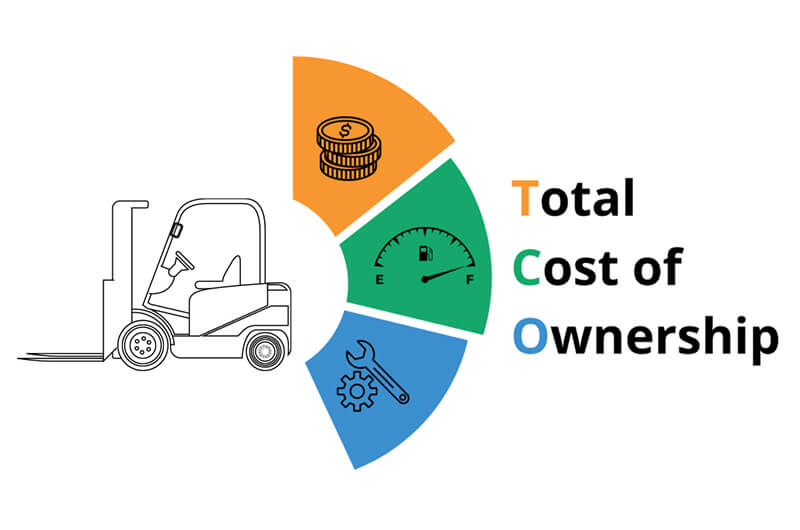
Total Cost of Ownership of a Lithium Battery for Port Forklifts
Short answer: TCO adds everything the battery costs across its life — initial purchase, electricity, maintenance, labor, downtime and eventual replacement — and that sum, not the purchase price, is the number a fleet decision should rest on. In multi-shift port operations, lithium’s TCO advantage typically outweighs its higher purchase price substantially.
The components, and where the money actually moves:
Initial cost. The battery and charger purchase. For lead-acid, include the second battery per truck, the battery-changing equipment, and the battery room build-out — these are part of the lead-acid system’s real acquisition cost, and they’re routinely omitted from price comparisons. Lithium’s upfront figure is higher but buys a complete system: one battery, chargers, done.
Electricity. Round-trip efficiency ~95% for lithium vs. ~80% for lead-acid, applied to every kWh the fleet consumes — thousands per truck per year in multi-shift duty. Lithium’s efficiency edge compounds across the fleet and the years, and terminal electricity is not cheap.
Maintenance. Lead-acid: watering, terminal cleaning, equalization charges, battery room upkeep — recurring, forever. Lithium: essentially none. The line item doesn’t shrink; it disappears.
Labor. This is the one ports feel first. Every daily battery swap takes minutes of two people’s time and a slice of truck availability; every maintenance task takes a technician off other work. At port labor rates across a fleet across a year, battery-related labor is a serious number — and it’s the one that most often surprises fleet managers who have simply budgeted it for years as “the way things are.”
Downtime. The hardest number to book and the easiest to underestimate. A truck unavailable for charging or swapping isn’t just idle labor — during vessel operations its downtime is priced against berth productivity. Lithium’s opportunity-charging model converts most charging downtime to zero. Many operators also value the removed safety and compliance overhead (ventilation monitoring, acid spill response, swap procedures) here.
Battery replacement. Lead-acid packs at 1,000–1,500 cycles get replaced two to three times over the period a 3,500–6,000-cycle lithium pack runs through once. Every replacement is repurchase plus downtime plus disposal. Lithium’s longer cycle life turns replacement from a recurring cost into, at most, a one-time event — with recycling programs available at end of life.
Total Cost of Ownership = Initial cost + Electricity + Maintenance + Labor + Downtime + Replacement — evaluated over the same period for both technologies, per truck, using your fleet’s actual numbers.
What consistently falls out of honest TCO modeling in multi-shift port duty: the lithium battery that looked expensive on the quote runs a meaningfully lower cost per operating hour than lead-acid, with typical fleet-level savings large enough to carry the decision on economics alone — before counting emissions reporting benefits, which increasingly matter to port customers and green-terminal programs. Single-shift indoor operations are the weaker case; ports are the strong one.
BSLBATT Lithium Battery Solutions for Port Forklifts
By now the requirements are on the table. Here’s how BSLBATT’s forklift battery systems map against them — using the same requirement → battery requirement → solution structure you’d apply to any supplier.
First, the company in brief. BSLBATT, founded in 2011 and headquartered in Guangdong, China, is a LiFePO4 battery manufacturer focused on industrial vehicles and heavy equipment — forklifts, material handling equipment, aerial work platforms, AGV/AMR systems, mining and agricultural machinery, plus industrial energy storage. Over 150,000 batteries have been deployed worldwide, annual delivery capacity exceeds 3 GWh, and deliveries reach 118+ countries through 10 overseas offices and a global distributor network. Manufacturing runs under ISO 9001, with forklift batteries certified to UL 2580, UN 38.3, CE and CB among others, and the company holds 80+ core patents in lithium battery technology.
Now the port-relevant mapping:
Heavy-duty port operation → Continuous high-current delivery with stable voltage under simultaneous travel, lift and steer → BSLBATT LiFePO4 traction batteries in 24V, 36V, 48V and 80V systems, built with prismatic LFP cells and a 32-bit BMS with cell-level voltage and temperature sampling, active and passive equalization, and CAN communication with the truck — rated for 3,500+ standard cycles, with high-performance configurations exceeding 6,000.
Multi-shift, no-time-to-charge operation → Opportunity charging with no cool-down, high charge acceptance → Batteries designed to charge from empty to full in around two hours on matched chargers (SPE, FRONIUS, Delta-Q and ECOTEC compatibility), with fast partial top-ups during breaks. The pack can stay on the charger whenever idle — the BMS terminates charge when full.
Outdoor port conditions — rain, salt fog, washdown → Real ingress protection and corrosion resistance → Steel enclosures with waterproof gasketing, IP54 standard with IP65-rated construction, maintaining performance through washdown, outdoor storage and high-humidity conditions, with REMA and Anderson connector systems rated for the current and the environment.
Intensive operation in hot climates → Temperature management that protects cycle life → An active thermal module: cell layout that maximizes natural convection, plus a temperature-activated cooling fan that reduces pack temperature by 5–10 °C under heavy load, and connectors with integrated temperature sensing that trim charge current when connector-side heat builds during opportunity charging. Discharge range spans –20 °C to 55 °C. For winter ports, dedicated low-temperature packages extend operation to roughly –30 °C (–22 °F).
Safety requirements in a port environment → Layered protection from chemistry to fire containment → LFP chemistry as the thermal foundation; multi-level BMS fault protection in an IP65-sealed housing that opens the contactor on critical faults; and a built-in automatic aerosol fire suppression system — standard, not optional — that activates at approximately 170 °C to stop a cell-level thermal event before it propagates, with feedback to the BMS. Certified to UL 2580 and IEC standards, and backed by an 8-year warranty covering capacity retention, with PICC product liability insurance behind it.
Fleet visibility → Remote monitoring across the yard → Every unit connects to BSL Cloud over WiFi — live state of charge, performance data, cycle history and fault alerts, accessible in 13 languages, so a fleet manager sees battery health across the port without walking it.
Retrofit into the trucks you already own → Drop-in fit and counterweight integrity → Packs built to match standard lead-acid tray dimensions without frame modification, in counterweight configurations (ballast beneath the cells for low center of gravity, or perimetric weight distribution for reach trucks), with customized weight and tray dimensions available.
The right way to start is the same one recommended throughout this guide: not with an order, but with your truck list, duty data and environment profile. BSLBATT’s engineering team works from those to a specification and a TCO comparison — and for heavier port equipment beyond counterbalance trucks, custom pack development is available for applications like reach stackers and empty container handlers.
Frequently Asked Questions
Can I retrofit my existing electric port forklifts with lithium batteries?
In most cases yes. Quality lithium batteries are built to match standard lead-acid tray dimensions and connect to the truck’s CAN system, so the retrofit is mechanical and electrical, not structural. Verify per truck: compartment dimensions, counterweight implications, connector type and charger replacement. A competent supplier confirms fitment before quoting.
How long does a lithium battery for port forklifts last?
Quality industrial LFP packs are rated for 3,000–5,000+ full-equivalent cycles. In two-shift port duty that typically means 8–10+ years — frequently longer than the truck’s first life. Actual life depends on depth of discharge, temperature exposure and charging discipline; opportunity charging at partial states of discharge actually favors longevity.
Do lithium forklift batteries handle salt air and rain?
A properly engineered industrial lithium battery does — sealed enclosure (IP54 minimum, IP65 for exposed duty), gasketed steel construction, corrosion-resistant connectors. This is exactly where battery quality differs between suppliers, so verify the IP rating and ask about salt-fog exposure validation rather than assuming.
Can lithium forklift batteries charge in freezing conditions?
LFP cells shouldn’t be charged below 0 °C unless the pack manages it. Discharging in cold is fine. Winter ports should specify packs with integrated heating, charge-temperature logic in the BMS, or a low-temperature package — all standard options from experienced suppliers.
Can I use my existing chargers with a new lithium battery?
Possibly. Chargers that can be reprogrammed for the battery’s charge profile and validated by the supplier’s engineering team can often be reused. This is a per-model question — get it tested and approved in writing rather than assuming either way.
Is lithium worth the higher upfront cost for a port fleet?
In multi-shift port duty, almost always: eliminated battery swaps and maintenance labor, lower charging losses, no second and third battery purchases, and 2–3× longer pack life typically combine into substantially lower TCO over the fleet’s life. The case weakens for single-shift light indoor duty — which is not what ports are.
Do lithium forklift batteries need watering or maintenance?
No. LFP batteries are sealed and maintenance-free — no watering, no equalization, no terminal cleaning. Routine attention amounts to keeping connectors clean and respecting BMS temperature guidance.
What certifications should a port forklift lithium battery carry?
Prioritize IEC 62619 (industrial lithium battery safety, explicitly covering forklifts), UL 2580 (battery systems for industrial trucks), UN 38.3 for transport, and ISO 9001 manufacturing, with CE and CB depending on your market. Request the certificates — a serious supplier has them ready.
The Bottom Line
Choosing a lithium battery for port forklifts is an engineering decision before it’s a purchasing decision. The port’s conditions — heavy loads, non-stop shifts, salt air, temperature extremes — set requirements the battery has to meet on current capability, cycle life, sealing, thermal management and safety engineering. Meet them, and lithium’s opportunity-charging model changes how the fleet operates: no battery room, no swaps, no maintenance windows, consistent power all shift, at a lower cost per operating hour than lead-acid over the battery’s life. Miss them, and you’ve bought an expensive battery that disappoints on the quay.
The specification sections of this guide are the checklist. Apply them to any supplier — including us.
Talk to BSLBATT About Your Port Fleet
If you’re evaluating lithium batteries for port forklifts, reach stackers or container handlers — as a port operator, fleet manager, forklift dealer, or battery distributor — the productive next step is a technical conversation, not a quote request.
Send us your truck list, duty profile and operating environment, and the BSLBATT engineering team will come back with:
- A battery specification matched to each truck class in your fleet
- Forklift compatibility verification for your existing equipment
- A TCO comparison built on your actual energy and labor costs
- Charging solution design — charger selection and opportunity-charging layout for your terminal
- Custom pack options for heavy port equipment and special applications
Contact BSLBATT — Request a Battery Specification and TCO Analysis

Related Product Recommendations
-
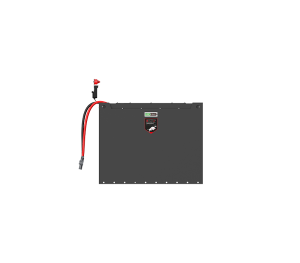
83.2V 1380AH
80V Forklift Battery 1380Ah for Heavy-Duty Use | BSLBATT
Learn More -
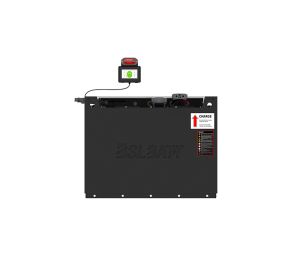
96V 690AH
Heavy Equipment Battery 83.2V 690Ah Port Grade Lithium | BSLBATT
Learn More -
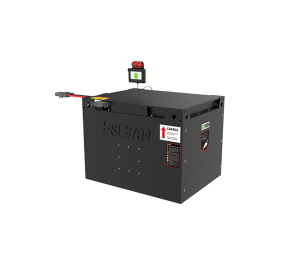
80V 410AH
Heavy-Duty 80V Fork Truck Battery High-Capacity 410Ah Lithium Power | BSLBATT
Learn More -
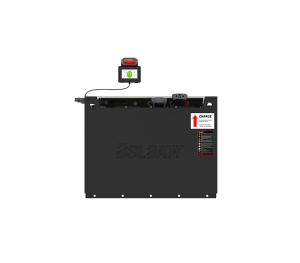
83.2V 612AH
83.2V Forklift Truck Batteries for Sale 612Ah Lithium | BSLBATT
Learn More -
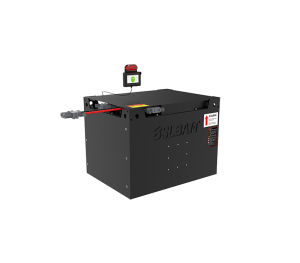
80V 560AH
Fork Truck Batteries for Sale 80V 560Ah High-Performance Lithium | BSLBATT
Learn More