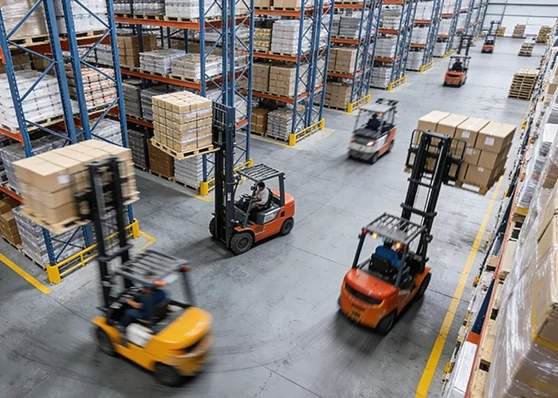
Walk onto the floor of a busy distribution center at 2 a.m. and you’ll see two very different kinds of machines doing what looks, at first glance, like the same job. One vehicle glides along a painted line or a buried magnetic strip, stopping precisely at a marked pickup point before continuing down the same corridor it has used ten thousand times before. A few aisles over, another vehicle takes a slightly different path than it did an hour ago, slowing to let a forklift pass, rerouting around a pallet that wasn’t there during the last shift, and adjusting its speed as it merges into a busier zone near the packing stations.
Both machines are doing useful, automated work. Both run on lithium batteries. But the way they move, and the way they consume energy, are not the same thing at all — and that difference matters a great deal once you get past the marketing language and into the engineering.
This is where the conversation about Automated Guided Vehicles (AGVs) and Autonomous Mobile Robots (AMRs) usually starts and, unfortunately, usually stops. Most explainers cover navigation technology and call it a day. Fewer go the extra step to ask a more practical question: if these two vehicle classes work so differently, why would anyone assume they need the same kind of battery?
They don’t, necessarily. And understanding why is useful whether you’re specifying a fleet, designing a chassis, or sourcing power systems as an OEM.
What’s the Main Difference Between an AGV and an AMR?
An AGV (Automated Guided Vehicle) follows a fixed, predetermined path — typically defined by magnetic tape, floor-embedded wires, QR codes, or reflective markers — and requires a structured environment to operate safely. An AMR (Autonomous Mobile Robot) navigates dynamically, using onboard sensors such as LiDAR, cameras, and SLAM (Simultaneous Localization and Mapping) software to build a live map of its surroundings and choose its own route in real time.
That single distinction — fixed guidance versus dynamic navigation — cascades into almost every other difference between the two vehicle types.
Navigation and Guidance
AGVs rely on infrastructure. Magnetic tape, embedded wires, or optical tracking strips tell the vehicle exactly where to go, and the vehicle has very little decision-making authority outside of that path. This makes AGVs predictable and relatively simple to validate for safety, but it also means any change to the workflow — a new pickup zone, a rearranged aisle — usually requires physically modifying the guidance infrastructure.
AMRs carry their intelligence onboard. They build and continuously update a map of the facility, localize themselves within it, and calculate paths on the fly. If a pallet is left in the aisle or a colleague walks through, the AMR replans around it instead of stopping and waiting, or worse, colliding.
Flexibility and Deployment
Because AGVs depend on fixed guidance infrastructure, deploying or reconfiguring a fleet tends to involve more upfront installation work — tape runs, wire trenching, marker placement — and more downtime when routes change. AMRs are generally faster to deploy since they map the space themselves, and they adapt more easily when a facility’s layout shifts, which is common in operations with seasonal SKU changes or shared warehouse space.
Obstacle Handling and Environmental Adaptability
AGVs typically use basic safety sensors (bumpers, simple laser scanners) to stop when something blocks the path, since the path itself is assumed to be predictable. AMRs are built to expect the unexpected — dynamic obstacle avoidance is a core design requirement, not a safety fallback, because AMRs are frequently deployed in mixed environments where people, forklifts, and other robots share the same floor space.
Comparison Table — AGV vs. AMR at a Glance
| Factor | AGV | AMR |
|---|
| Navigation | Fixed path (tape, wire, markers) | Dynamic (LiDAR, cameras, SLAM) |
| Route flexibility | Low — requires infrastructure changes | High — replans in real time |
| Deployment speed | Slower, more installation work | Faster, minimal fixed infrastructure |
| Obstacle handling | Basic stop-and-wait behavior | Active dynamic avoidance |
| Typical use case | Repetitive, high-volume transport | Mixed-traffic, variable-task environments |
| System complexity | Lower | Higher (sensor fusion, mapping software) |
None of this makes one vehicle type inherently “better” — AGVs remain the right tool for high-throughput, repetitive transport where predictability and lower system cost matter more than flexibility. AMRs earn their keep in environments where layouts change often or where robots must safely share space with people.
Why Working Patterns Change the Power Equation
Here’s where most AGV-vs-AMR content stops short. The navigation difference isn’t just an engineering curiosity — it directly shapes how each vehicle type consumes energy over the course of a shift, which in turn shapes what the battery underneath it needs to do.
How AGVs Typically Draw Power
Because AGVs run the same or similar routes repeatedly, their energy consumption tends to be more predictable. A given AGV on a given route will, in many cases, draw a fairly consistent amount of power trip after trip. This predictability supports several practical patterns:
- Repetitive routes with known travel distances, which make it easier to calculate daily energy draw with reasonable accuracy
- Scheduled charging, since operators can often anticipate low-traffic windows or shift breaks
- Fixed operating cycles, particularly in single-shift or two-shift facilities where the fleet has defined active and idle periods
- Known energy consumption patterns, which simplify battery sizing during the design phase
This doesn’t mean every AGV deployment is simple. Heavy-load AGVs used for towing or high-bay stacking can draw substantial peak current even on a fixed route. But the variability of the load — how much it changes from cycle to cycle — tends to be lower than what you’ll see in an AMR fleet.
How AMRs Typically Draw Power
AMRs, by contrast, often operate with a wider spread of conditions from one task to the next:
- Dynamic routes and variable travel distances, since the vehicle is replanning based on real-time conditions
- Frequent acceleration and deceleration, driven by obstacle avoidance, tight turns, and mixed-traffic navigation
- Changing payloads, especially in piece-picking or order-fulfillment applications where the robot might carry a light tote on one trip and a nearly full one on the next
- More unpredictable duty cycles, making it harder to model exact energy draw in advance
- Opportunity charging, where the robot tops up during short idle windows rather than taking a long, scheduled break
- Continuous or near-continuous operation, particularly in 24/7 fulfillment environments where the fleet is expected to keep working with minimal planned downtime
None of these traits are absolute rules — a simple point-to-point AMR shuttle can behave a lot like an AGV in terms of energy draw, and a large heavy-load AGV fleet can have its own charging complexity. But as a general pattern, AMR duty cycles tend to be less predictable, which changes what a battery needs to do well.
The practical takeaway: battery selection should be based on the actual operating profile of the vehicle, not simply on voltage and capacity numbers pulled from a spec sheet. A battery that performs well on a slow, predictable AGV route may struggle with the sharper current spikes and irregular charging windows of a busy AMR fleet — and vice versa, a battery over-engineered for AMR-style duty cycles may add unnecessary cost and weight to a simple AGV application.
AGV Battery Requirements vs. AMR Battery Requirements
Once the operating profile is understood, the next step is translating it into concrete battery specifications. Depending on the application, the priorities can look quite different.
| Battery Consideration | Typical AGV Requirement | Typical AMR Requirement |
|---|
| Voltage & capacity | Sized to a known, repeatable duty cycle | Sized with margin for variable payloads and routes |
| Peak discharge capability | Moderate, unless heavy-load towing/stacking | Often higher, due to frequent acceleration and obstacle-avoidance maneuvers |
| Continuous discharge | Steadier, more predictable | More variable, depending on task mix |
| Cycle life | Important for high-volume, multi-shift use | Often critical, given frequent partial charges |
| Charging speed | Can often use scheduled, longer charge windows | Frequently needs fast opportunity charging |
| Installation space | Depends heavily on chassis design | Often tighter, compact modular footprints are common |
| Weight | Balanced against payload and stability needs | Balanced against maneuverability and turning dynamics |
| BMS requirements | Standard protection, SOC monitoring | Often needs finer-grained data for fleet-wide health tracking |
| Communication protocol | CAN bus, RS485, or application-specific | Frequently includes wireless monitoring (e.g., Bluetooth) for fleet management |
| Thermal management | Depends on environment and duty cycle | Depends on environment and near-continuous use patterns |
| Operating temperature | Facility-dependent | Facility-dependent, sometimes multi-environment (cold storage to ambient) |
| Reliability/maintenance | Low-maintenance expected across fleet | Low-maintenance expected, often at larger fleet scale |
| Monitoring & data | Basic SOC/voltage monitoring often sufficient | Remote, app-based fleet monitoring increasingly expected |
A few things are worth underlining here. First, none of these differences are absolute — a high-throughput AGV fleet running three shifts a day may need opportunity charging just as much as an AMR fleet does. Second, physical integration constraints often matter as much as electrical specifications: AMR platforms in particular are frequently designed with tight, irregular battery compartments that rule out off-the-shelf pack shapes. Third, communication and monitoring needs tend to scale with fleet size and operational complexity more than with vehicle type alone — a 200-unit AMR fleet has very different remote-monitoring needs than a two-unit AGV pilot line.
The practical implication for OEMs and integrators: battery configuration is rarely a one-size-fits-all decision, even within a single product family. Two AGV models from the same manufacturer, built for different applications, can have meaningfully different battery requirements once duty cycle, space, and charging infrastructure are factored in.
Charging Strategy: Why It’s Not Just About Speed
It’s tempting to think of charging strategy purely in terms of how fast a battery can top up. In practice, the right strategy depends on a broader set of operational factors.
Scheduled Charging for Predictable Fleets
In facilities where AGVs run known routes on a known schedule, traditional scheduled charging — plugging in during a break, a shift change, or overnight — often works well. It’s simpler to manage, requires less charging infrastructure per vehicle, and aligns naturally with predictable duty cycles.
Opportunity Charging for Dynamic Fleets
For AMRs, and for AGVs operating in high-utilization, low-downtime environments, opportunity charging (also called top-up or partial charging) is often more practical. The vehicle returns to a charging point during short idle windows — while waiting for a task, during a queue delay, or between assignments — and picks up enough charge to keep working without a dedicated long break. This approach depends on a battery and BMS combination designed to handle frequent partial charge-discharge cycles without accelerated degradation, and it typically pairs with automatic or contact-based charging docks so the vehicle can charge without human intervention.
Matching Charging Strategy to Fleet Size and Uptime Targets
Charging strategy shouldn’t be decided in isolation from the rest of the operation. It needs to account for:
- Fleet size — larger fleets often need more distributed charging infrastructure to avoid bottlenecks
- Operating hours — a single-shift operation has very different charging windows than a 24/7 fulfillment center
- Daily duty cycle — how much of the day the fleet is actually in motion versus idle
- Charging infrastructure — the number, placement, and type of charging stations available
- Available downtime — natural breaks in the workflow that can be used for charging without disrupting throughput
- Required system uptime — how much tolerance the operation has for vehicles being offline to charge
There’s no universal “right” answer here. A facility running lean staffing on a single shift may do perfectly well with scheduled overnight charging, even for an AMR fleet. A high-volume, round-the-clock fulfillment center may need opportunity charging even for a simple AGV shuttle route, simply because there’s no idle window long enough for a full charge. The charging strategy should follow from the operational constraints, not the other way around.
Why LiFePO4 Is Often a Strong Fit for Industrial Mobile Robotics
Lithium iron phosphate (LiFePO4, sometimes written LFP) has become a common chemistry choice for AGV and AMR battery packs, and for reasons that go beyond marketing appeal.
Compared to other lithium chemistries, LiFePO4 is known for being chemically and thermally stable, which contributes to a lower risk of thermal runaway — a meaningful consideration for equipment that often operates unattended, in mixed-traffic environments, or in enclosed warehouse spaces. It also typically supports a long cycle life, frequently in the range of several thousand cycles depending on depth of discharge and pack design, which matters directly for AMR-style fleets that rely on frequent partial charging rather than a single deep cycle per day. LiFePO4 packs are also generally low-maintenance compared to lead-acid alternatives — no watering, no acid handling, no equalization charging — and depending on the battery and charging system design, can support fast charging and opportunity charging patterns well suited to continuous-operation robotics.
None of this means LiFePO4 is automatically the right choice for every AGV or AMR application. Chemistry selection should still be driven by the vehicle’s actual operating requirements — voltage class, space constraints, thermal environment, and duty cycle — rather than assumed by default. But for many industrial mobile robotics applications, LiFePO4’s combination of safety, cycle life, and charging flexibility makes it a strong starting point for the conversation. You can read more about how lithium chemistry compares to lead-acid technology for industrial applications.
Finding a Battery Partner That Designs Around the Vehicle, Not the Other Way Around
Once an AGV or AMR manufacturer has a clear picture of its real energy profile — peak and average power draw, duty cycle variability, available installation space, and realistic charging windows — the next challenge usually isn’t chemistry. It’s finding a battery partner capable of adapting the pack to the vehicle, instead of asking the vehicle to be redesigned around a standard battery shape.
This is the point where BSLBATT, as an industrial lithium battery manufacturer, becomes a relevant part of the conversation.
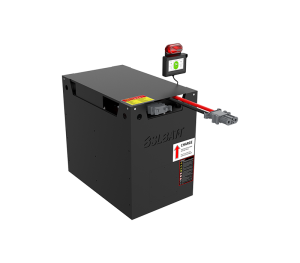
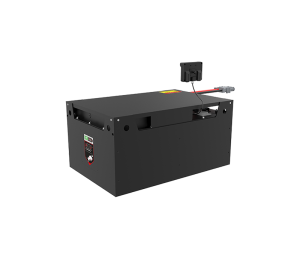
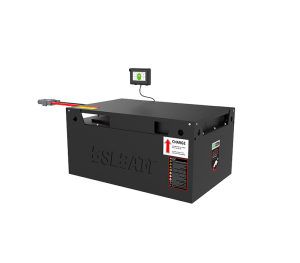
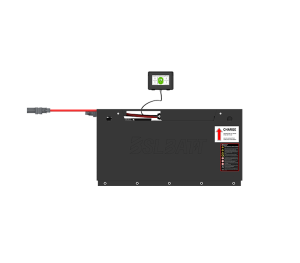
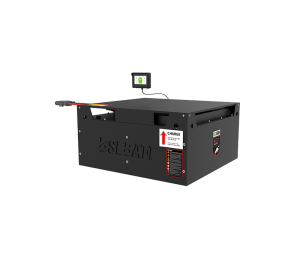
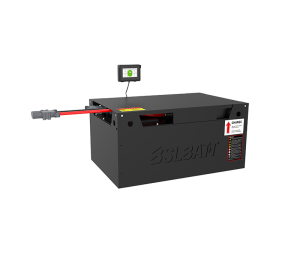
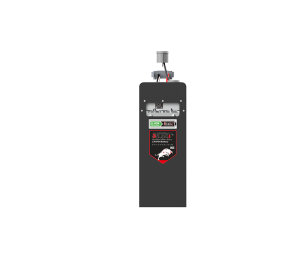
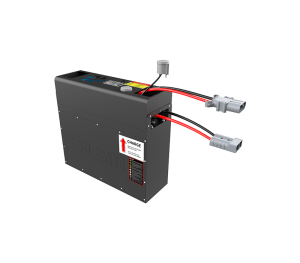
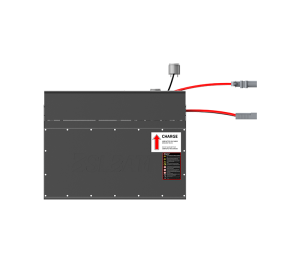
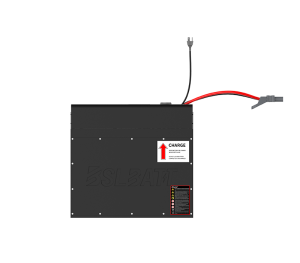
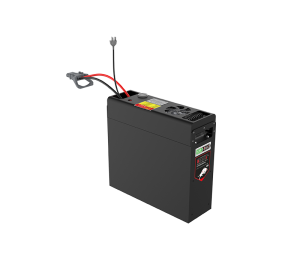
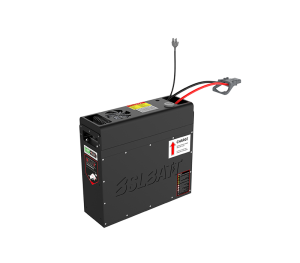
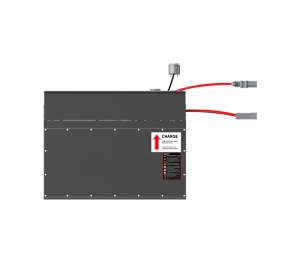
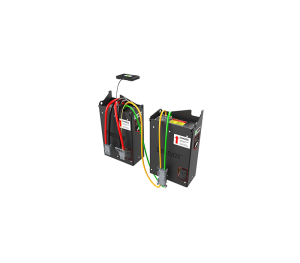
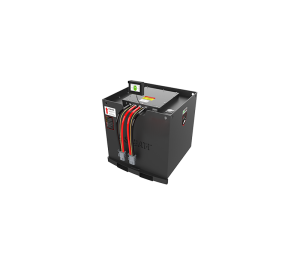
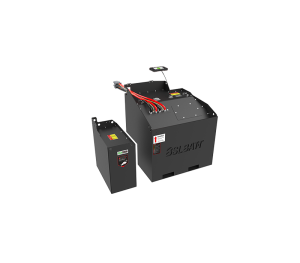
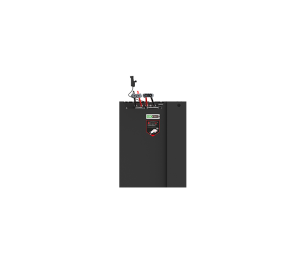
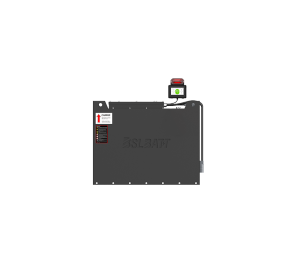
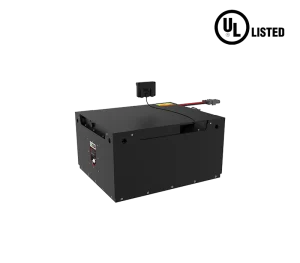
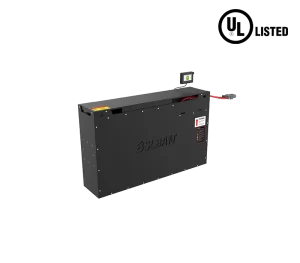
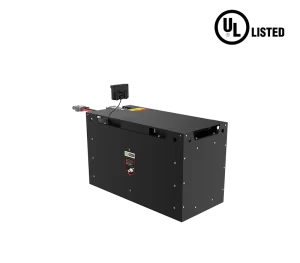
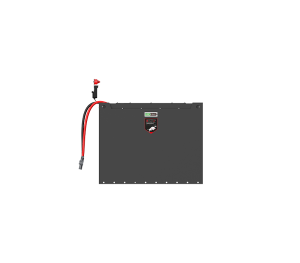
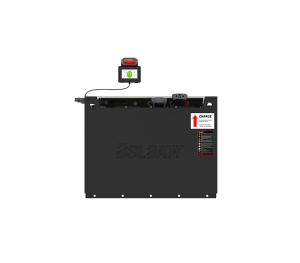
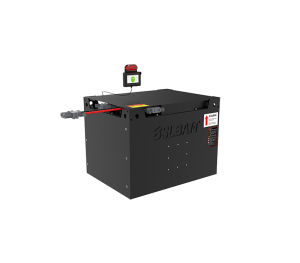
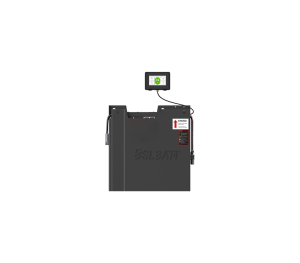
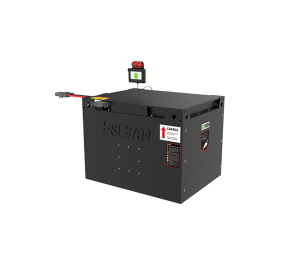
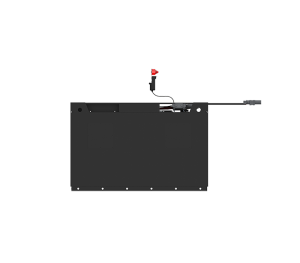
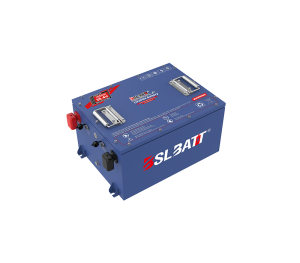
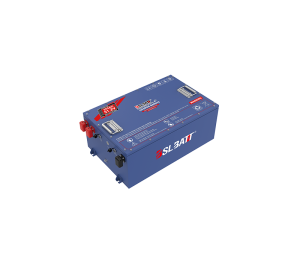
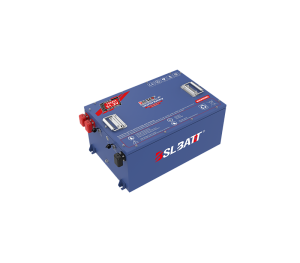
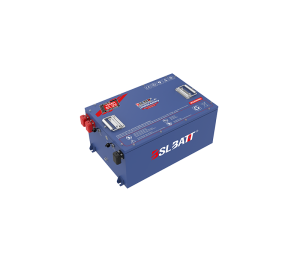
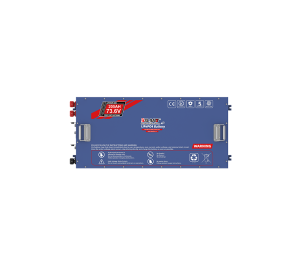
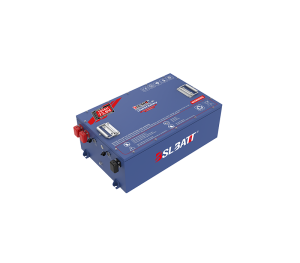
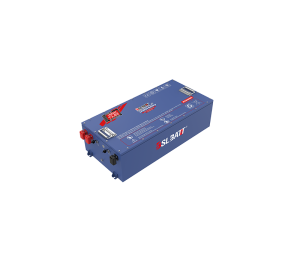
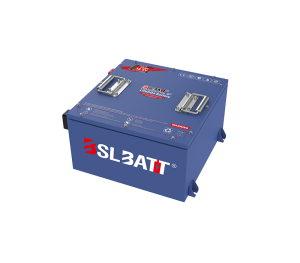
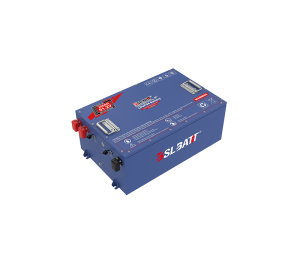
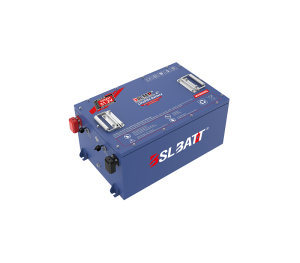
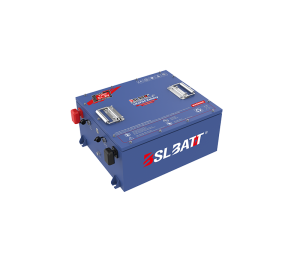
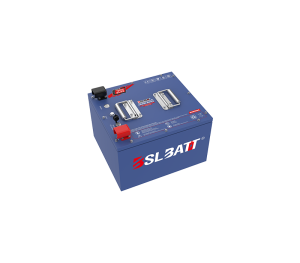
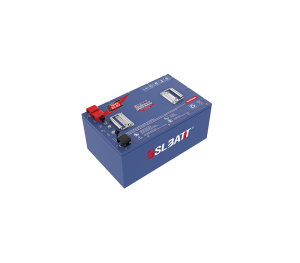
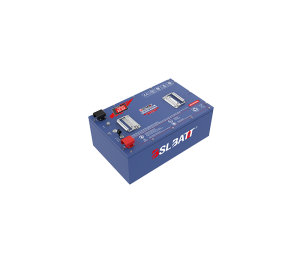
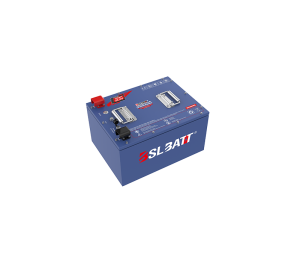
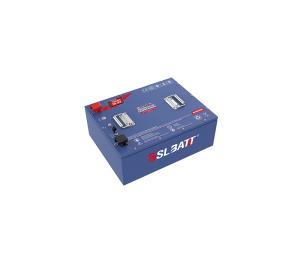
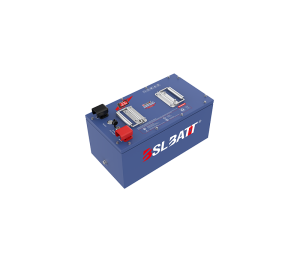
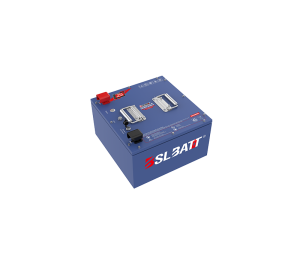
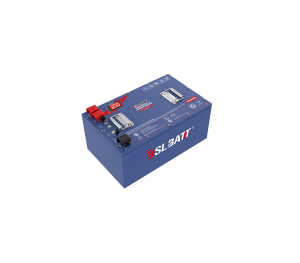
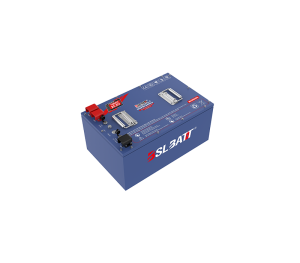
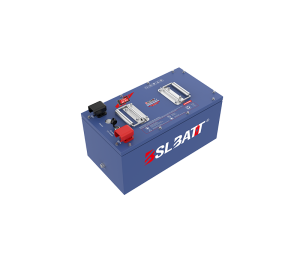
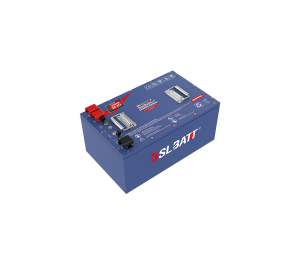
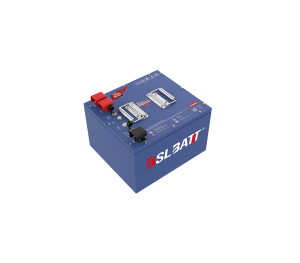
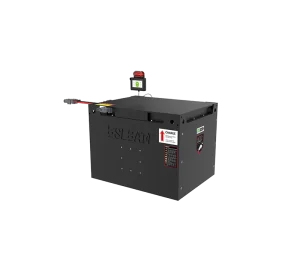
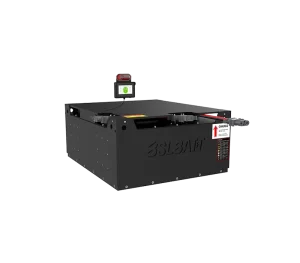
BSLBATT designs and manufactures LiFePO4 battery systems for a range of industrial equipment categories, including lithium battery solutions built specifically for AGV and AMR logistics applications. For automated logistics platforms, that includes a compact, modular pack design intended to fit tight chassis space, support for fast opportunity charging so fleets can top up during short idle windows, an intelligent BMS to guard against overcharging, short circuits, and overheating, and built-in Bluetooth connectivity so maintenance teams can check voltage, temperature, and state-of-charge data remotely across a fleet rather than pulling each unit for inspection.
For OEMs and integrators evaluating a supplier, a few capabilities tend to matter most:
- Customized battery configurations across different voltage and capacity requirements, rather than a fixed catalog of one-size-fits-all packs
- BMS integration that goes beyond basic protection into fleet-level monitoring and diagnostics
- OEM/ODM support, allowing the battery system to be engineered around an existing chassis and duty cycle rather than the reverse
- Safety-focused design, including protection against thermal and electrical faults appropriate to unattended, continuous-duty operation
- Experience across demanding industrial equipment, since lessons learned from forklift, ground support, and other high-duty-cycle applications often transfer directly into AGV and AMR battery design
You can browse BSLBATT’s AGV and AMR battery product line or explore the company’s broader approach to lithium battery technology, including BMS and thermal management design, to get a fuller picture of how these systems are engineered.
The point of this section isn’t to suggest that BSLBATT is the only path forward — plenty of capable battery manufacturers exist. It’s to make the case that whoever you choose, the battery partner’s ability to adapt to your equipment’s real operating profile matters more than any single spec on a datasheet.
How to Choose the Right Lithium Battery for an AGV or AMR
Before requesting quotes or comparing spec sheets, it helps to have clear answers to the following questions. Bring these to your battery supplier conversation — the more precisely you can answer them, the more accurately a supplier can size and configure a pack for your application.
How many hours per day will the vehicle operate?
Single-shift, multi-shift, or near-continuous operation changes cycle-life requirements significantly.
What is the average and peak power demand?
Peak draw during acceleration, lifting, or towing often dictates discharge requirements more than average draw does.
How frequently will the battery be charged?
Once daily, multiple times per shift, or continuously via opportunity charging.
Is opportunity charging required?
If so, the BMS and cell chemistry need to be validated for frequent partial-cycle use.
What installation space is available?
Chassis dimensions, weight limits, and mounting orientation all constrain pack design.
What voltage does the vehicle require?
Confirm compatibility with existing motor controllers and electrical systems.
What communication protocol is needed?
CAN bus, RS485, Bluetooth, or a proprietary fleet-management interface.
What operating temperatures will the vehicle experience?
Cold storage, ambient warehouse, or multi-environment operation all affect thermal design.
Is remote battery monitoring required?
Especially relevant for larger fleets where manual inspection doesn’t scale.
What safety standards or certifications are required for the target market?
Requirements vary by region and application.
Does the application require a customized battery enclosure or mechanical design?
Irregular chassis shapes are common in both AGV and AMR platforms.
If you want a starting estimate before a full engineering conversation, BSLBATT’s online battery sizing calculator can help narrow down voltage and capacity ranges based on basic vehicle parameters.
Frequently Asked Questions
What is the main difference between an AGV and an AMR?
AGVs follow a fixed, predetermined path using guidance infrastructure like magnetic tape or embedded wires. AMRs navigate dynamically using onboard sensors and mapping software, allowing them to plan their own routes and adapt to obstacles in real time.
Do AGVs and AMRs use the same type of battery?
Not necessarily. Both commonly use lithium-ion batteries, often LiFePO4, but the specific configuration — capacity, peak discharge capability, charging strategy, and BMS features — should be matched to each vehicle’s actual duty cycle rather than assumed to be identical across vehicle types.
What type of lithium battery is best for AGVs?
There’s no single “best” answer, since it depends on the application, but LiFePO4 is a common choice for AGVs due to its cycle life, thermal stability, and compatibility with scheduled or opportunity charging, depending on the specific duty cycle.
Why is opportunity charging important for AMRs?
AMRs frequently operate in dynamic, near-continuous environments where long, scheduled downtime isn’t practical. Opportunity charging lets the robot top up during short idle windows, helping maintain fleet uptime without requiring extended breaks.
How do you choose the right battery for an AGV or AMR?
Start with the vehicle’s real operating profile — hours of operation, average and peak power demand, charging frequency, available installation space, and required communication protocols — then work with a battery supplier who can configure a pack around those specifics rather than fitting the application to a standard product.
Is LiFePO4 always the right chemistry for industrial robotics?
No. LiFePO4 is a strong option for many AGV and AMR applications because of its safety profile, cycle life, and charging flexibility, but chemistry and pack design should ultimately be selected based on the vehicle’s specific voltage, space, thermal, and duty-cycle requirements.
What’s the difference between scheduled charging and opportunity charging?
Scheduled charging happens during a planned, longer downtime window, such as a shift break or overnight. Opportunity charging happens in short, unplanned idle windows throughout the day, allowing a vehicle to top up without a dedicated long charge cycle.
Can the same battery manufacturer supply both AGV and AMR batteries?
Yes, but the manufacturer should be able to configure different specifications — voltage, capacity, BMS features, enclosure design — for each vehicle type rather than offering a single standardized pack for both.
Every AGV and AMR fleet has its own energy signature — shaped by duty cycle, payload, charging infrastructure, and uptime targets. If you’re specifying a battery for a new platform or looking to solve a charging bottleneck on an existing fleet, BSLBATT’s engineering team can work through the numbers with you and configure a LiFePO4 system around your equipment rather than the other way around. Get in touch with BSLBATT to discuss your AGV or AMR power requirements, or download the product brochure for a closer look at current configurations.


 Explore all product lines