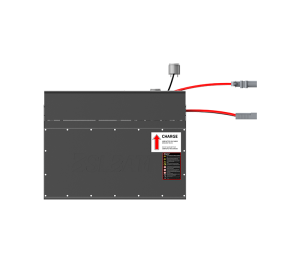
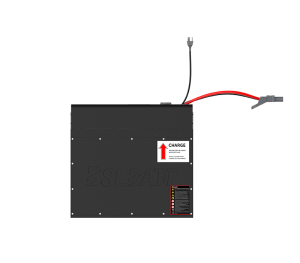
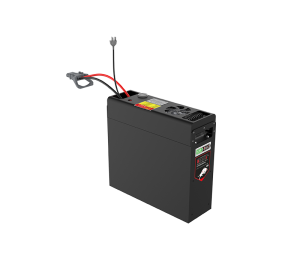
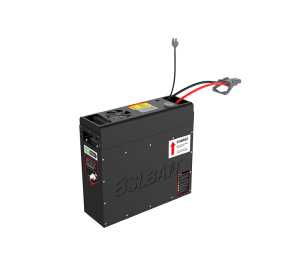
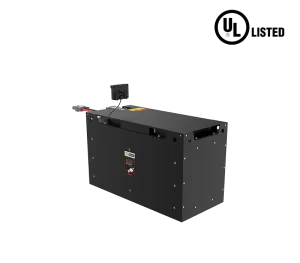
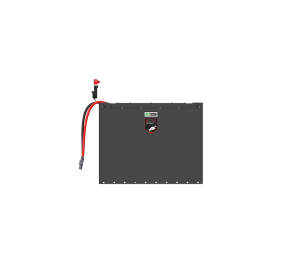
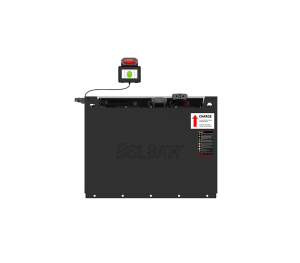
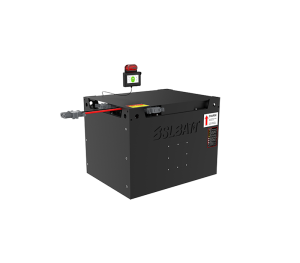
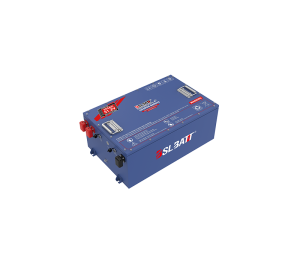
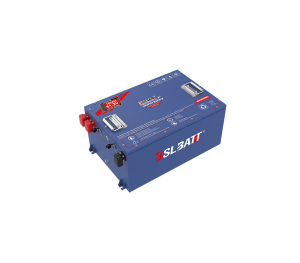
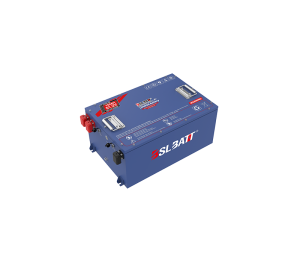
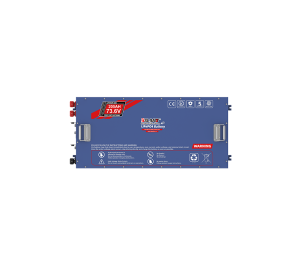
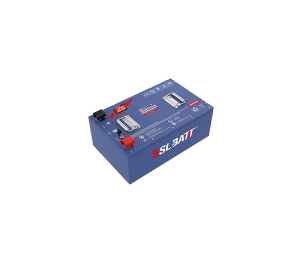
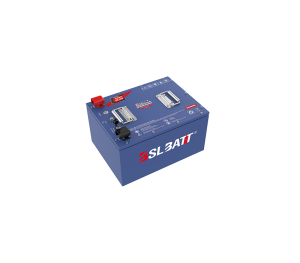
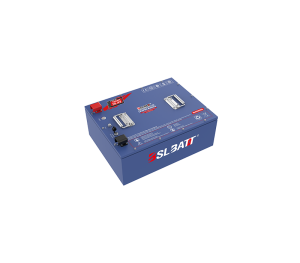
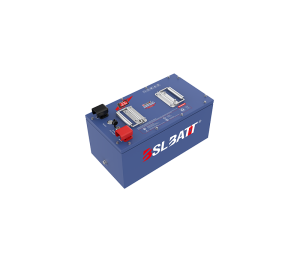
A lithium forklift battery sold in the EU is an industrial battery under Regulation (EU) 2023/1542. That one classification decides the rest: substance limits, a carbon footprint declaration, a performance document and a battery passport apply — while the stationary-storage safety rules and the BMS data duties do not.
The short answer
- Does it apply? Yes. A traction pack for a counterbalance or reach truck is an industrial battery under Article 3(1)(13), and the Regulation has applied since 18 February 2024.
- What is already due? Technical documentation, an EU declaration of conformity, CE marking, and the Article 10(1) performance and durability document — that last one since 18 August 2024.
- What is coming? The general information label (from 18 August 2026 at the earliest), then the QR code and the EU battery passport on 18 February 2027 for packs above 2 kWh.
- What does not apply? Article 12 (stationary storage safety) and Article 14 (BMS state-of-health data). Both are confined to stationary storage systems, and Article 14 extends only to LMT and EV batteries.
What Is EU Battery Regulation 2023/1542?
Regulation (EU) 2023/1542 was adopted on 12 July 2023 and replaced Directive 2006/66/EC as the single rulebook for batteries placed on the EU market. It applies from 18 February 2024. It covers the whole life of a battery: substance restrictions, carbon footprint, recycled content, electrochemical performance, safety, labelling, digital records, and what happens at end of life.
Two things are worth understanding before reading any article of it. First, the Regulation does not treat batteries as one category. Article 3 separates them into portable, SLI (starting, lighting and ignition), LMT (light means of transport), industrial and electric vehicle batteries — and each category inherits a different subset of obligations. Second, many deadlines are conditional: the text repeatedly says “from date X, or 18 months after the delegated act enters into force, whichever is later”. A date in the Regulation is an earliest possible trigger, not a guarantee that the requirement is live.
Read the consolidated version rather than the original 2023 publication, because it incorporates later amendments. And use the Commission’s batteries pages to track the delegated and implementing acts, since those acts set most of the operative dates for industrial batteries.
Where Does a Forklift Battery Fit?
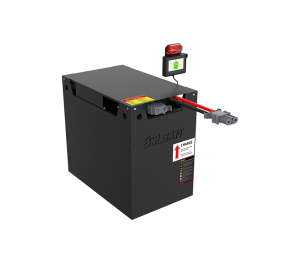
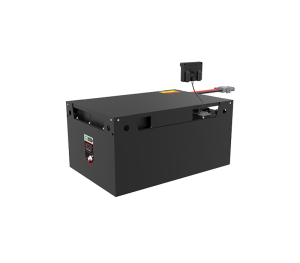
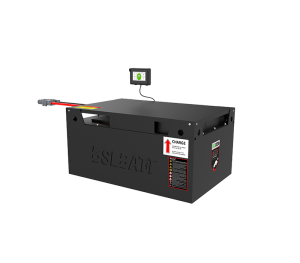
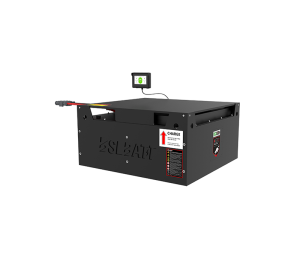
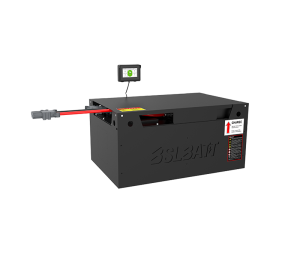
Article 3(1)(13) defines an industrial battery in three alternative ways: a battery specifically designed for industrial uses; a battery intended for industrial uses after repurposing; or any other battery weighing more than 5 kg that is not an EV, LMT or SLI battery. A forklift traction pack meets the first limb directly — and even if a supplier disputed it, a 48V 410Ah pack weighs well over 200 kg, so the third limb applies anyway.
The distinction that is most often missed is the next one. An industrial battery is not automatically a stationary battery energy storage system. Article 3(1)(15) reserves that term for an industrial battery specifically designed to store energy from, or deliver energy to, the grid or end-users. A forklift battery delivers energy to a traction motor, and it is not an EV battery either: Article 3(1)(14) confines that category to traction batteries for vehicles of categories L, M, N and O, and a forklift is mobile machinery rather than a vehicle of those categories. That single line of reasoning removes two whole articles from a forklift supplier’s obligation list.
| Requirement | Article | Applies to a forklift lithium battery? | Basis |
|---|
| Substance restrictions | Art. 6, Annex I | Yes | Mercury limit applies to all batteries; the cadmium and lead rows address portable batteries and batteries in M1/N1 vehicles |
| Carbon footprint declaration | Art. 7(1) | Yes, if rechargeable and above 2 kWh | Excludes batteries with exclusively external storage |
| Performance and durability document | Art. 10(1) | Yes, above 2 kWh | In force since 18 August 2024 |
| Recycled content | Art. 8 | Yes, above 2 kWh | Where cobalt, lead, lithium or nickel is present in active materials |
| Labelling, marking, QR code | Art. 13, Annex VI | Yes | Staged between 18 August 2025 and 18 February 2027 |
| Battery passport | Art. 77 | Yes, above 2 kWh | From 18 February 2027 |
| Supply-chain due diligence | Art. 48 | Yes, above the turnover threshold | From 18 August 2027 |
| Producer responsibility and take-back | Chapter VIII | Yes | Chapter VIII applies from 18 August 2025 |
| Stationary storage safety | Art. 12, Annex V | No | Limited to stationary battery energy storage systems |
| BMS state-of-health data | Art. 14, Annex VII | No | Limited to stationary storage, LMT and EV batteries |
| Removability and replaceability | Art. 11 | No | Portable and LMT batteries only |
The Requirements That Actually Bite
Substance restrictions (Article 6). Annex I sets a mercury limit of 0.0005% by weight that applies to every battery. Its cadmium and lead rows are narrower — they address portable batteries and, since 13 August 2026, batteries installed in M1 and N1 vehicles following the replacement of Annex I by Regulation (EU) 2026/1738. For an industrial lithium traction pack the Annex I exposure is therefore narrow, but these limits apply in addition to REACH restrictions, so a full material declaration is still the practical answer.
Carbon footprint (Article 7). Rechargeable industrial batteries above 2 kWh need a declaration expressed in kg CO2-equivalent per kWh over the expected service life, drawn up per model and per manufacturing plant, with the life-cycle breakdown set out in Annex II. The declaration date is 18 February 2026, a performance class follows on 18 August 2027 and a maximum threshold on 18 February 2029 — each one qualified by “or 18 months after the relevant Commission act enters into force, whichever is later”.
Performance and durability (Article 10). This is the one already in force. Since 18 August 2024, rechargeable industrial batteries above 2 kWh need a document giving the Annex IV Part A parameters — rated capacity and its fade, power and its fade, internal resistance and its increase, round-trip efficiency where applicable, and expected lifetime in cycles and years — together with the Part B explanation of how they were measured. Minimum values arrive later and depend on a delegated act.
Labelling (Article 13). The separate collection symbol has been required since 18 August 2025. The general information label follows, from 18 August 2026 at the earliest: manufacturer identity, category, place and date of manufacture, weight, capacity, chemistry, hazardous substances other than mercury, cadmium and lead, usable extinguishing agent, and critical raw materials above 0.1%. The QR code arrives on 18 February 2027.
Battery passport (Article 77). From 18 February 2027, industrial batteries above 2 kWh need an electronic passport, reached through the QR code and a unique identifier. It carries model and manufacturer information, material composition, carbon footprint, recycled content and end-of-life information, with different data visible to the public, to market operators and to authorities.
Due diligence (Article 48). Companies above the turnover threshold in Article 47 — a net turnover of EUR 40 million or more — must operate a supply-chain due diligence policy covering cobalt, lithium, nickel and natural graphite. The start date was moved to 18 August 2027 by Regulation (EU) 2025/1561, replacing the original 18 August 2025.
End of life (Chapter VIII). Since 18 August 2025, producers must register in each Member State where they make a battery available, finance collection and treatment under extended producer responsibility, and take back waste industrial batteries from end-users free of charge.
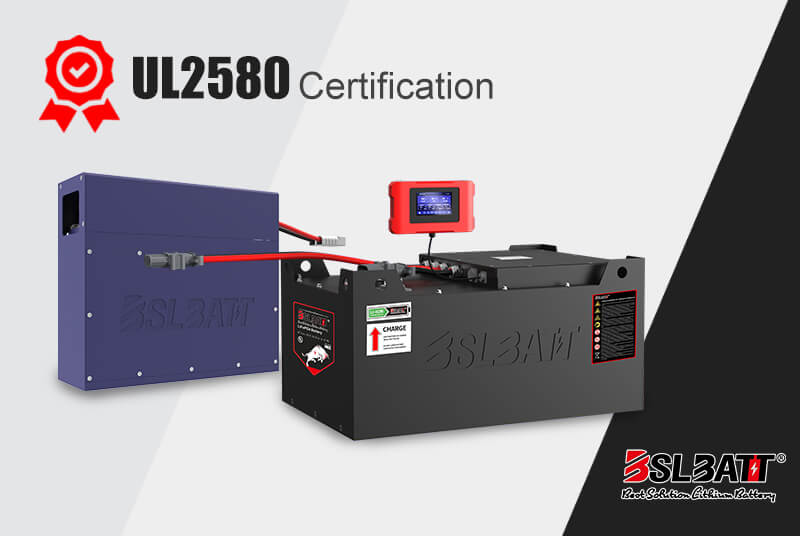
One boundary worth stating plainly: a test report against a standard such as IEC 62619 or UL 2580 is evidence about defined hazards under defined conditions. It is not, on its own, proof of compliance with Regulation (EU) 2023/1542. Compliance is produced by the conformity assessment, the technical documentation, the EU declaration of conformity and the CE marking — not by any single test.
Timeline
Dates below are taken from the consolidated text. Items marked conditional depend on a Commission act that may not yet be in force; the calendar date is the earliest possible trigger.
| Date | Requirement | Applies to | What to check |
|---|
| 18 Feb 2024 | Regulation applies (Art. 96) | All batteries | Baseline technical file for every model sold in the EU |
| 18 Aug 2024 | Conformity assessment (Art. 17), operator obligations, technical documentation, DoC, CE marking | All batteries | Annex VIII documentation set complete |
| 18 Aug 2024 | Performance and durability document (Art. 10(1)) | Rechargeable industrial above 2 kWh, LMT, EV | Annex IV Part A values plus Part B measurement basis |
| 18 Aug 2025 | Separate collection symbol (Art. 13(4)) | All batteries | Symbol size against the largest face |
| 18 Aug 2025 | Chapter VIII — registration, EPR, take-back | All batteries | Producer registration per Member State; take-back contracts |
| 18 Feb 2026 (conditional) | Carbon footprint declaration (Art. 7(1)) | Rechargeable industrial above 2 kWh | Per-model, per-plant study; Annex II breakdown |
| 13 Aug 2026 | Annex I replaced by Regulation (EU) 2026/1738 | Batteries in M1/N1 vehicles | No change for forklift packs; check which version a customer cites |
| 18 Aug 2026 (conditional) | General information label (Art. 13(1)) | All batteries | All Annex VI Part A items, including extinguishing agent |
| 18 Feb 2027 | QR code (Art. 13(6)) and battery passport (Art. 77) | Passport: industrial above 2 kWh, LMT, EV | Unique identifier, data build, hosting continuity |
| 18 Aug 2027 (conditional) | Minimum performance values (Art. 10(2)) | Rechargeable industrial above 2 kWh | Declared values against the delegated act |
| 18 Aug 2027 | Due diligence obligations (Art. 48(1)) | Operators above EUR 40 million turnover | Policy, management system, notified body verification |
| 18 Aug 2028 (conditional) | Recycled content documentation (Art. 8(1)) | Industrial above 2 kWh, EV, SLI | Supplier mass balance per model, year and plant |
| 18 Aug 2031 | Recycled content minimums: 16% Co, 85% Pb, 6% Li, 6% Ni (Art. 8(2)) | As above | Evidence held in technical documentation |
| 18 Aug 2036 | Recycled content minimums: 26% Co, 85% Pb, 12% Li, 15% Ni (Art. 8(3)) | As above, plus LMT | Supply contracts able to deliver the higher shares |
What Should Buyers Ask For?
There is a difference between documents the Regulation requires and questions a competent procurement team should ask anyway. Mixing them is how tender specifications end up demanding paperwork with no legal basis, or missing paperwork that has one.
Documents that must exist under the Regulation:
- EU declaration of conformity with the CE marking affixed (Arts. 18–19)
- Technical documentation meeting Annex VIII
- The Article 10(1) performance and durability document, for packs above 2 kWh
- Separate collection symbol on the battery, sized to Article 13(4)
- Carbon footprint declaration, once its Commission acts are in force
- From the respective dates: general information label, QR code, passport access
Questions that are good practice, but not statutory documents:
- Which cell and module suppliers are used, and what information they provide under Article 39
- Whether the BMS exposes state-of-health data — useful for fleet management, not required for a forklift pack
- Which standards the pack was tested against, and what the reports actually cover
- How the importer or distributor handles registration, take-back and end-of-life in the destination country
If you import under your own name or trademark, Article 44 treats you as the manufacturer. The obligations do not stay with the factory.
Frequently Asked Questions
Does EU Battery Regulation 2023/1542 apply to lithium forklift batteries?
Yes. A forklift traction pack is an industrial battery under Article 3(1)(13), and the Regulation has applied since 18 February 2024. What follows from that classification is narrower than most people expect: substance limits, a carbon footprint declaration, a performance document, labelling, a passport above 2 kWh and end-of-life duties — but not the stationary-storage safety rules or the BMS data duties.
What documentation should buyers request from a forklift battery supplier?
The EU declaration of conformity, the Annex VIII technical documentation and the Article 10(1) performance document, which has been required since 18 August 2024. From the staged dates, add the general information label, the QR code and passport access. Ask for carbon footprint documentation once its Commission acts are in force.
Are all forklift lithium batteries subject to the battery passport?
No. Article 77 applies the passport to LMT batteries, industrial batteries with a capacity above 2 kWh and EV batteries, from 18 February 2027. A pack of 2 kWh or less falls outside it.
What is the difference between safety testing and EU regulatory compliance?
A test report covers defined hazards under defined conditions. Compliance with Regulation (EU) 2023/1542 is a legal status produced by the conformity assessment in Article 17, the technical documentation, the EU declaration of conformity and the CE marking. One does not substitute for the other.
Which deadlines should industrial battery manufacturers watch?
The general information label from 18 August 2026 at the earliest, the QR code and battery passport on 18 February 2027, and due diligence from 18 August 2027 for operators above the EUR 40 million turnover threshold. The carbon footprint, minimum performance and recycled content dates all depend on Commission acts, so check whether those acts are in force before planning around a calendar date.
Does Article 14 require a forklift battery BMS to expose state-of-health data?
No. Article 14 covers stationary battery energy storage systems, LMT batteries and EV batteries. A forklift traction pack is none of those, so the obligation does not attach — though exposing state-of-health data remains a sensible fleet-management feature.
Where This Leaves a Forklift Battery Programme
Most of what this industrial battery regulation asks of a forklift pack is documentation, not redesign. The work that tends to be missing is the boring part: a per-model technical file, a measurement basis for the performance figures, label artwork checked against the actual lid rather than the datasheet, and a plan for who hosts the passport data.
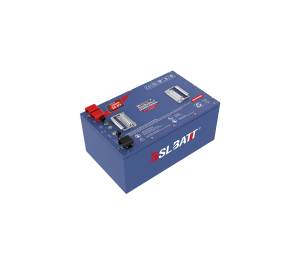
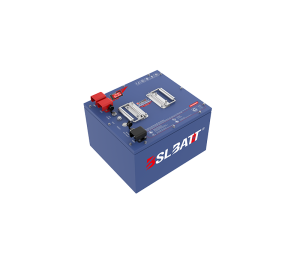
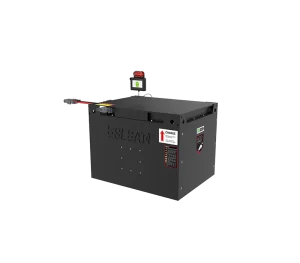
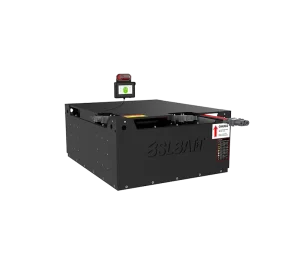
BSLBATT builds lithium battery packs for material handling equipment, and the documentation set behind each model is what a European buyer will ultimately assess. If you are mapping these requirements onto a specific truck model or import route, the BSLBATT material handling team can go through the technical file with you. Product details sit on the industrial lithium battery pages, and the engineering background is on our battery technology page.
This article summarises Regulation (EU) 2023/1542 as at 28 October 2026 and is not legal advice. Confirm the current status of the delegated and implementing acts before relying on any conditional date.


 Explore all product lines