Airports are switching ground support equipment to lithium because lead-acid cannot keep up with ramp duty cycles. Lithium packs charge in under two hours, run a full shift without a battery swap, and need no watering. For baggage tugs and pushback tractors, that means fewer delays and lower operating cost.
Why Airport GSE Is Moving Away From Lead-Acid
Ground support equipment works to a schedule that punishes downtime. A pushback tractor that loses power at the gate does not just inconvenience a crew — it ripples into taxi slot, runway queue, and on-time performance. Yet the lead-acid packs that powered this equipment for decades were designed for a different operating model: charge overnight, swap mid-shift, water weekly, replace every two to three years.
That model breaks down on a modern apron. Turnarounds are tighter, fleets run double shifts, and sustainability mandates from airport authorities increasingly target diesel and lead-acid on the ramp. Lithium — specifically LiFePO4 — removes most of the friction points at once.
| Factor | Lead-Acid on the Ramp | LiFePO4 on the Ramp |
|---|
| Charging | 8+ hours, plus cool-down; needs a ventilated battery room | Under 2 hours; opportunity charges between turns, no battery room |
| Mid-shift swaps | Routine — spare packs and changeout labor required | Not required for most single- and double-shift duty |
| Maintenance | Watering, equalizing, acid spill cleanup, corrosion | None routine; sealed pack with BMS self-monitoring |
| Voltage under load | Sags as pack discharges — weaker torque late in shift | Flat discharge curve — consistent torque to the last percent |
| Service life | Typically 1,000–1,500 cycles | Engineered for several thousand cycles and up to 10 years |
| Emissions / housekeeping | Acid handling, gassing, watering records | Sealed, no gassing, no electrolyte handling |
The Two Workhorses: Baggage Tugs vs. Pushback Tractors
“GSE” covers a wide family — belt loaders, passenger stairs, cargo loaders, pushback tugs. But when airports begin a lithium conversion, two machine types usually set the specification: the baggage tug and the pushback tractor. They look similar from a distance and are often discussed together, but their duty profiles are different enough that they should not be specified with the same pack.
| Duty Profile | Baggage Tug | Pushback Tractor |
|---|
| Primary load | Towing trains of loaded baggage carts, often six or more | Pushing back and repositioning aircraft, from narrow-body to wide-body |
| Torque pattern | Sustained pull over long distances between terminals | Very high instantaneous torque over a short, critical window |
| Duty rhythm | Near-continuous running, punctuated by gate stops | Short intense bursts, long idle waits between movements |
| Cost of failure | Missed baggage connection, delayed loading | Blocked gate, missed slot, cascading departure delay |
| What the pack needs | High sustained energy, long-distance endurance | High instantaneous current, deep reserve capacity |
Matching Voltage and Capacity to the Job
Voltage matters more on the ramp than in a warehouse. Running at 80V lets a pack deliver the same power at lower current — which means less heat in the harness, higher towing torque under full load, and steadier performance when a tug is pulling a full cart train across a large hub.
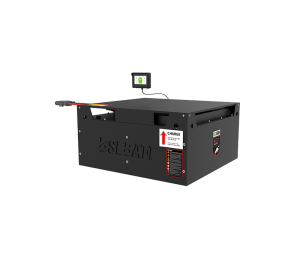
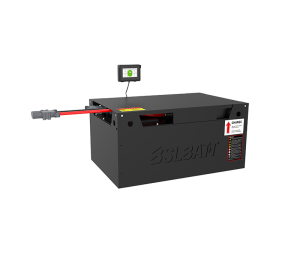
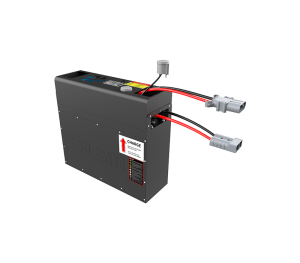
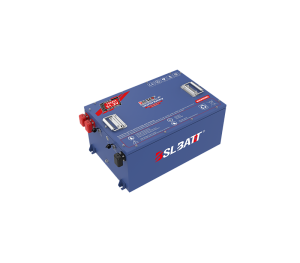
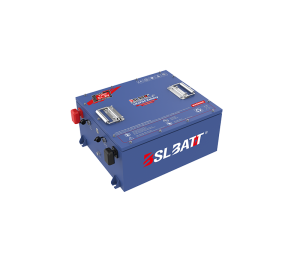
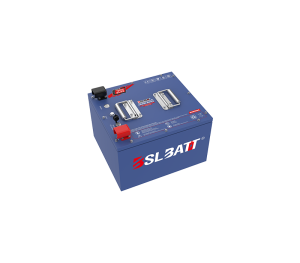
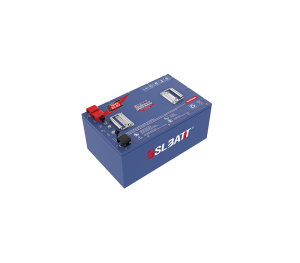
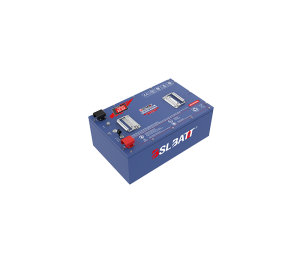
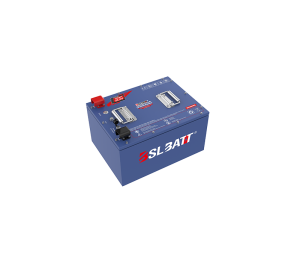
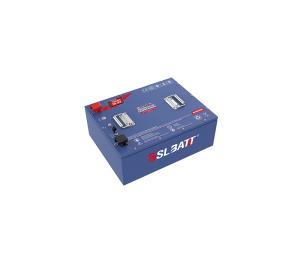
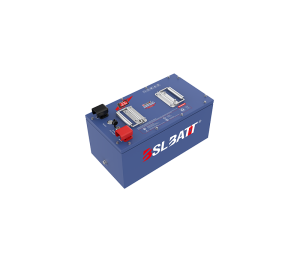
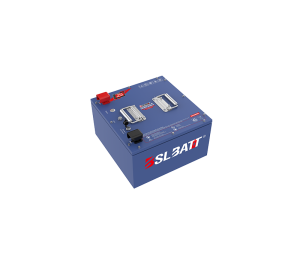
BSLBATT builds GSE packs on that 80V platform in two sizes, plus a 48V option for lighter luggage-tug duty:
| Model | Voltage / Capacity | Energy | Typical Application |
|---|
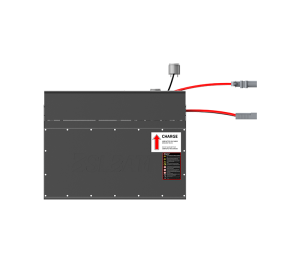
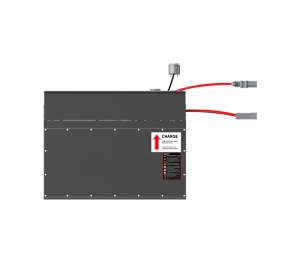
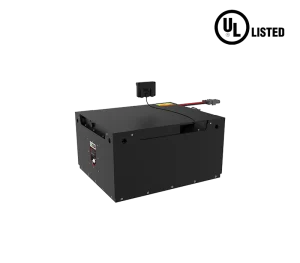
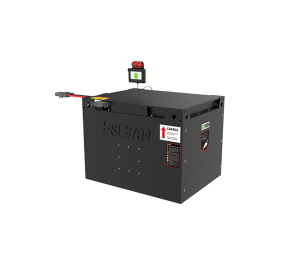
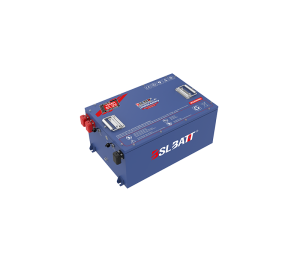
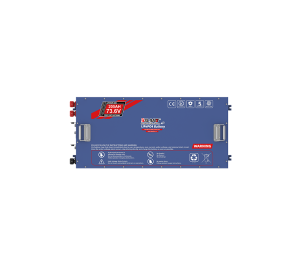
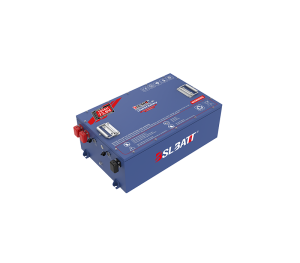
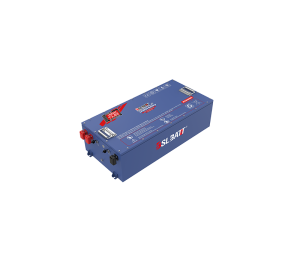
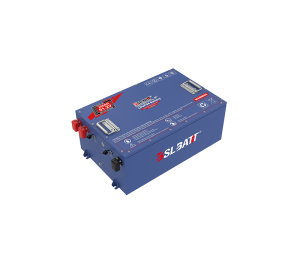
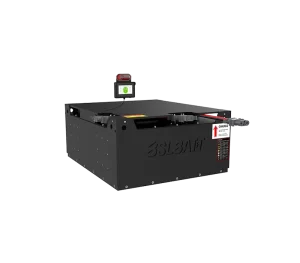
| B-LFP80-300MH | 80V (83.2V) / 300Ah | 24.96 kWh | Heavy-duty baggage tug — multi-cart trains, long taxi runs, back-to-back wide-body turnarounds |
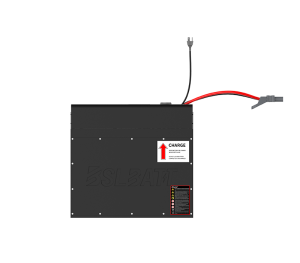
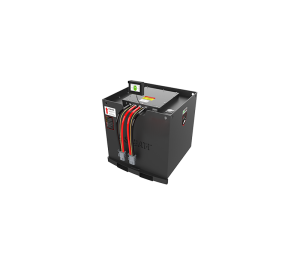
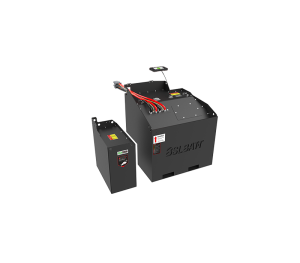
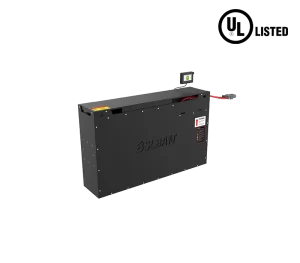
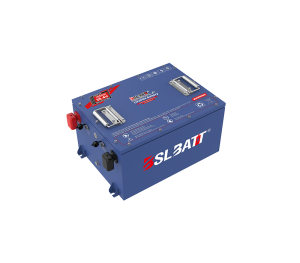
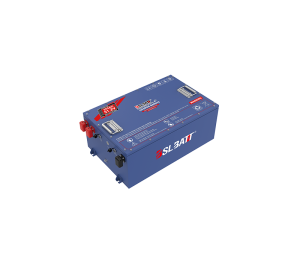
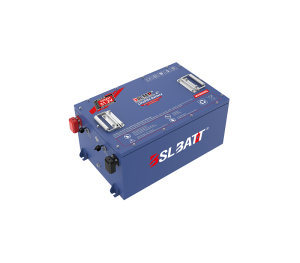
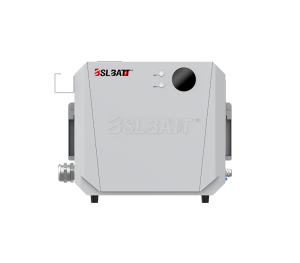
| B-LFP80-560MH | 80V / 560Ah | 44.80 kWh | Airport pushback tractor — high instantaneous torque, double-shift coverage |
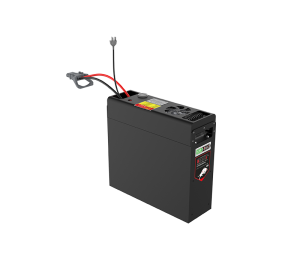
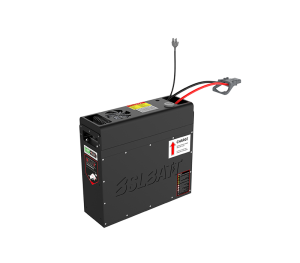
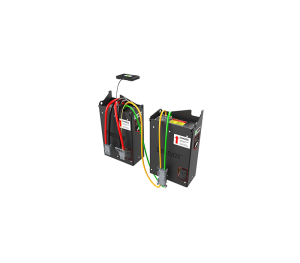
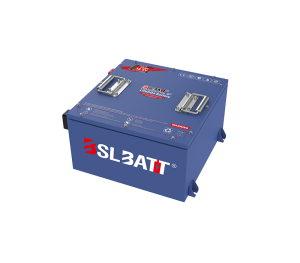
| B-LFP48-460MH | 51.2V / 460Ah | — | Lighter luggage tugs and regional-terminal duty |
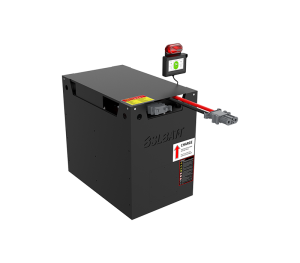
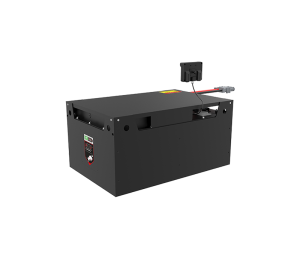
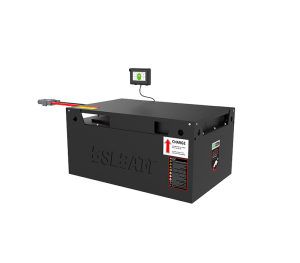
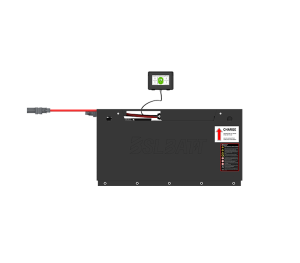
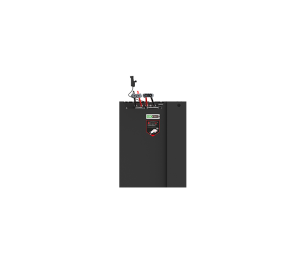
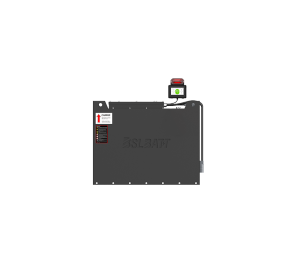
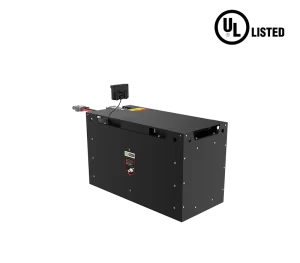
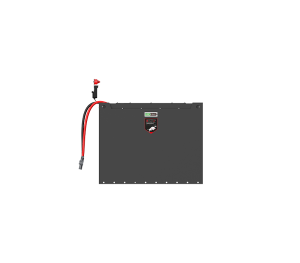
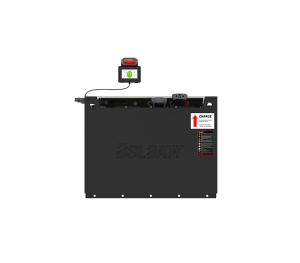
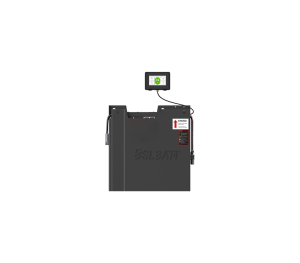
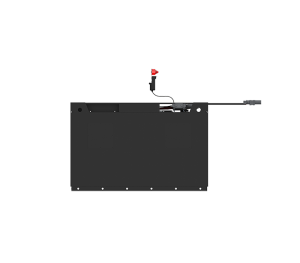
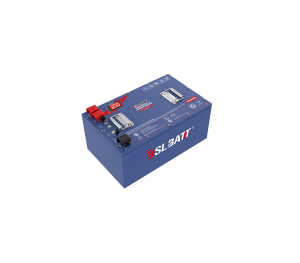
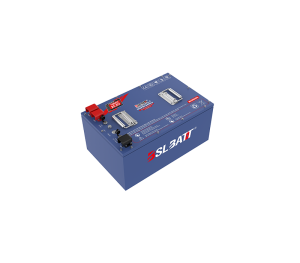
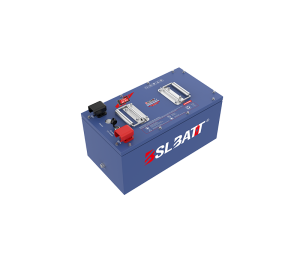
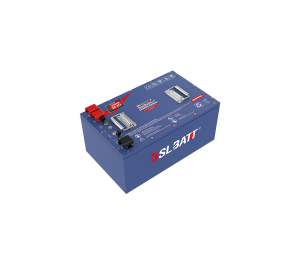
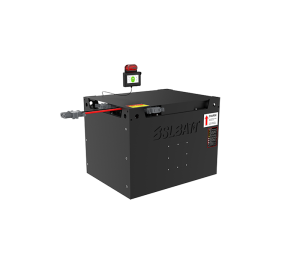
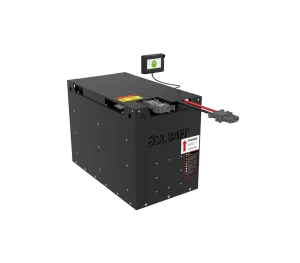
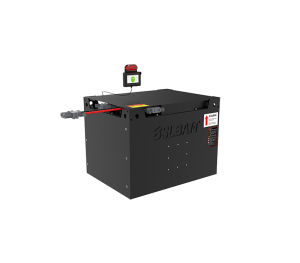
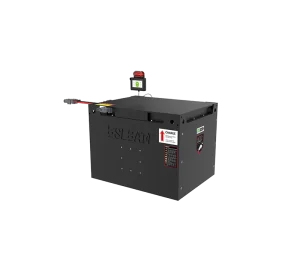
The 300Ah baggage tug pack is a drop-in replacement sized for a single machine: roughly 1,250 × 578 × 580 mm and around 555 kg, with a reinforced steel case sealed against tarmac dust, jet fuel vapour and rain. The 560Ah pushback pack roughly doubles stored energy to 44.8 kWh so a single tractor can cover a double shift without a mid-day changeout — the spec sheet lists a modular 2P5S×5 build, so capacity and case dimensions can be adapted to the tractor model.
Both run CANbus / RS485 communication, which is what lets the pack negotiate with the charger and report to the vehicle controller. BSLBATT GSE packs are built to speak the protocols used by major GSE and material-handling OEMs, so integration is usually a configuration exercise rather than a retrofit.
Opportunity Charging: The Ramp’s Biggest Advantage
The single biggest operational change lithium brings to GSE is not energy density — it is the removal of the battery room.
Lead-acid requires a dedicated, ventilated charging area and an overnight cycle with cool-down. Lithium supports opportunity charging: short, partial top-ups taken whenever the equipment is idle. On an apron, idle periods already exist — between pushbacks, during crew changeovers, while an aircraft is being loaded and the tug is waiting.
With a charge time of under two hours to full and no memory effect, a baggage tug can take 20–30 minutes of charge during a natural gap and gain hours of usable runtime. The practical consequences:
- No spare-buffer fleet. You no longer need one spare pack per machine to cover swaps.
- No battery room. Floor space previously given to charging and watering returns to operations.
- No changeout labor. The mid-shift swap — and the forklift, operator, and downtime it consumes — disappears.
- Higher vehicle utilization. Equipment stays on the ramp instead of queuing at a charger.
Charging hardware matters here. GSE packs use industrial connectors — REMA320 for charging and ANDERSON350 for discharge — and pair with an 80V200A charger. Confirm the charger can talk to the pack over CAN before you order; that handshake is what makes opportunity charging safe rather than merely fast. Our charger matching guide covers the compatibility check.
Safety on the Apron: What Aviation Demands
Ground support equipment operates in the most safety-sensitive environment in material handling: metres from aircraft fuselages, fuel trucks, and passengers. That context sets a higher bar than a warehouse.
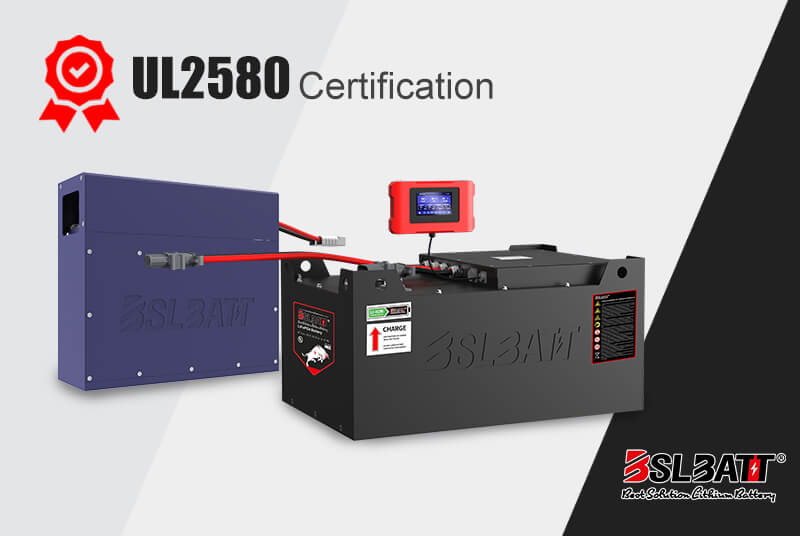
- Certification. BSLBATT lithium batteries are UL 2580 certified — the standard written for battery packs in electric vehicles, and the one airport authorities and insurers increasingly reference.
- Integrated fire suppression. Packs carry a built-in automatic fire suppression system that activates on detecting critical heat. This is a proactive layer on top of LiFePO4’s electrochemical stability, not a substitute for it.
- Sealed enclosure. A reinforced steel case, rated for dust and water ingress, keeps the pack sealed against rain, de-icing fluid, jet fuel residue and tarmac dust.
- Multi-layer BMS protection. Continuous monitoring of cell voltage, current and temperature, with real-time balancing and disconnect logic against over-current, short circuit and thermal excursion.
- No hazardous materials handling. No watering, no acid, no gassing — which removes an entire category of ramp housekeeping and spill response.
Note that certification scope varies by model and market. The 80V baggage tug pack lists UL, CE, IEC, UN38.8 and Sedex; verify the exact certificate set for the model and destination you are buying before sign-off.
Cold, Heat, Rain: Operating From -20°C to 55°C
Open aprons are thermally brutal. A ramp in a northern winter starts below freezing; the same apron in summer can sit well above 40°C with radiant heat off the tarmac. Lead-acid loses a large share of its capacity in the cold and degrades faster in sustained heat.
BSLBATT GSE packs are engineered for a -20°C to 55°C operating window, supported by a smart thermal management system with self-heating — the pack warms itself before accepting charge in cold conditions, which is what protects the cells from lithium plating during a winter top-up. An integrated Power Distribution Unit (PDU) with enhanced cooling design handles heat rejection on the other end of the range.
For airports in cold climates, this is usually the deciding factor. It removes the seasonal capacity collapse that forces winter fleets to oversize or swap more often.
Fleet Visibility: Turning GSE Batteries Into Data
The third shift is operational. Every pack connects to BSLBATT’s IoT cloud platform, giving ramp supervisors real-time visibility into:
- SOC — state of charge, so dispatch knows what is actually available.
- SOH — state of health, so replacement is planned against data rather than guessed.
- Cell-level voltage and temperature — exposing the weak cell before it drags the pack down.
- GPS location — useful across a large apron with dispersed equipment.
- Fault history and alerts — timestamped, for maintenance and warranty discussions.
Predictive algorithms flag early signs of cell imbalance or capacity degradation, so maintenance intervenes before a power issue disrupts a departure. On-board, packs also support Bluetooth for local diagnostics and a rotating display with multi-language support for at-a-glance status. The underlying battery management approach is covered in our technology overview.
What to Ask Before You Convert a GSE Fleet
A lithium conversion is a specification exercise, not a like-for-like swap. Work through these before you issue an RFQ:
- What is the actual duty profile per machine type? Baggage tugs and pushback tractors need different capacity. Size to the worst day, not the average one.
- Do you have the electrical headroom for opportunity charging? Ramp-side charging points may need to be installed where the equipment naturally waits.
- Does the charger communicate over CAN with the pack? A dumb charger will not deliver safe opportunity charging.
- What is the ambient temperature range across the year? Confirm self-heating is included if you see freezing conditions.
- What certification does the airport authority require? Get the certificate numbers, not a marketing claim.
- What does the warranty actually cover? Read the warranty terms and check what BMS data is required to support a claim.
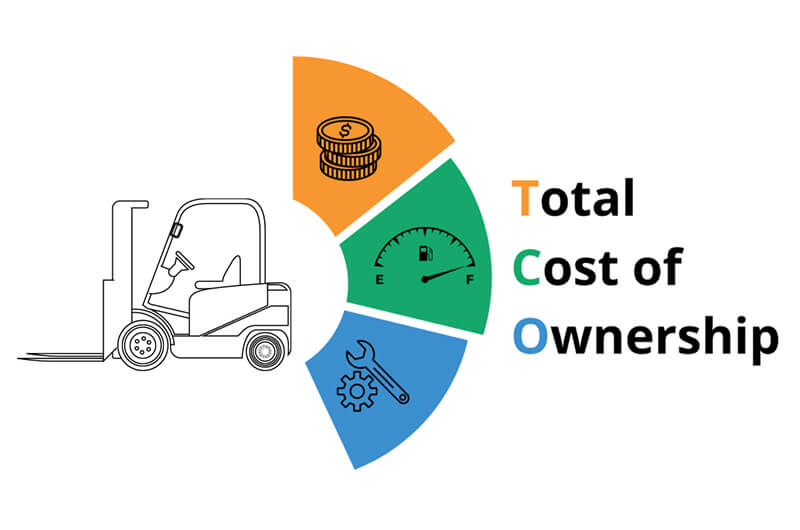
- What is the full cost picture? Model it out over the service life rather than comparing sticker prices — see the TCO breakdown.
Frequently Asked Questions
What battery voltage do airport baggage tugs use?
Most heavy-duty airport baggage tugs run on an 80V platform (83.2V nominal for LiFePO4 packs). Higher voltage delivers the same power at lower current, which reduces heat in the wiring and improves towing torque when pulling multiple loaded carts. Lighter luggage tugs in regional terminals often run on 48V (51.2V) packs instead.
How long does it take to charge a GSE lithium battery?
BSLBATT GSE packs charge to full in under two hours with a matched 80V200A charger. More importantly, they support opportunity charging — short partial top-ups taken during natural gaps between aircraft movements — so equipment does not need to leave the apron or wait for a full overnight cycle.
Can lithium batteries replace lead-acid in existing GSE without modification?
In most cases yes, but it is a specification exercise rather than a drop-in swap. The pack must match the machine’s voltage, physical battery compartment, weight requirement (lithium is lighter, which may affect ballast), and communication protocol. BSLBATT GSE packs support CANbus and RS485, compatible with protocols used by major GSE OEMs. Confirm charger compatibility before ordering.
Are lithium batteries safe to use on an airport apron?
Yes, when specified correctly for aviation use. BSLBATT lithium batteries are UL 2580 certified — the standard for electric vehicle battery packs — and include an integrated automatic fire suppression system, a sealed enclosure rated against dust and water ingress, and a smart BMS with multi-layer protection against over-current, short circuit and thermal excursion. LiFePO4 chemistry is also intrinsically more thermally stable than other lithium chemistries.
Do GSE lithium batteries work in cold climates?
Yes. BSLBATT GSE packs are engineered for a -20°C to 55°C operating window with smart thermal management and self-heating, which warms the pack before it accepts charge in freezing conditions. This is what prevents the severe winter capacity loss that lead-acid suffers on cold aprons.
Powering Your Ramp Conversion
Whether you are specifying baggage tugs, pushback tractors, or a mixed GSE fleet, the right starting point is your actual duty profile — not a catalogue. Our team can review your shift pattern, ambient conditions and equipment mix, then match a pack and charging setup to it. Talk to our GSE specialists or browse the full airport GSE lithium battery solutions.


 Explore all product lines