

Revolutionize the energy economy with advanced lithium-ion battery technology—lower costs, reduce heat, and accelerate sustainable development.
 Explore all product lines
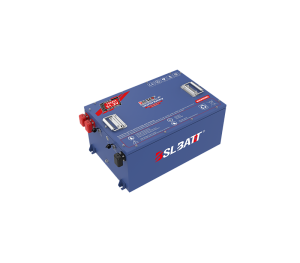
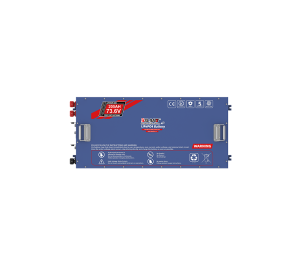
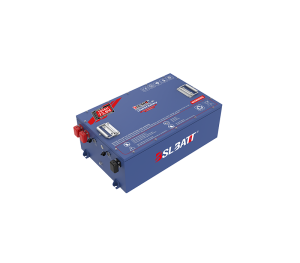
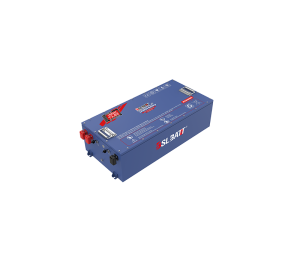
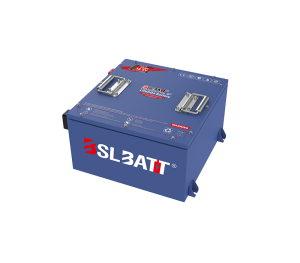
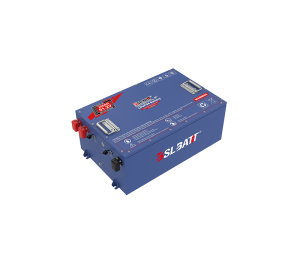
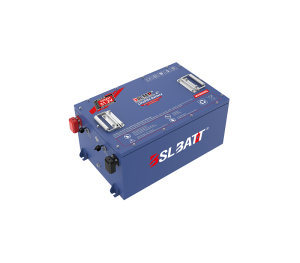









- Specialty Forklift Manufacturers and BSLBATT Lithium Battery Solutions
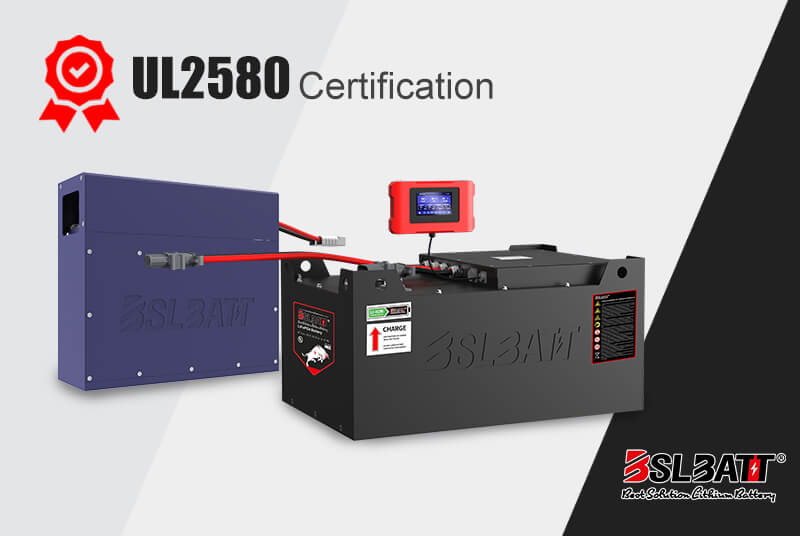
- The first lithium forklift battery that is UL 2580 certified and ISO9001 certified in the industry is BSLBATT® Battery – Industrial
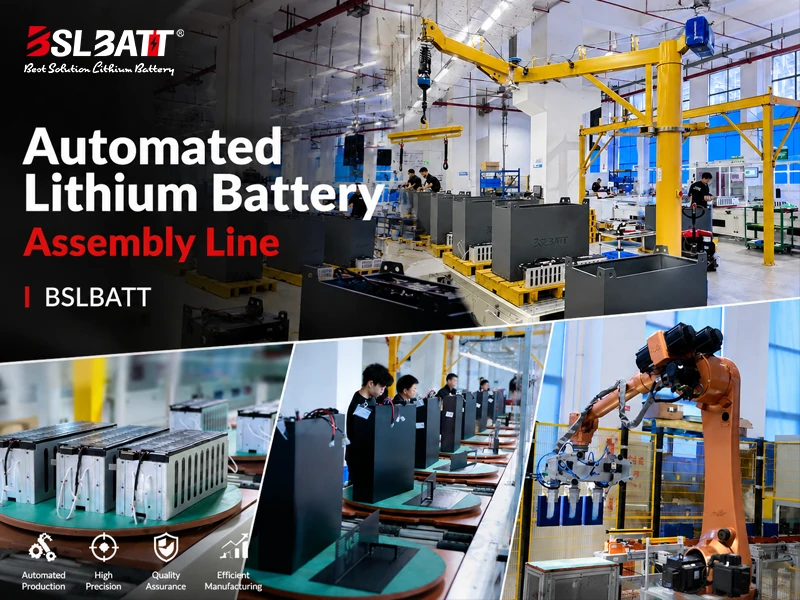
- Automated Lithium Battery Assembly Line | BSLBATT Smart Factory
- Time to Retire Lead-Acid: Why Your Warehouse Needs Lithium-Ion Power
- Lithium Forklift Battery Maintenance Guide 2026
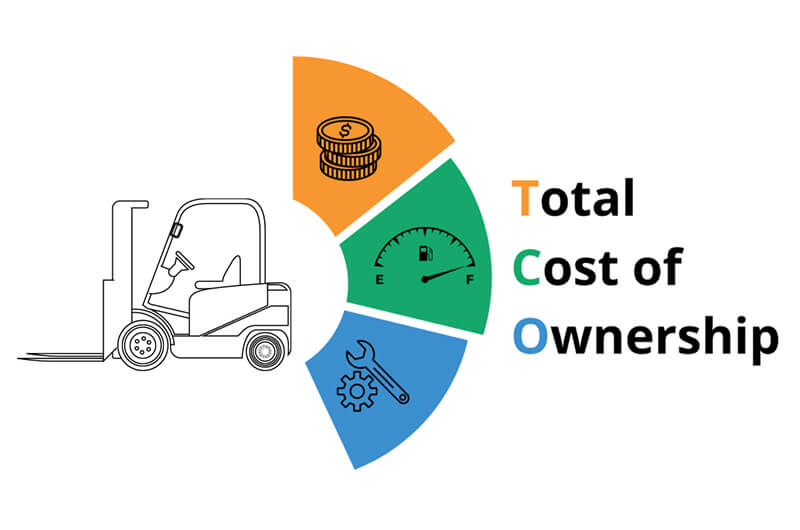
- Industrial Lithium Batteries: Initial Price vs. Long-Term Costs
Forklifts
Lithium vs Lead-Acid Forklift Batteries: 12-Point Data-Backed Comparison
Table of contents
- Quick Answer
- Lithium vs Lead-Acid Forklift Batteries: 12-Point Comparison
- 1. Upfront Cost
- 2. Usable Battery Capacity
- 3. Charging Time
- 4. Opportunity Charging
- 5. Charging Efficiency
- 6. Battery Lifespan / Cycle Life
- 7. Maintenance
- 8. Labor Requirements
- 9. Downtime
- 10. Operating Temperature
- 11. Space / Weight Utilization
- 12. Total Cost of Ownership
- Lithium vs Lead-Acid Forklift Battery TCO
- What Drives the 5-Year Number
- Why TCO Matters More Than Purchase Price
- Real Operating Scenarios
- Scenario 1 — Single-Shift Warehouse
- Scenario 2 — Two-Shift Distribution Center
- Scenario 3 — Three-Shift High-Utilization Fleet
- Scenario 4 — Cold Storage Operation
- When Lead-Acid Still Makes Sense
- When Lithium-ion Makes More Sense
- Which Forklift Battery Should You Choose?
- How to Calculate Forklift Battery ROI
- Conclusion: Lithium vs Lead-Acid Forklift Batteries
- Need Help Choosing the Right Forklift Battery?
- Frequently Asked Questions
Battery price is only one line item in the budget. For a forklift running two or three shifts a day, charging losses, battery changes, watering labor, and downtime can add up to more than the sticker price of the battery itself. The chemistry a fleet chooses — lithium-ion or lead-acid — affects how efficiently that fleet can operate for the next several years, and the right answer isn’t the same for every operation.
This guide compares lithium-ion and lead-acid forklift batteries across 12 dimensions: cost, capacity, charging behavior, efficiency, lifespan, maintenance, labor, downtime, temperature tolerance, space, and total cost of ownership. Where solid figures exist, they’re cited. Where figures vary by manufacturer, duty cycle, or operating environment, that’s stated plainly rather than smoothed into a single number.
Quick Answer
Are lithium forklift batteries better than lead-acid?
It depends on how the forklift is used. Lithium-ion is generally the stronger fit for fleets running two or three shifts, where opportunity charging during breaks, lower maintenance labor, and reduced battery-changing time can offset the higher purchase price over a multi-year period. Lead-acid can still be the more rational choice for single-shift, lower-utilization fleets where upfront budget is the primary constraint and a battery room is already in place. Neither chemistry wins in every scenario — the right choice depends on shift pattern, utilization, local labor and electricity costs, and how much downtime actually costs the operation.
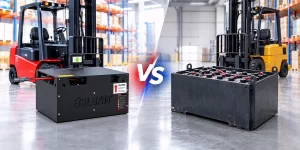
Lithium vs Lead-Acid Forklift Batteries: 12-Point Comparison
| Comparison Point | Lithium-ion (LiFePO4) | Lead-acid | Practical Impact |
|---|---|---|---|
| 1. Upfront Cost | Commonly 2–3x the price of an equivalent lead-acid battery | Lower purchase price | Lead-acid wins on day one; lithium has to earn the difference back over time |
| 2. Usable Capacity | Manufacturers commonly rate a higher usable share of nameplate capacity | Commonly limited to roughly 50–60% of nameplate capacity to protect battery life | Rated Ah is not directly comparable between chemistries |
| 3. Charging Time | Often 1–3 hours for a full charge, model-dependent | Typically 6–8 hours to charge, plus a rest period before reuse | Lithium generally supports same-day, multi-session charging |
| 4. Opportunity Charging | Designed to tolerate partial charging | Not recommended; partial charging can shorten cell life | Lithium reduces the need for spare batteries in many fleets |
| 5. Charging Efficiency | Generally higher round-trip efficiency than flooded lead-acid | Generally lower round-trip efficiency due to gassing losses during charge | Lithium typically wastes less purchased electricity as heat |
| 6. Cycle Life | Manufacturer-rated cycle life varies significantly by cell design and test conditions | Commonly rated in the 1,000–1,500 cycle range under industrial duty | Actual service life depends on depth of discharge and duty cycle, not the rating alone |
| 7. Maintenance | Sealed; no watering or equalization charging | Requires periodic watering and equalization charging | Lithium removes a recurring, scheduled maintenance task |
| 8. Labor Requirements | Minimal changeout labor when opportunity-charged | Battery changes required in most multi-shift operations | Labor cost scales with how many swaps per day the duty cycle requires |
| 9. Downtime | Charges in place during scheduled breaks in most cases | Requires changeout plus, typically, a rest period before the battery is redeployed | Lithium can reduce planned downtime tied to battery changes |
| 10. Operating Temperature | Cold-environment performance is model-specific | Capacity is reduced in low temperatures | Neither chemistry is cold-proof by default; specification matters |
| 11. Space / Weight | Commonly lighter for comparable usable capacity | Heavier; typically requires a dedicated, ventilated charging area | Lithium can reduce or eliminate the need for a dedicated battery room |
| 12. Total Cost of Ownership | Often lower over a multi-year horizon in multi-shift, high-utilization use | Often lower over a multi-year horizon in single-shift, low-utilization use | TCO outcome depends on utilization, not on chemistry alone |
Figures above reflect commonly cited industry ranges and manufacturer specifications. They are not universal standards — actual performance varies by cell design, charger, duty cycle, depth of discharge, ambient temperature, and how a fleet is operated. Confirm specifications with the battery manufacturer for a given model before using these figures in a purchasing decision.
1. Upfront Cost
Lithium-ion forklift batteries commonly cost two to three times more than a comparably sized lead-acid battery. That price difference reflects cell chemistry cost, the battery management system (BMS), and — for certified products — testing and certification expenses.
Lead-acid pricing is well established because the chemistry has been the industrial default for decades. A 48V battery sized for a Class I forklift typically runs several thousand dollars; the lithium equivalent, matched for comparable usable capacity, carries a meaningfully higher price tag. Exact numbers vary by voltage, capacity, brand, and region, so any specific dollar figure should come from a current quote rather than a generic industry average.
That gap is real, and it’s the reason lead-acid remains the default in many low-utilization fleets. What changes the calculation is everything that happens after the purchase.
2. Usable Battery Capacity
Rated Ah is not the same as usable Ah, and the gap between the two differs by chemistry.
Lead-acid batteries lose service life if they’re regularly discharged below roughly 20% state of charge (SOC), which is why most operations plan around 50–60% of nameplate capacity as the practical usable range. Lithium-ion batteries can typically be discharged further — often down toward 10–20% SOC or lower — without the same life-shortening effect, with the BMS managing that limit automatically.
The exact usable percentage for either chemistry depends on discharge rate, temperature, and how the manufacturer defines “end of usable capacity” in its own specifications. As a rule of thumb, a 400Ah lithium battery and a 600–700Ah lead-acid battery can deliver comparable usable runtime, but the only reliable way to confirm that for a specific truck is to compare manufacturer datasheets side by side rather than comparing rated Ah alone.
3. Charging Time
A standard lead-acid forklift battery typically takes 6–8 hours to reach a full charge. Battery manufacturers commonly recommend an additional rest (cooldown) period — often cited around 8 hours — before the battery goes back into service, to let the electrolyte settle and the plates cool. Together, that’s roughly a 12–16 hour cycle for one full charge-and-rest, which is why lead-acid fleets running more than one shift typically need spare batteries and a changing routine.
Lithium-ion batteries generally don’t require that rest period. Charge times vary by battery size and charger output, but many lithium forklift batteries can reach a full charge within roughly 1–3 hours, and a partial top-up to a usable charge level can often be completed faster. Actual charge time for a specific battery and charger combination should be confirmed against the manufacturer’s charging specification.
4. Opportunity Charging
Opportunity charging means plugging in during natural breaks — lunch, shift changeovers, slower periods — instead of waiting for a scheduled full recharge. Lithium-ion batteries are generally designed to tolerate this kind of partial, repeated charging without a meaningful life penalty.
Lead-acid batteries are not built the same way. Interrupting a charge cycle or repeatedly partial-charging a flooded lead-acid battery is commonly associated with accelerated sulfation on the plates, which can shorten usable life. That’s the underlying reason lead-acid fleets are typically operated on full charge-and-rest cycles rather than short top-ups.
In multi-shift operations, this is usually the biggest operational shift that comes with a lithium conversion: batteries top up in short windows throughout the day instead of being pulled and swapped on a fixed schedule.
5. Charging Efficiency
Charging efficiency describes how much of the electricity drawn during charging ends up as usable battery capacity, versus being lost as heat and gassing. Lithium-ion batteries generally have a meaningfully higher round-trip charging efficiency than flooded lead-acid batteries, which lose a larger share of input energy to heat, particularly during the final stage of charge (the equalization/finishing phase, where gassing increases).
Manufacturer-reported efficiency figures vary, and a precise industry-wide percentage for either chemistry shouldn’t be treated as fixed. What’s consistent across sources is the direction of the difference: lithium charging is more efficient, and that difference compounds across hundreds of charge cycles per year on a facility’s electricity bill.
6. Battery Lifespan / Cycle Life
Cycle life is the number of full charge-discharge cycles a battery can deliver before its capacity drops to a defined threshold, commonly 80% of original rated capacity. Cycle-life ratings vary significantly by cell chemistry, battery and BMS design, operating temperature, depth of discharge, and the specific test conditions a manufacturer uses to generate the rating — so a single number rarely applies across brands.
Lead-acid forklift batteries are commonly rated in the range of roughly 1,000–1,500 cycles under typical industrial duty. Lithium-ion (LiFePO4) forklift batteries are commonly rated higher, with manufacturer datasheets often citing figures from around 2,000 cycles up to several thousand, depending on the product line and how deeply the battery is discharged each cycle. Buyers should treat any specific cycle-life number as a manufacturer specification for that model, not an industry-wide constant, and confirm the test conditions (depth of discharge, temperature) behind the rating.
Cycle life and calendar life are related but not identical. A battery cycled once per weekday burns through its rated cycles more slowly than one cycled twice a day, so the same cycle-life rating can translate into very different numbers of service years depending on the duty cycle. A fleet manager comparing options should ask for the manufacturer’s cycle-life rating alongside the depth-of-discharge and temperature conditions it was tested under, then map that against the fleet’s actual daily cycle count — rather than relying on a generic “years of service” figure.
7. Maintenance
Lead-acid batteries require regular watering — commonly on a weekly basis — to keep electrolyte at the correct level and prevent plate damage from exposure to air. They also typically need periodic equalization charging, terminal cleaning to manage corrosion, and specific-gravity checks with a hydrometer to track cell health.
Skipping watering on a lead-acid battery can permanently damage the plates. Overfilling before charging can cause electrolyte to overflow as the battery gasses during charge.
Lithium-ion batteries are sealed. There’s no watering, no equalization charging, and no acid handling; the BMS manages cell balancing internally. Routine care for a lithium pack is generally limited to visual inspection and keeping terminals clean.
For a facility running a large lead-acid fleet, watering and related upkeep represent a recurring labor cost that lithium largely removes — though the exact hours depend on fleet size and battery count, and should be estimated from the facility’s own maintenance records rather than a generic industry figure.
Explore BSLBATT’s forklift battery maintenance guide for what routine lithium battery care actually involves.
8. Labor Requirements
A discharged lead-acid battery mid-shift means the forklift stops while an operator or battery attendant removes it — using a hoist, conveyor, or extraction system as required by OSHA’s battery-handling provisions — and installs a charged spare. A single swap commonly takes on the order of 15–20 minutes, not counting travel time to and from the battery room; this varies by facility layout and equipment.
In a two- or three-shift operation, that swap can happen once or more per truck per day. Multiplied across a fleet, battery-changing time becomes a measurable labor cost, separate from the operator’s actual material-handling work.
Lithium-ion, charged opportunistically during natural breaks, generally reduces or eliminates the scheduled swap in single-battery-per-truck configurations. Very high-utilization, continuous three-shift trucks may still require planned top-up charging or, in some cases, a second battery — the right configuration depends on the specific duty cycle rather than a blanket rule.
9. Downtime
Labor is the person-hours spent on a battery swap; downtime is the truck sitting idle while that swap, and any queueing for a charged spare, takes place.
Because lead-acid batteries typically need a rest period after charging, multi-shift lead-acid fleets commonly carry more than one battery per truck to avoid a truck waiting on its own battery to finish resting. The exact number of spares needed depends on shift length, charger capacity, and how tightly shifts are scheduled — it is a facility-specific planning question, not a fixed ratio.
A forklift comes off charge in the morning and runs until the end of the shift. If it’s lead-acid and the shift runs long, that truck may need a trip to the battery room. If it’s lithium and it picked up a short charge during a scheduled break, it often doesn’t need that trip. Reduced downtime can also mean fewer spare batteries need to be purchased and stored, which is a capital cost that’s easy to overlook in a battery-only price comparison.
10. Operating Temperature
Cold storage and freezer environments affect both chemistries, but the practical response differs.
Lead-acid battery capacity is reduced in low temperatures, and charging in cold conditions carries its own risks for the plates — this is well documented across battery manufacturer technical literature.
Standard lithium-ion cells are also temperature-sensitive. Charging a lithium battery below freezing without protection can cause lithium plating on the anode and permanent capacity loss — a known failure mode for lithium-ion chemistry generally. For that reason, lithium batteries intended for cold storage use are typically built with internal heating elements that bring the cells to a safe charging temperature before allowing current to flow.
Cold-storage suitability is model-specific. Not every lithium battery on the market includes cold-rated thermal management, and the specific temperature range a given battery is rated for — and whether it’s rated to be charged inside the freezer versus only stored there — should be confirmed against that model’s datasheet rather than assumed. A standard lithium battery without cold-rated design is not automatically suitable for sub-freezing use.
11. Space / Weight Utilization
Lithium-ion batteries are commonly lighter than a lead-acid battery of comparable usable capacity, though the exact weight difference varies by model and voltage class.
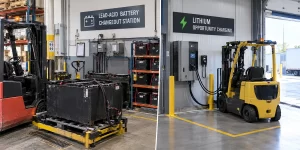
This has two practical consequences. First, some forklifts use battery weight as part of the counterbalance system, so switching to a lighter lithium pack can require added ballast to maintain the truck’s rated lift capacity and stability — this should be confirmed with the forklift OEM before a conversion, not assumed. Second, flooded lead-acid batteries off-gas hydrogen during charging and typically require a dedicated, ventilated charging area as a result. Lithium batteries generally don’t produce that same off-gassing during normal charging, which is why many facilities converting to lithium are able to reduce or repurpose the floor space previously used for a lead-acid battery room — though local fire code and facility requirements should still be confirmed for the specific installation.
12. Total Cost of Ownership
Every point above eventually rolls into one question: what does it cost to own and operate this battery over its useful life, not just to buy it?
Lithium vs Lead-Acid Forklift Battery TCO
Purchase price is the easiest number to compare and the least representative of actual cost. A full comparison includes energy, maintenance, labor, downtime, and how many replacement batteries are needed within the same time horizon. The example below is a calculation framework, not a universal dollar figure — the actual numbers should be run with a fleet’s own rates.
What Drives the 5-Year Number
A 3-shift, high-utilization truck illustrates why the comparison shifts over time. The main variables are the same regardless of fleet: purchase price, charging efficiency, maintenance labor, battery-changing labor, and whether the lead-acid battery needs a mid-life replacement before the comparison period ends. At 3-shift duty, a lead-acid battery commonly accumulates enough cycles within 4–5 years to approach or exceed its rated cycle life, which is often the single biggest swing factor in a multi-year TCO comparison — more than energy or labor cost individually.
None of these variables — electricity rate, labor rate, cycle count, battery pricing — are the same from one facility to the next, so a single published dollar figure for “the” 5-year TCO would misrepresent more fleets than it would help. Rather than presenting an illustrative number here, run your own fleet’s shift pattern, battery size, and local rates through BSLBATT’s battery calculator, which builds the comparison from your actual inputs instead of an industry-wide assumption. For background on how the underlying cost categories are typically modeled, see BSLBATT’s forklift battery total cost of ownership breakdown.
The payback period cannot be generalized across fleets. It depends on shift count, electricity rate, labor rate, battery pricing at time of purchase, and whether the lead-acid comparator would need a replacement within the window being evaluated.
Why TCO Matters More Than Purchase Price
Purchase price is the number on the quote. Energy cost accumulates every charge cycle. Maintenance accumulates with every watering session and equalization charge on a lead-acid fleet. Labor accumulates with every battery swap. Downtime accumulates whenever a truck sits idle waiting on power. Replacement cost hits again if a battery’s cycle life runs out before the comparison period ends. None of that shows up on the purchase invoice — which is the case for running the TCO framework instead of comparing sticker prices.
Real Operating Scenarios
Scenario 1 — Single-Shift Warehouse
One shift a day, moderate forklift utilization, existing lead-acid infrastructure already paid for. A lead-acid battery in this pattern typically completes its full charge-and-rest cycle comfortably overnight, without a mid-shift swap. Battery-changing labor and downtime are minimal because there’s rarely a need to change batteries during the shift. Upfront cost tends to dominate the decision here, and lead-acid frequently remains the more economical choice.
Scenario 2 — Two-Shift Distribution Center
Two shifts a day raises the odds that a lead-acid battery won’t comfortably cover both shifts without a swap, particularly on high-utilization trucks such as order pickers running near-continuously. This is the range where lithium’s case starts to strengthen: opportunity charging during shift changeover can eliminate a swap that would otherwise cost roughly 15–20 minutes of downtime and a battery-room trip.
Scenario 3 — Three-Shift High-Utilization Fleet
Near-continuous operation is where lead-acid’s operational costs compound. Multiple batteries per truck, a battery room sized for the changing cadence, and dedicated battery-handling labor become fixed costs of running the fleet. Lithium’s ability to top up in short windows between shifts, without a full changeout, tends to produce the clearest labor and downtime savings in this scenario — and the higher annual cycle count makes a longer rated cycle life more valuable here than in lower-utilization fleets.
Scenario 4 — Cold Storage Operation
Sub-freezing environments affect both chemistries differently. Standard lead-acid batteries lose usable capacity in the cold and are commonly moved to a warmer area to charge, adding a handling step. Lithium batteries specifically designed with cold-rated, self-heating BMS technology are built to remain inside the freezer and charge in place — but as noted above, this depends entirely on the specific battery model. A standard lithium battery without that design is not automatically a fit for this scenario, and battery selection here should be treated as an engineering decision, not a chemistry decision.
When Lead-Acid Still Makes Sense
Lithium is not automatically the cheaper option for every fleet. Lead-acid remains a reasonable choice when several of the following apply:
- One shift per day with light-to-moderate utilization
- Low annual operating hours per truck
- A limited capital budget where the upfront cost gap is the binding constraint
- An existing, already-amortized battery room and ventilation system
- Lower local labor cost, which reduces the value of eliminating battery-changing labor
- A duty cycle unlikely to require battery replacement before the forklift itself is retired
A lightly used forklift running one shift a day may not generate enough labor and downtime savings to justify lithium’s higher purchase price within a reasonable payback window. That’s a legitimate conclusion based on the numbers, not a sign of falling behind on technology.
When Lithium-ion Makes More Sense
The case for lithium generally strengthens as utilization and shift count rise. It tends to be the stronger fit when:
- The fleet runs two or three shifts, especially with extended or overlapping hours
- Trucks see continuous or near-continuous utilization
- Opportunity charging during natural breaks is operationally feasible
- Battery-changing labor is a real, budgeted cost the fleet wants to reduce
- Electricity costs are high enough that charging-efficiency differences matter
- Maintenance staff time is limited or expensive
- Floor space for a dedicated battery room is scarce or needed for other uses
- Downtime has a high cost — tight shipping windows, just-in-time manufacturing, high-throughput fulfillment
- The application is cold storage, provided the specific battery model is rated for it
Explore BSLBATT’s forklift lithium battery solutions for Class I, II, and III trucks to see how these factors map to specific battery configurations.
Which Forklift Battery Should You Choose?
| Fleet Requirement | Better Fit | Why |
|---|---|---|
| 1 shift/day, light use | Lead-acid | Charge/rest cycle fits within off-hours; upfront cost dominates |
| 2 shifts/day | Depends on truck-level utilization | Lithium gains an edge on trucks running near-continuously |
| 3 shifts/day | Lithium, in most cases | Opportunity charging addresses the changeout bottleneck |
| Opportunity charging needed | Lithium | Lead-acid is not designed for repeated partial charging |
| Cold storage (freezer) | Cold-rated lithium (model-specific) | Standard lead-acid loses capacity; only cold-rated lithium models are suited to in-freezer charging |
| High-utilization warehouse | Lithium | Higher cycle count favors a battery with a longer rated cycle life |
| Lowest upfront cost priority | Lead-acid | Purchase price is commonly 2–3x lower |
| Lowest long-term operating cost priority | Lithium, in multi-shift use | Efficiency, maintenance, and labor savings accumulate over years |
| Limited maintenance staff | Lithium | No watering or equalization charging required |
| Existing battery room, low utilization | Lead-acid | Infrastructure is a sunk cost; low duty cycle limits lithium’s payback |
| Frequent battery changes today | Lithium | Directly addresses the labor and downtime this creates |
How to Calculate Forklift Battery ROI
ROI = Net Savings ÷ Additional Investment
Additional Investment is the lithium battery’s purchase price minus the cost of the equivalent lead-acid battery (and any spares the lead-acid option would have required).
Net Savings typically includes:
- Energy savings from higher charging efficiency
- Maintenance savings from eliminating watering and equalization
- Labor savings from reduced battery-changing time
- Downtime reduction, valued at whatever a lost hour of truck availability is worth to the operation
- Avoided replacement cost, if the lead-acid comparator would need a mid-life battery within the comparison window
There is no single industry-wide ROI percentage that applies across fleets. Actual ROI depends on operating hours, shift count, local electricity price, labor cost, forklift utilization, battery pricing, and how often the lead-acid comparator would otherwise need replacing. Running the formula with a fleet’s own numbers — rather than applying a published average — gives a materially more reliable answer.
Conclusion: Lithium vs Lead-Acid Forklift Batteries
Should you switch from lead-acid to lithium?
If the fleet runs two or three shifts, sees high utilization, could use opportunity charging, carries meaningful labor cost for battery changes, faces high downtime costs, or has limited maintenance staff, lithium is generally worth evaluating and can produce a lower TCO within a multi-year window under a range of realistic assumptions.
If the fleet runs a single shift with light utilization, has a limited upfront budget, and already has a functioning lead-acid battery room and charging routine, lead-acid can still make solid economic sense, with no operational urgency to change chemistries.
The better battery depends on how the forklift is used and what the fleet is trying to optimize — not on which technology is newer.
Need Help Choosing the Right Forklift Battery?
Every fleet’s numbers are different. BSLBATT works with fleet and procurement teams to size a lithium battery configuration around the details that actually drive the decision: forklift voltage and capacity, forklift model and battery compartment dimensions, counterweight requirements, charger compatibility, shift pattern, actual annual operating hours, working environment (including cold storage), and duty cycle.
Request a Forklift Battery Quote — share your fleet’s shift pattern and forklift specs, and BSLBATT’s team will help evaluate whether lithium fits your operation and what configuration would work.
Frequently Asked Questions
Are lithium forklift batteries better than lead-acid?
Neither chemistry is universally better — it depends on utilization. Lithium tends to be the stronger fit for multi-shift, high-utilization fleets due to opportunity charging and lower maintenance and labor costs. Lead-acid can still make sense for single-shift, lower-utilization operations where upfront cost is the main constraint.
How long does a lithium forklift battery last?
Cycle-life ratings vary by manufacturer, cell design, depth of discharge, and operating temperature, so there is no single industry-wide figure. Manufacturer datasheets should be checked for the specific rated cycle life and test conditions, and that figure should be mapped against the fleet’s actual daily cycle count to estimate service years.
How much more expensive are lithium forklift batteries?
Lithium-ion batteries typically cost two to three times more upfront than a comparable lead-acid battery. The gap can narrow or reverse over the battery’s life once energy, maintenance, labor, and replacement costs are included, particularly in multi-shift operations — though the outcome depends on the specific fleet’s numbers.
Can you charge a lithium forklift battery during breaks?
Yes. This is called opportunity charging, and lithium-ion batteries are generally designed to tolerate it without a meaningful life penalty. A short charge during a break can extend a truck’s runtime without a full battery swap.
Do lithium forklift batteries require maintenance?
Lithium-ion batteries are sealed and don’t require watering, equalization charging, or acid handling. Routine care is generally limited to visual inspection and keeping terminals clean, which is far less labor-intensive than lead-acid battery maintenance.
What is the ROI of switching from lead-acid to lithium?
ROI equals net savings divided by the additional investment over an equivalent lead-acid battery. There is no fixed industry-wide ROI figure — it depends on shift pattern, electricity rate, labor cost, utilization, and how often the lead-acid comparator would otherwise need replacing within the comparison period.
Are lithium forklift batteries safe?
LiFePO4 (lithium iron phosphate) chemistry, used in most forklift lithium batteries, is generally regarded as more thermally stable than some other lithium chemistries. Buyers should verify the battery’s applicable certifications and test standards, such as UL 2580, for the intended forklift and application before purchase.
Can lithium batteries be used in cold storage forklifts?
Only lithium batteries specifically engineered for cold environments, typically with internal self-heating elements that warm the cells before allowing charge current to flow. Cold-storage suitability is model-specific; a standard, non-cold-rated lithium battery should not be assumed suitable for sub-freezing use.
How many lithium batteries do I need for a multi-shift forklift?
In many multi-shift operations using opportunity charging, one lithium battery per truck is sufficient. Very high-utilization, continuous three-shift trucks may still warrant evaluating a second battery, depending on the specific duty cycle and charger capacity.
Can I replace my lead-acid forklift battery with lithium?
Often yes, though compartment size, weight (and any counterbalance requirements), charger compatibility, and voltage need to be confirmed against the forklift’s specifications first. Many lithium batteries are built to standard lead-acid compartment dimensions to support drop-in replacement, but this should be verified for the specific forklift model.


Related Product Recommendations
-
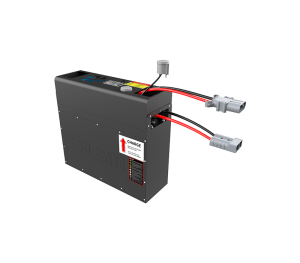
25.6V 100AH
24V Forklift Lithium Battery 100Ah Compact Energy Solution | BSLBATT
Learn More -
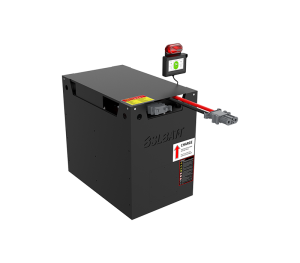
38.4V 690AH
36 Volt Forklift Battery 690Ah Lithium-ion Solution for Reach Trucks & Class I Fleets | BSLBATT
Learn More -
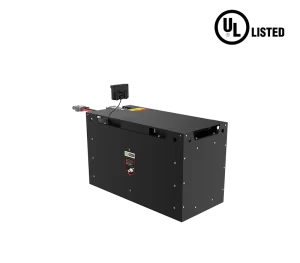
38.4V 820AH Lithium Forklift Battery
36V Lithium-ion Forklift Battery UL Certified 820Ah Power | BSLBATT
Learn More -
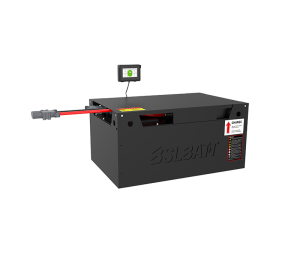
51.2V 336AH
48 Volt Forklift Battery Powerful 336Ah Lithium-ion Solution | BSLBATT
Learn More -
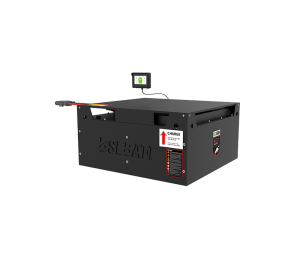
51.2V 690AH
48V Forklift Battery Price High-Endurance 690Ah Lithium Pack | BSLBATT
Learn More