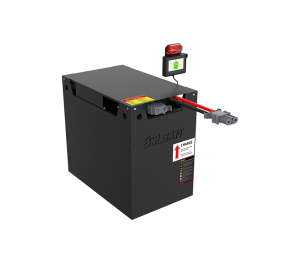
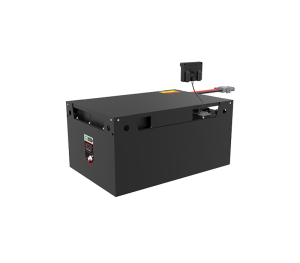
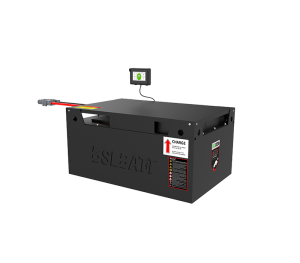
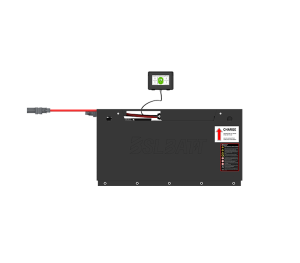
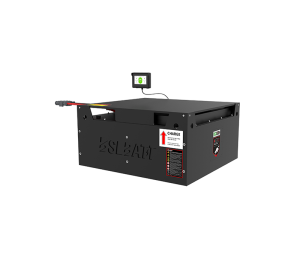
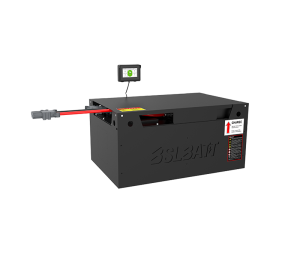
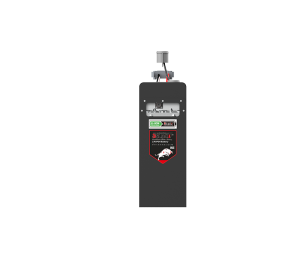
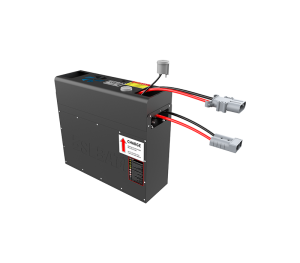
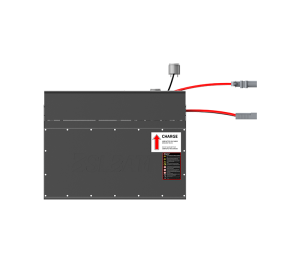
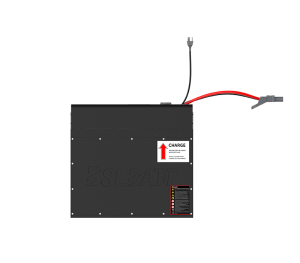
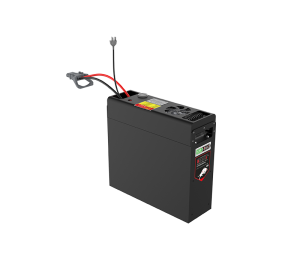
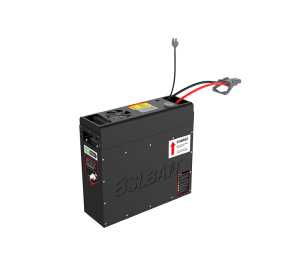
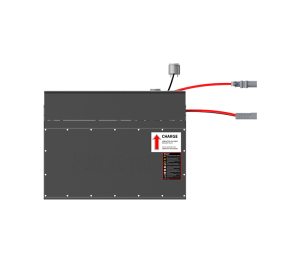
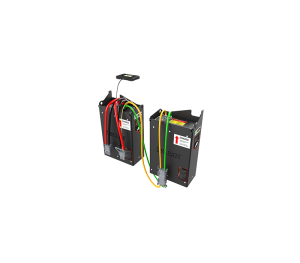
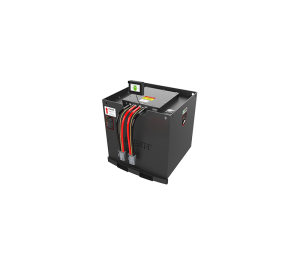
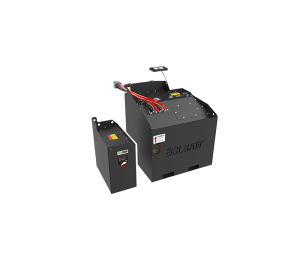
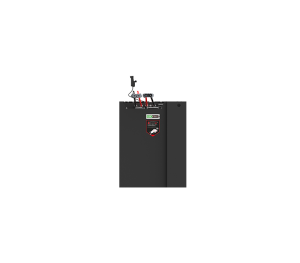
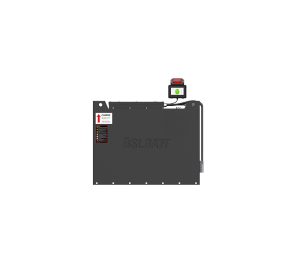
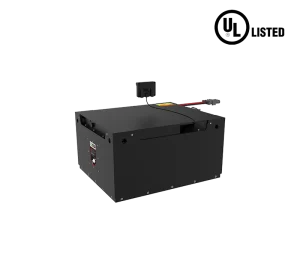
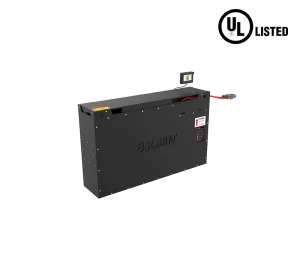
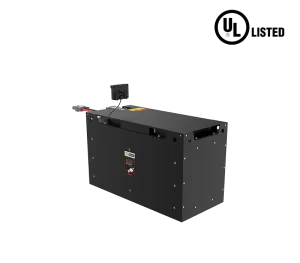
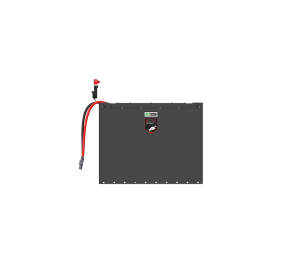
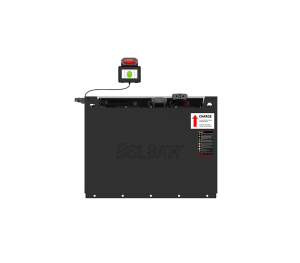
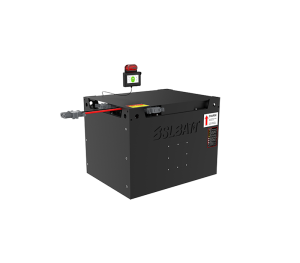
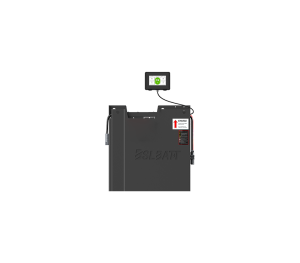
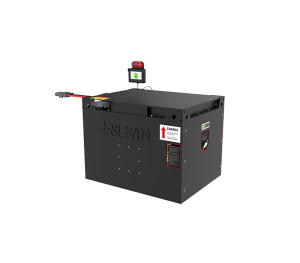
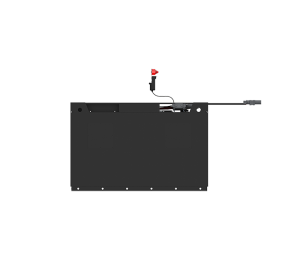
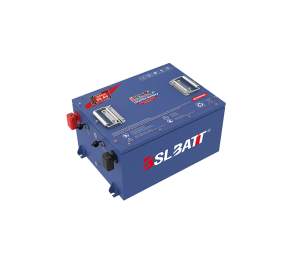
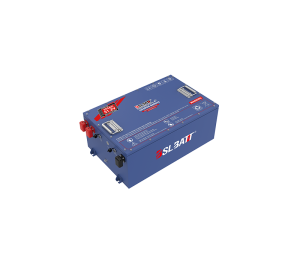
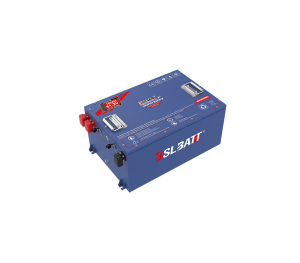
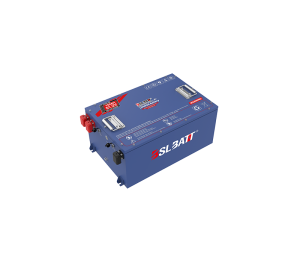
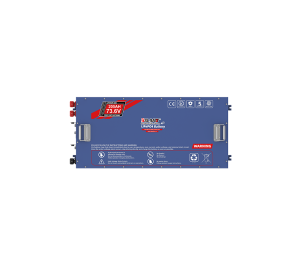
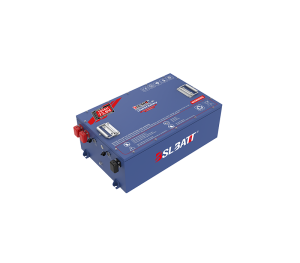
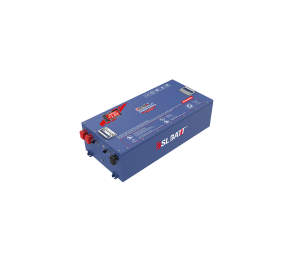
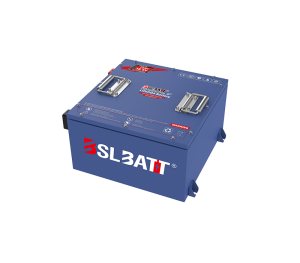
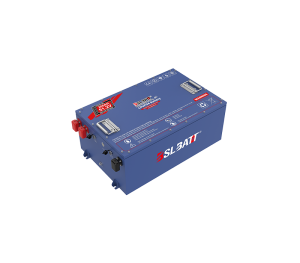
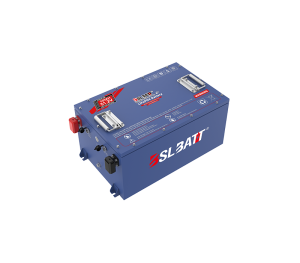
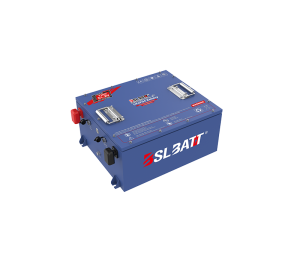
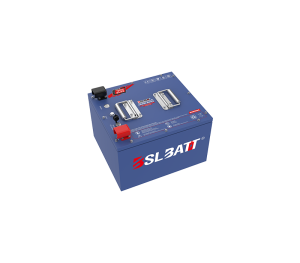
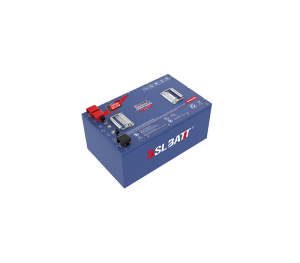
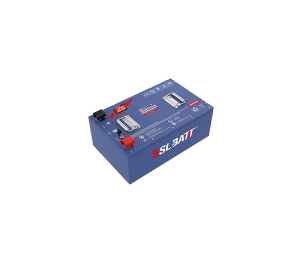
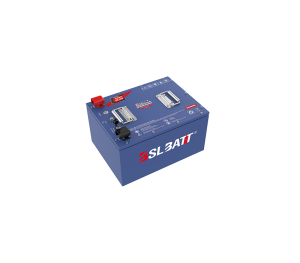
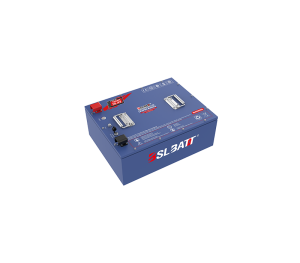
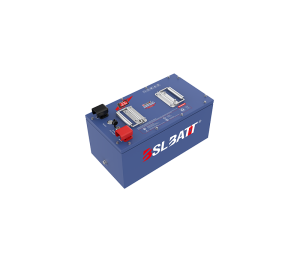
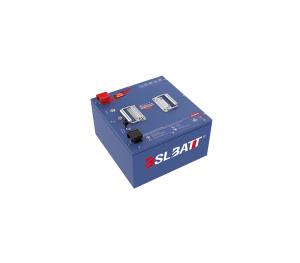
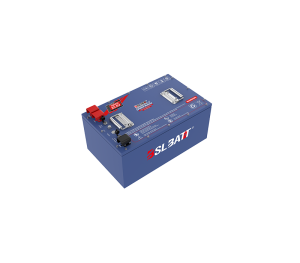
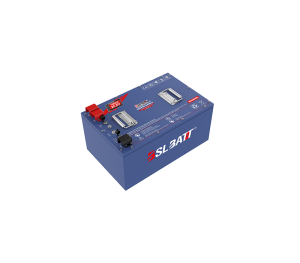
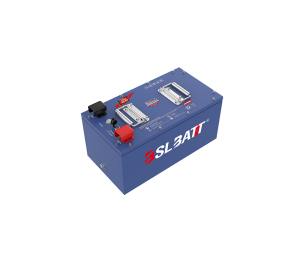
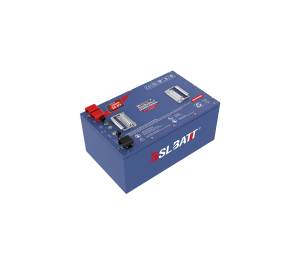
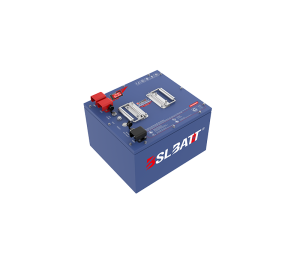
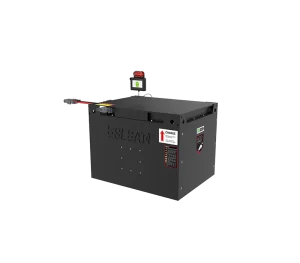
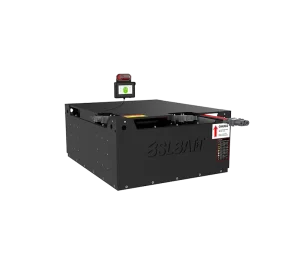
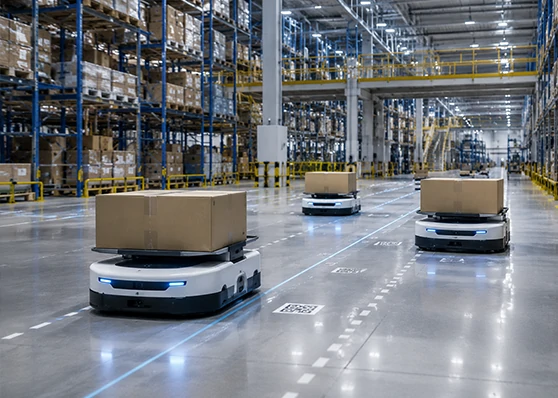
AGV and AMR batteries must deliver high peak current in short bursts, talk to the robot controller over CAN bus, and accept opportunity charging between missions. Voltage is set by the vehicle platform (usually 24V or 48V); capacity is set by duty cycle, not by catalog convention.
Why Automated Fleets Break Conventional Battery Assumptions
A forklift battery lives in a world with a human in the loop: someone notices the truck slowing down, someone plugs it in at shift change, someone tops up the water. An automated fleet has none of that. The vehicle is expected to work continuously, decide for itself when to charge, and report its own health — with nobody walking past to notice a problem.
That single difference changes the specification. In an automated warehouse, the battery stops being a consumable and becomes part of the control system: it is a power source, a data node, and a scheduled resource that the fleet management software dispatches. Three consequences follow:
- Downtime is a system failure, not an inconvenience. One robot off-line can stall an aisle, a pick zone, or an entire flow-through sequence.
- Charging has to be autonomous. No operator plugs in a cable, so charging happens through docking contacts or automated connection — and the fleet software decides when.
- The battery must be legible to software. State of charge, health and fault data have to reach the robot controller and the fleet dashboard, not just a label on the case.
What Automation Demands From a Battery
| Requirement | Why automation makes it critical | What to specify |
|---|
| High-rate discharge | Acceleration, lift cycles and towing draw sharp current peaks; voltage sag trips controller faults | Peak current (A) with duration, plus continuous rating |
| Controller communication | The robot must know SOC before accepting a mission and must react to faults | CAN bus (or RS485) interface, documented signal map |
| Autonomous opportunity charging | No operator to swap or plug; charging happens in short windows between missions | Charge C-rate, charge-window minutes, docking or connector type |
| Compact, defined envelope | Robot chassis space is fixed; weight affects traction and braking distance | Dimensions, mass, center-of-gravity constraint |
| Thermal stability in continuous duty | 24/7 cycling with no cool-down shift | Thermal management approach, ambient operating range |
| Fleet-level telemetry | Maintenance teams cannot walk the floor checking hundreds of robots | BMS data access: SOC, SOH, temperature, fault history |
High-Rate Discharge: Peak Current Is the Spec That Fails First
An AGV does not draw power the way a truck on a long haul does. It accelerates, lifts, brakes, and repeats — so the pack sees short, high-current pulses rather than a smooth draw. Two numbers matter, and only one is usually quoted:
Continuous current — what the pack can sustain indefinitely without exceeding its thermal budget.
Peak current — what it can deliver for a few seconds during acceleration or a lift, and for how long.
Peak current is where undersized packs fail. If the pack cannot hold voltage during a peak, the robot controller sees an undervoltage condition and throws a fault — the vehicle stops mid-aisle, and the failure looks like a software bug rather than a battery sizing error. The BMS will also cut off at its own protection limits, which is correct behavior but still stops the vehicle.
What to put in the specification: peak current in amps with an explicit duration (for example “X A for 10 seconds”), continuous current, and the minimum pack voltage the controller can tolerate at those currents. Ask what the BMS does at the limit — a controlled derate is far better for fleet uptime than a hard cutoff. Thermal design matters here too: continuous high-current cycling is a heat problem before it is a capacity problem.
Communication: Getting the Battery to Talk to the Robot
This is the integration step most often discovered late. The battery is not a dumb energy tank in an automated vehicle — it is a node on the machine’s network. BSLBATT industrial packs expose CANbus / RS485 interfaces, and are documented as compatible with communication protocols from major truck OEMs including Toyota, Hyster and Yale.
| Data point | Who consumes it | What it prevents |
|---|
| State of charge (SOC) | Robot controller + fleet scheduler | Accepting a mission the vehicle cannot finish |
| State of health (SOH) | Maintenance planning | Surprise capacity loss across the fleet |
| Pack current & voltage | Controller protection logic | Undervoltage trips during peak draw |
| Cell & pack temperature | Thermal management, derating | Charging or discharging outside limits |
| Fault & alarm codes | Fleet dashboard, service dispatch | Robots sitting idle undiagnosed |
| Charge request / ready signals | Charging dock or charger handshake | Failed charge docking, aborted charge sessions |
Two practical rules for the project plan:
- Decide who owns the integration. Protocol mapping between a battery BMS and a robot controller is real engineering work. Get it in writing — battery supplier, robot OEM, or systems integrator — before hardware ships.
- Ask for the signal map, not the word “CAN.” “Supports CAN” is not a specification. Ask for the object dictionary or message list: which IDs, which signals, which units, and what happens on a fault.
For maintenance teams, wireless access matters as much as the vehicle bus. BSLBATT packs for automated logistics include built-in Bluetooth, so a technician can check voltage, temperature and SOC from a mobile app without opening the machine — and cloud connectivity (GPRS / Wi-Fi) for fleet-level monitoring and predictive alerts.
Opportunity Charging: How Automated Fleets Actually Stay Powered
In an automated fleet there is no battery swap crew, and there should not be a spare battery inventory either. The standard model is opportunity charging: short, high-rate top-ups in the gaps the schedule already contains — during dwell time, at a pickup queue, or on a designated charge point when SOC drops below a threshold.
Why LiFePO4 suits this pattern:
- High charge acceptance. Lithium takes high current during a partial charge without the memory-effect and gassing constraints that made frequent partial charging impractical for lead-acid.
- No cool-down or equalization cycle. There is no mandatory rest period or weekly equalization charge to schedule around.
- No battery room. Charging happens at floor-level charge points, so the ventilation, gas extraction and water systems of a lead-acid charging room disappear.
Three things to get right:
Charger as a matched pair. High-rate charging is only safe when charger and BMS agree on limits through the communication handshake. Connector standard, power class and protocol must be specified together — see the charger matching guide.
Connection method. Decide early between docking/contact charging (fully autonomous, needs precise parking repeatability) and connector-based charging with an automated or manual mating step.
SOC policy. The fleet scheduler needs a rule: dispatch to charge below X% SOC, release at Y%, and never start a mission that cannot be completed with reserve. This is a software decision with battery consequences.
Sizing: Energy per Mission, Not Nameplate Amp-Hours
AGV and AMR packs are sized from the mission profile, not from what a similar-looking truck used. The arithmetic:
Required usable energy = (kWh per mission × missions per day) ÷ usable depth of discharge + reserve margin
Then check the second constraint: peak current. A pack with enough energy can still fail if it cannot deliver the acceleration or lift peak without sag. Both constraints must pass.
BSLBATT’s industrial range covers the span from compact AMRs to automated heavy towing:
| Model | Voltage | Capacity | Approx. energy | Typical automation role |
|---|
| B-LFP24-100MH | 25.6V | 100Ah | 2.56 kWh | Compact AMRs, light shuttles, small-bay transport |
| B-LFP24-230MH | 25.6V | 230Ah | ~5.9 kWh | Mid-size AMRs, goods-to-person robots on longer routes |
| B-LFP48-504MH | 51.2V | 504Ah | 25.8 kWh | AGV tuggers, automated counterbalance and reach trucks |
| B-LFP48-690MH | 51.2V | 690Ah | 35.3 kWh | Heavy-duty automated handling, multi-shift shuttle duty |
Energy values are nominal (voltage × capacity); the 24V and 48V packs listed are rated above 3,500 cycles with CANbus/RS485 interfaces and sub-2-hour charge capability. Confirm final energy, envelope and cycle rating against the datasheet for your specific model — and note that cycle-life ratings are published per line, so match the figure to the model you are buying.
Also budget for the environment. Automated logistics runs from cold-chain aisles to hot factory floors: packs specified for this duty carry an IP65 enclosure and a wide ambient operating range, and thermal management has to be sized for continuous cycling rather than for a shift with a rest period.
Integration Checklist: What to Specify Before You Buy
- Peak and continuous current — in amps, with duration for the peak, matched to your vehicle’s measured duty profile.
- Communication interface and signal map — CANbus or RS485, with the documented object dictionary your controller team can implement against.
- Charger as a matched pair — connector, power class and handshake protocol.
- Charging strategy — docking contacts vs. connector, target charge window in minutes, and the SOC thresholds the scheduler will use.
- Mechanical envelope and mass — including center-of-gravity and any counterweight requirement; a heavier pack changes braking and traction behavior.
- Thermal management and ambient range — continuous-duty cycling, cold-chain or high-ambient sites.
- Ingress protection and vibration resistance — IP65 for wash-down or dusty environments; shock and vibration rating for the chassis.
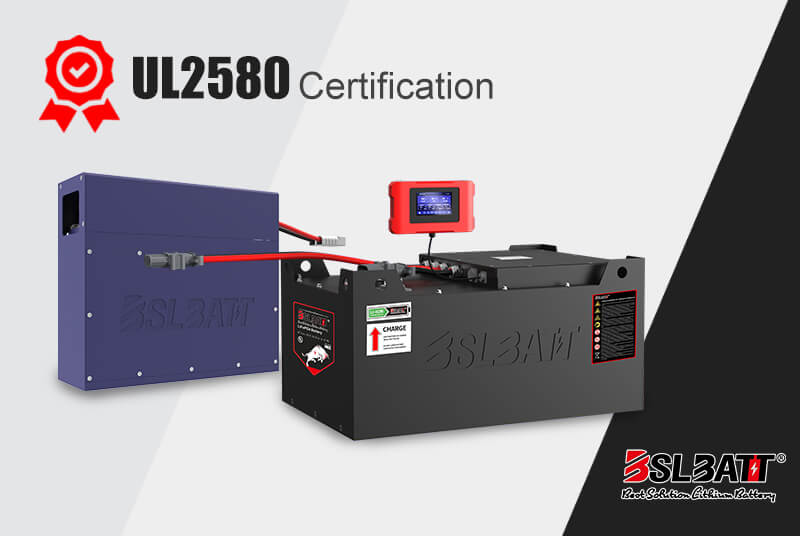
- Safety certification scope — pack-level certification for industrial vehicles and cell-level transport approval (see the UL 2580 overview).
- Cycle-life definition and warranty in writing — cycles to what capacity, at what depth of discharge and temperature (check warranty terms).
- Telemetry access — Bluetooth for technicians, cloud data for the fleet dashboard, and whether remote monitoring is included or an add-on.
- Fleet rollout plan — pilot units, spares policy, and how firmware or BMS updates are handled across hundreds of robots.
Common Integration Failures (and How to Avoid Them)
- Sizing on nameplate Ah. Amp-hours say nothing about peak current capability or usable depth of discharge. Size on energy per mission plus the peak check.
- Discovering the protocol gap late. “Supports CAN” agreed in a sales call, then nobody owns the mapping work at commissioning. Assign it before hardware ships.
- Charger bought separately. A charger that cannot handshake with the BMS either refuses to charge or charges badly. Buy them as a matched pair.
- No SOC policy in the scheduler. Robots start missions they cannot finish, or sit at a charge point longer than necessary. Both are software fixes with uptime impact.
- Ignoring regenerative braking. Vehicles that recover energy on braking or lowering must feed it back into the pack safely — confirm the pack and BMS accept it.
- Underestimating heat in 24/7 duty. Continuous cycling with no rest shift needs a thermal budget, not just a capacity budget.
FAQ
What battery does an AGV or AMR use?
Most automated guided vehicles and autonomous mobile robots use LiFePO4 (lithium iron phosphate) packs, typically in 24V or 48V nominal configurations matched to the vehicle platform. LiFePO4 suits automation because it accepts high-rate opportunity charging between missions, delivers high peak current without excessive voltage sag, and requires no watering or battery room.
Why does an AGV battery need CAN bus communication?
The robot controller and the fleet scheduler need live battery data to operate autonomously: state of charge before accepting a mission, current and voltage during peak draw, cell temperature, and fault codes. Without a documented CAN or RS485 signal map, the vehicle cannot manage its own charging or report a problem, and faults surface as unexplained stops.
Can AGVs charge without human intervention?
Yes. Automated fleets use opportunity charging at floor-level charge points, either through docking contacts the vehicle parks onto or through an automated connector. The fleet software dispatches a robot to charge when its state of charge drops below a threshold, so there is no battery swap crew and no spare battery inventory.
How do you size a lithium battery for an AGV?
Calculate usable energy from the mission profile: kWh per mission multiplied by missions per day, divided by usable depth of discharge, plus a reserve margin. Then check the second constraint separately — peak current in amps with duration, because a pack with enough energy can still fail if voltage sags during acceleration or lifting.
How long do lithium AGV batteries last?
BSLBATT industrial packs are rated above 3,500 cycles, with the AGV and AMR line published at 4,000 cycles at 80% depth of discharge. Real service life depends on depth of discharge, ambient temperature, charging practice and peak-current duty, so confirm the cycle definition and warranty term for the exact model you are buying.
Do I need a spare battery for each AGV?
Usually not. Because lithium supports opportunity charging, automated fleets are designed to top up in scheduled gaps instead of swapping packs. Spare capacity is better spent on a small number of fleet-level spares for maintenance swap-outs than on one spare battery per vehicle.
What should I ask a battery supplier before an AGV project?
Ask for peak and continuous current ratings with duration, the CAN or RS485 signal map, the matched charger specification, mechanical envelope and mass including center of gravity, thermal management approach and ambient range, IP and vibration ratings, the cycle-life definition and warranty in writing, and how telemetry is accessed.
Specifying Batteries for an AGV or AMR Fleet?
BSLBATT builds LiFePO4 packs for automated logistics — compact 24V units for AMRs through to 48V 504Ah and 690Ah packs for AGV tuggers and automated forklifts, all with CANbus/RS485 integration and opportunity charging. See the AGV & AMR lithium battery solutions overview, or send us your mission profile and duty-cycle data.
Contact BSLBATT Engineering · Read the TCO Guide


 Explore all product lines