Revolutionize the energy economy with advanced lithium-ion battery technology—lower costs, reduce heat, and accelerate sustainable development.
 Explore all product lines
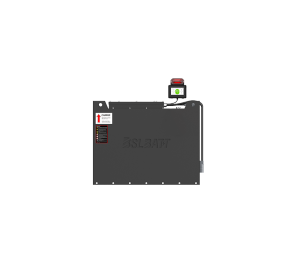
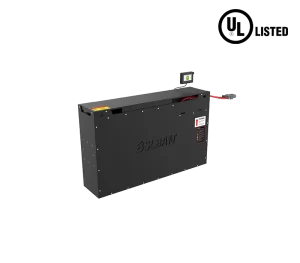
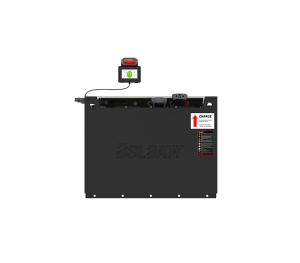
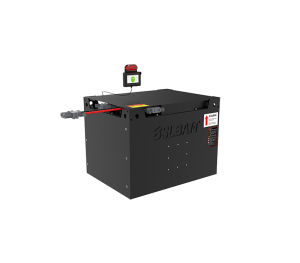










- Specialty Forklift Manufacturers and BSLBATT Lithium Battery Solutions
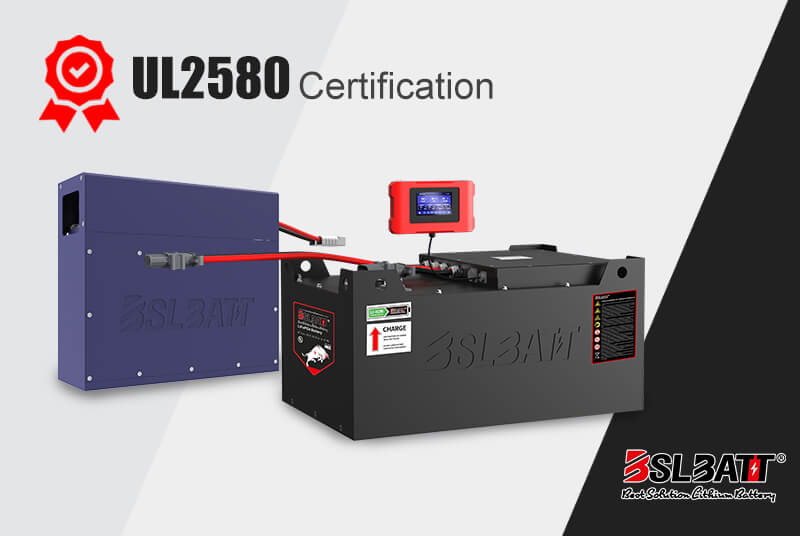
- The first lithium forklift battery that is UL 2580 certified and ISO9001 certified in the industry is BSLBATT® Battery – Industrial
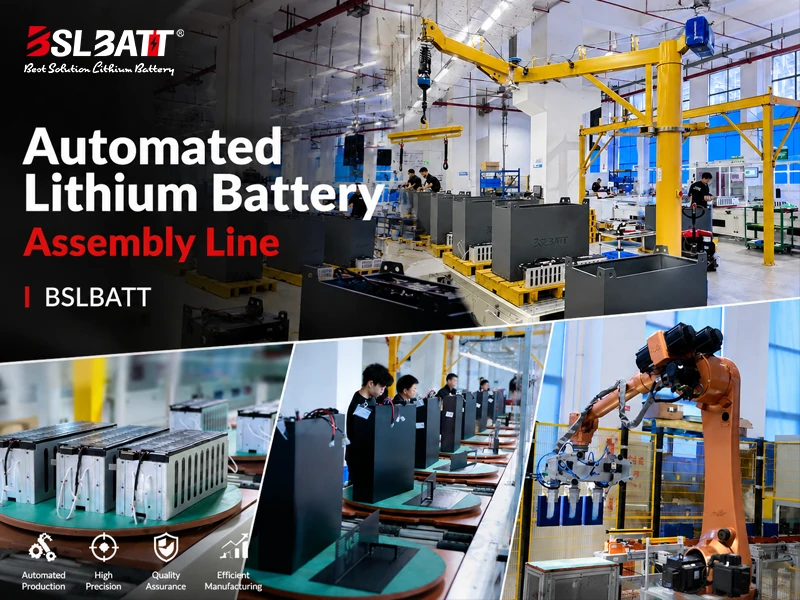
- Automated Lithium Battery Assembly Line | BSLBATT Smart Factory
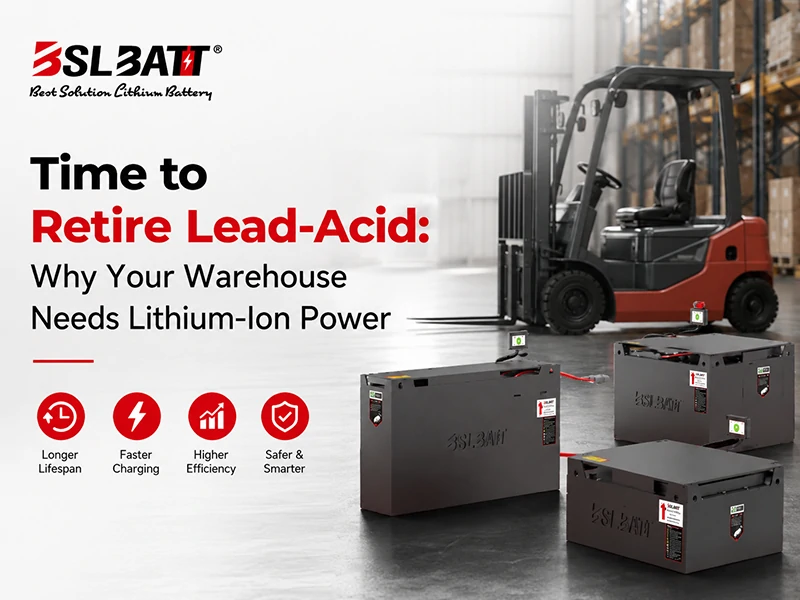
- Time to Retire Lead-Acid: Why Your Warehouse Needs Lithium-Ion Power
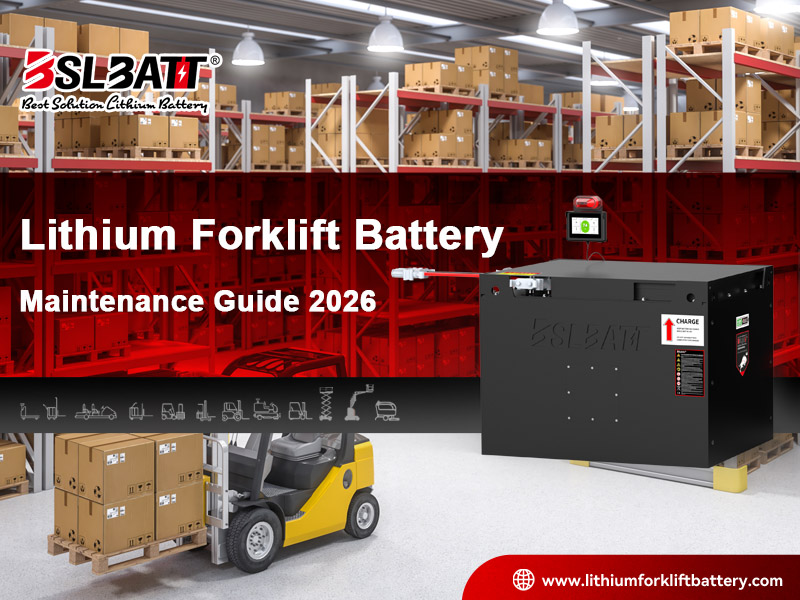
- Lithium Forklift Battery Maintenance Guide 2026
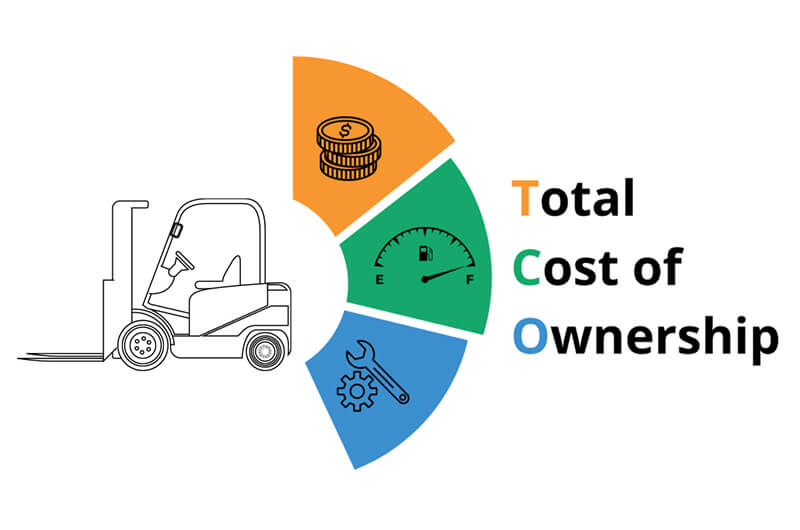
- Industrial Lithium Batteries: Initial Price vs. Long-Term Costs

Blog
Opportunity Charging Explained: How Lithium Fleets Run 24/7
Table of contents
- What Is Opportunity Charging?
- Why Lithium-Ion Batteries Work So Well for Opportunity Charging
- Partial charging is practical
- No traditional cool-down routine
- Faster charging can fit operational breaks
- Stable voltage during discharge
- How Opportunity Charging Supports Multi-Shift Forklift Fleets
- The Energy Balance Behind 24/7 Fleet Operation
- How Long Does Opportunity Charging Take?
- Opportunity Charging vs. Battery Swapping
- How to Design an Opportunity Charging Strategy
- What Can Go Wrong With Opportunity Charging
- Is Opportunity Charging Bad for Lithium Battery Life?
- What the Battery Management System (BMS) Has to Do With Opportunity Charging
- When Does Opportunity Charging Make Sense?
- How BSLBATT Lithium Forklift Batteries Support Opportunity Charging
- Practical Example: A Multi-Shift Warehouse
- How to Calculate Whether Your Fleet Can Run 24/7
- Conclusion
- 7. FAQ
- What is opportunity charging for forklifts?
- Can lithium forklift batteries be opportunity charged?
- Is opportunity charging bad for lithium-ion batteries?
- How long does it take to opportunity charge a forklift?
- Can opportunity charging support 24/7 forklift operations?
- Does opportunity charging eliminate battery swapping?
- What charger do I need for a lithium forklift battery?
- Is opportunity charging suitable for every forklift fleet?
A forklift parked in a charging bay for several hours is not productive. In a multi-shift warehouse, the bottleneck is rarely the truck itself — it is the moment when the truck has to stop because the battery is depleted, a full charge cycle has not finished, or a battery swap has to be organized. For most operations, the real question is not “how much capacity does this battery hold?” but “when can the truck charge without interrupting the operation?”
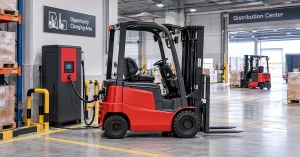
Opportunity charging is the practice of topping up a forklift battery during the natural pauses that already exist in every shift — operator breaks, lunch, shift changes, loading and unloading waits, staging time, and other short idle periods. The battery is not fully charged at each pause. Short, partial charging sessions add usable energy between work periods.
Combined with lithium-ion chemistry, opportunity charging becomes a practical way to keep electric forklift fleets productive across multiple shifts. This article explains how the strategy actually works, where it fits, and what fleet managers need to evaluate before adopting it.
What Is Opportunity Charging?
Opportunity charging is short, partial charging performed during the natural downtime of a working forklift. It is not a full recharge. It is a top-up.
The key distinction is when the charging happens and how long it lasts:
- Conventional charging usually means a forklift returns to a charging area at the end of a shift, stays there for several hours, and is only ready again for the next shift. Lead-acid flooded batteries often need an additional cool-down period after reaching full charge before they can be put back into service.
- Battery swapping replaces a depleted battery with a fully charged one. It keeps the truck working, but it requires spare batteries, a battery room, lifting equipment, and trained operators.
- Opportunity charging uses the idle minutes that already exist in an operator’s day. A truck pulls up to a charger during a 15-minute break, connects, and resumes work with more usable energy in the battery.
| Charging Approach | Typical Workflow | Best Fit |
|---|---|---|
| Conventional charging | Charge after operation | Single-shift / predictable usage |
| Battery swapping | Replace discharged battery | High-utilization operations with swap infrastructure |
| Opportunity charging | Short charging during natural downtime | Multi-shift / high-utilization fleets |
Opportunity charging is not automatically the best option for every fleet. Single-shift operations with predictable downtime often do fine with conventional charging. Battery swapping still makes sense in operations where charging windows are very short or where heavy batteries are difficult to handle. The right strategy depends on the operation, not on marketing.
Why Lithium-Ion Batteries Work So Well for Opportunity Charging
Lithium-ion traction batteries — particularly LiFePO4 (LFP) chemistries used in modern material handling equipment — are well suited to repeated partial charging for several practical reasons.
Partial charging is practical
Unlike flooded lead-acid batteries, lithium-ion cells do not require a full charge cycle to remain balanced or to deliver expected cycle life. Adding energy at 40% state of charge, 60% state of charge, or 80% state of charge is part of the normal operating envelope for a properly designed lithium system.
No traditional cool-down routine
Flooded lead-acid batteries generate heat during charging and typically need an equalization charge and a cool-down period before they return to service. A lithium-ion battery is ready to work when the operator is. This removes the “charge, wait, cool down, swap, return” cycle that eats into shift productivity.
Faster charging can fit operational breaks
How much energy can actually be added during a 15-minute break or a lunch period depends on the specific battery and charger combination. Factors include battery voltage, ampere-hour capacity, the charger’s kW output, the current state of charge, battery temperature, and the charging profile programmed into the charger.
Some lithium forklift systems from established manufacturers are designed to support high-rate charging during short windows. For example, Toyota Material Handling publishes guidance indicating that its lithium-ion forklift batteries can reach full charge from low state of charge in roughly one hour under defined conditions, and that partial charging during breaks is part of normal use. This is a manufacturer-specific example — actual charging performance for any given model must be confirmed against the battery and charger specifications supplied by the manufacturer.
Stable voltage during discharge
Lithium-ion cells deliver a relatively flat voltage curve across most of their discharge range. The forklift does not slow down simply because the battery has dropped from full to half full. For multi-shift operations, this means consistent hydraulic performance, travel speed, and lifting capacity across the shift, rather than a noticeable drop-off as the battery empties.
How Opportunity Charging Supports Multi-Shift Forklift Fleets
The simplest way to picture opportunity charging in a multi-shift operation is as energy flowing into the battery during downtime and energy flowing out during productive work.
A typical day might look like this:
- Shift 1: Operators work. Forklift uses energy. At break and lunch, the truck is parked at a charger and partial energy is added.
- Shift change: The truck is parked briefly between shifts. Another top-up occurs.
- Shift 2: Work continues. Energy is again added during operator breaks.
- Shift 3 (if applicable): The pattern continues.
The battery is not “charged once and runs forever.” Instead, energy is added during planned downtime and consumed during productive work. Across a 24-hour operating window, several short charging sessions are combined to keep trucks available.
This approach is most effective when:
- Operators have predictable break windows (15–30 minutes).
- Chargers are placed where trucks already stop.
- The charger power and battery capacity are matched to the duty cycle.
The Energy Balance Behind 24/7 Fleet Operation
“Run 24/7” is a fleet operating strategy. It does not mean a battery can deliver unlimited energy without recharging. Whether a fleet can sustain continuous operation through opportunity charging depends on a simple energy balance.
Energy available from charging ≈ charger output × effective charging time × charging efficiency
For each truck, the question becomes:
Is the energy put back into the battery during available charging windows greater than, or at least equal to, the energy consumed during the work periods between those windows?
If yes — or close to it, with a reasonable reserve — opportunity charging can support the operation.
If no — and the deficit is large — no amount of opportunity charging will close the gap. The fleet will either need additional chargers, larger batteries, more trucks in rotation, or reduced energy consumption per shift.
Variables that affect this balance include:
- Battery capacity (kWh)
- Daily energy consumption per truck
- Charger output (kW)
- Effective charging time per opportunity
- Number of trucks charging at the same time
- Charging efficiency and profile
- Ambient and battery temperature
- Load profile and duty cycle
- Battery state of health
How Long Does Opportunity Charging Take?
There is no single answer. Charging time depends on:
- Battery voltage (V)
- Ampere-hour capacity (Ah)
- Charger output (kW)
- Current state of charge (SOC)
- Battery chemistry and cell format
- BMS-defined charging limits
- Battery temperature
- The charging profile programmed into the charger
A simple illustration helps frame the relationship between battery energy and charger power:
A 48 V, 600 Ah lithium-ion forklift battery has a nominal energy of:
48 V × 600 Ah = 28.8 kWh
This is a nominal energy calculation. Actual usable energy depends on the depth of discharge the system allows, conversion losses, and manufacturer specifications.
If the connected charger delivers 15 kW to that battery, the theoretical minimum time to put 28.8 kWh back into the pack is roughly:
28.8 kWh ÷ 15 kW ≈ 1.92 hours
Real charging time is rarely equal to this number. CC/CV charging profiles, taper at high state of charge, BMS limits, and thermal constraints all extend the practical time required for a full charge. The calculation simply shows how charger power relates to battery capacity — and why a higher-power charger shortens the time required to refill a given battery, or why a larger battery needs more charging time at the same charger output.
For a true “opportunity” session — a 15-minute break — only a fraction of the full energy can be put back. The job of the fleet planner is to make sure that fraction is enough to cover the next work period.
Opportunity Charging vs. Battery Swapping
Both approaches aim to keep forklifts moving. They differ in infrastructure, workflow, and operational impact.
| Factor | Opportunity Charging | Battery Swapping |
|---|---|---|
| Battery handling | Minimal | Required |
| Spare batteries | Often fewer | Usually required |
| Battery room | Can potentially be reduced | Often required |
| Operator workflow | Plug in during downtime | Drive to swap area |
| Infrastructure | Chargers distributed around operation | Battery storage + swap equipment |
| Best fit | Multi-shift fleets with planned downtime | Operations where charging windows are limited |
Neither approach is universally better. Operations with very short charging windows, heavy batteries, or limited electrical infrastructure may still prefer swapping. Operations with predictable breaks and a willingness to install distributed charging points may prefer opportunity charging because it reduces spare battery inventory and battery handling.
How to Design an Opportunity Charging Strategy
A working strategy follows the operation, not the charger catalogue.
Step 1 — Measure energy consumption first. Before specifying a charger, record energy consumption per truck, operating hours per shift, load intensity, and idle periods. Existing telematics or a short-term metering exercise on representative trucks is enough.
Step 2 — Identify the available charging windows. List the natural pauses that already exist in each shift: 15-minute breaks, lunch, shift change, loading waits, staging. These are the windows opportunity charging depends on.
Step 3 — Match charger power to the duty cycle. Bigger is not automatically better. A higher-power charger shortens charging time but increases electrical infrastructure requirements and may add thermal management demands on the battery. Match charger output to the energy that needs to be replaced in each available window.
Step 4 — Place chargers where trucks naturally stop. Practical positions include the staging area, break area, loading dock, end-of-aisle, or production line entry. Avoid placing chargers across traffic intersections, in front of emergency exits, on pedestrian routes, or in locations where cables would create trip or snag hazards.
Step 5 — Confirm battery / charger compatibility. Voltage, current, charging profile, and communication / BMS protocol all need to be verified between the battery and the charger. A mismatch can degrade performance or battery charging areas. Manufacturers’ compatibility matrices should be reviewed before deployment.
What Can Go Wrong With Opportunity Charging
A strategy that looks correct on paper can still fail on the floor. Common failure modes include:
- Insufficient charger power. Charging speed cannot keep up with energy consumed during the work period.
- Too few charging stations. Multiple trucks need to charge at the same break, creating queues.
- Poor charger placement. Operators must leave the work area to reach a charger, eroding the productivity gain.
- Operator behaviour. Opportunity charging depends on operators actually plugging in. Without workflow discipline, plug-in rates drop.
- Battery / charger mismatch. Performance and safety depend on confirmed compatibility.
- Temperature effects. Cold batteries charge more slowly; hot environments can trigger BMS limits on charge current.
- Electrical infrastructure. Multiple high-power chargers running simultaneously may exceed facility capacity and require an infrastructure review.
A pre-deployment energy and infrastructure review prevents most of them.
Is Opportunity Charging Bad for Lithium Battery Life?
For a properly specified lithium-ion traction battery, opportunity charging is not inherently harmful. Partial state-of-charge cycling is part of the normal operating envelope for lithium chemistries used in material handling.
However, battery service life is still influenced by:
- Depth of discharge per cycle
- Charge rate (C-rate) used
- Average operating temperature
- Cell chemistry and format
- BMS controls and limits
- Total cumulative energy throughput
- Charging profile accuracy
A claim that “opportunity charging extends battery life” is not supported by general industry evidence. A more accurate statement is that opportunity charging, applied within the manufacturer’s specified limits, does not by itself shorten battery life compared with conventional full-charge cycling.
What the Battery Management System (BMS) Has to Do With Opportunity Charging
Opportunity charging is not just “plug the truck in.” The battery management system is what makes repeated partial charging safe and predictable.
A BMS typically:
- Monitors cell voltage and pack voltage
- Monitors charge and discharge current
- Monitors cell and pack temperature
- Enforces charging limits defined by the manufacturer
- Balances cells during charge cycles
- Protects against over-charge, over-discharge, over-current, and out-of-range temperatures
- Communicates battery status to the charger, the truck, or a fleet management platform
For opportunity charging specifically, the BMS controls how much current the battery will accept at any given state of charge and temperature. A charger can be rated for high power, but the battery will only accept what its BMS and thermal state allow. This is why battery / charger / BMS must be treated as a coordinated system, not three separate components.
When Does Opportunity Charging Make Sense?
A short decision framework:
Likely a good fit:
- Two or three shift operations
- High forklift utilization with predictable breaks
- Limited downtime for full conventional charging
- Battery swapping is operationally inconvenient
- Limited warehouse space for battery rooms
- Operators can access charging points without long walks
Not for every fleet:
- Low-utilization, single-shift operations
- Continuous-duty applications with almost no natural downtime
- Sites without sufficient electrical capacity
- Operations where charging infrastructure cannot be installed safely
- Operations where operator plug-in discipline cannot be established
How BSLBATT Lithium Forklift Batteries Support Opportunity Charging
BSLBATT designs lithium forklift battery systems for demanding material handling applications where uptime, predictable performance, and simplified charging workflows matter. Several design characteristics support opportunity charging in real fleets:
- LiFePO4 cell chemistry — a stable lithium chemistry widely used in traction applications.
- High-power charging capability — on battery models designed to accept it, supporting shorter top-up sessions during operational breaks.
- Integrated BMS — managing voltage, current, temperature, cell balancing, and charging limits.
- Thermal management — supporting stable charging behaviour across ambient conditions commonly found in warehouses and distribution centres.
- Fleet monitoring integration — allowing operators and service teams to review state of charge, state of health, and charging events.
- Voltage and capacity configurations — across the common material handling range, including 24V, 36V, 48V, and 80V systems, suitable for different forklift classes and duty cycles.
- Application-specific design — engineered for multi-shift warehouse, distribution, manufacturing, and logistics operations.
For teams evaluating lithium forklift batteries for a multi-shift fleet, BSLBATT’s lithium battery solutions for material handling cover the configurations typically required for electric counterbalance forklifts, reach trucks, pallet trucks, and order pickers. Where a fleet is also reviewing lithium-ion against legacy lead-acid, the comparison page on lithium vs lead-acid forklift batteries provides additional context on charging workflow differences.
Practical Example: A Multi-Shift Warehouse
A distribution centre operates a fleet of 48 V electric forklifts across two production shifts plus partial third-shift replenishment.
Conventional approach:
The forklift works a full shift. Near the end of the shift, the battery state of charge is low. The truck is driven to the charging area. A depleted battery is removed and a charged one is installed. The discharged battery is moved to a charging bay and connected to a charger. Because the system uses flooded lead-acid, an equalization charge and cool-down period is required before the battery is ready for service. The cycle of swap, charge, equalize, cool down, and return is a recurring operational cost.
Opportunity charging approach:
The same forklift works its shift, but the operator plugs the truck into a wall-mounted charger at the staging area during a 15-minute break. Partial energy is added. The operator returns to work. The same pattern repeats at lunch and at shift change. The truck returns to the dock charger at the end of shift and remains connected until the next shift begins.
The result is not a claim that downtime drops to zero. The result is that charging becomes part of the operating rhythm, rather than a separate maintenance event scheduled around it.
How to Calculate Whether Your Fleet Can Run 24/7
A practical checklist for a fleet manager:
- What is the nominal energy of each battery in the fleet?
- How much energy does each truck consume per shift?
- How many charging windows exist in the operating schedule?
- How long is each effective charging window?
- What is the charger output (kW) available at each point?
- How many trucks need to charge at the same time?
- Can the facility’s electrical infrastructure support the load?
- Does the battery accept the required charging rate at the expected state of charge and temperature?
- What happens during peak production periods when downtime shrinks?
- Is there operational reserve if one charger goes offline?
A simple formula:
Daily recovered energy = charger power × effective charging time × charging efficiency
Compare this number to total daily energy consumption per truck. If recovered energy is consistently less than consumed energy, the operation cannot sustain itself through opportunity charging alone. The available levers are:
- Increase available charging time (workflow changes)
- Increase charging capacity (more chargers, higher-power chargers)
- Increase battery capacity (larger pack, if the truck compartment allows)
- Add trucks in rotation (fleet size)
- Reduce energy consumption per shift (load, route, operator behaviour)
Conclusion
Opportunity charging is a practical strategy for multi-shift electric forklift fleets — and lithium-ion forklift batteries are the chemistry that makes the strategy viable at production scale. The “24/7” in “lithium fleets run 24/7” is a fleet operating outcome, not a battery behaviour. It is achieved by combining battery capacity, charger power, well-placed charging points, predictable operator workflow, and an energy balance that keeps recovered energy at or above consumed energy over the operating day.
For fleet managers evaluating the strategy, the starting point is measurement, not hardware. Once the duty cycle and energy consumption are understood, the right lithium battery system, charger configuration, and BSLBATT solution follow.
If you are planning an opportunity charging strategy for a multi-shift forklift fleet, BSLBATT can help evaluate battery voltage, capacity, charging requirements, and application conditions for your specific operation.
Request a Lithium Forklift Battery Solution
7. FAQ
What is opportunity charging for forklifts?
Opportunity charging is the practice of plugging an electric forklift into a charger for short, partial charging sessions during the natural pauses of a shift — such as breaks, lunch, shift changes, or staging time — rather than waiting for a full charge cycle.
Can lithium forklift batteries be opportunity charged?
Yes. Lithium-ion traction batteries, including LiFePO4 systems used in material handling, are designed to accept partial charging at varying states of charge, making them well suited to opportunity charging workflows.
Is opportunity charging bad for lithium-ion batteries?
Not inherently. Partial state-of-charge cycling is within the normal operating envelope for properly specified lithium forklift batteries. Actual battery service life still depends on depth of discharge, charge rate, temperature, BMS limits, and total energy throughput.
How long does it take to opportunity charge a forklift?
There is no single answer. It depends on battery voltage, ampere-hour capacity, charger output, current state of charge, battery temperature, and the charging profile defined by the manufacturer. A short break may add enough energy to cover the next work period, or it may not — that is what the energy balance calculation is for.
Can opportunity charging support 24/7 forklift operations?
It can, but only if the energy added during charging windows equals or exceeds the energy consumed during the work periods between them. Battery capacity, charger power, charging window length, and electrical infrastructure all matter.
Does opportunity charging eliminate battery swapping?
Not always. Some operations still prefer or require swapping, particularly where charging windows are very short, batteries are heavy, or charging infrastructure cannot be installed. Opportunity charging is one option among several, not a universal replacement.
What charger do I need for a lithium forklift battery?
A charger matched to the battery’s voltage, current limit, charging profile, and BMS communication protocol. Manufacturer compatibility matrices should be confirmed before deployment. Higher-power chargers shorten charging time but require adequate electrical infrastructure and thermal management.
Is opportunity charging suitable for every forklift fleet?
No. Single-shift operations with predictable downtime, very low utilization, or limited electrical capacity may not benefit. The strategy fits best where utilization is high, downtime is predictable but short, and operators can access charging points as part of their normal workflow.



Related Product Recommendations
-
25.6V 230AH
24 Volt Forklift Battery for Sale 230Ah High-Endurance Lithium | BSLBATT
Learn More -
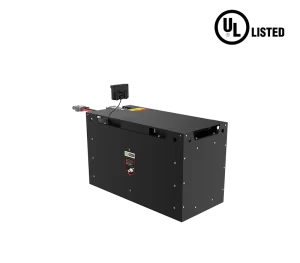
38.4V 820AH Lithium Forklift Battery
36V Lithium-ion Forklift Battery UL Certified 820Ah Power | BSLBATT
Learn More -
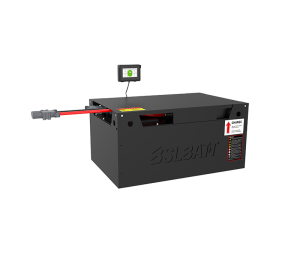
51.2V 336AH
48 Volt Forklift Battery Powerful 336Ah Lithium-ion Solution | BSLBATT
Learn More -
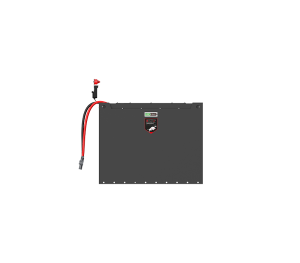
83.2V 1380AH
80V Forklift Battery 1380Ah for Heavy-Duty Use | BSLBATT
Learn More -
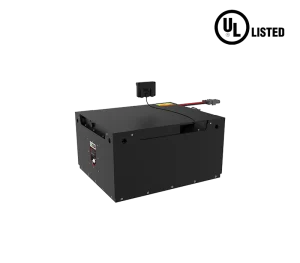
51.2V 615AH Lithium Forklift Battery
Electric Forklift Batteries for Sale UL Certified 48V 615Ah IP65 Lithium | BSLBATT
Learn More -
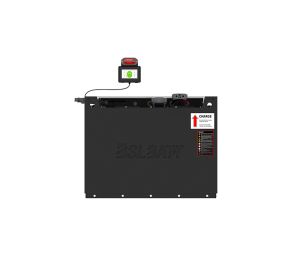
96V 690AH
Heavy Equipment Battery 83.2V 690Ah Port Grade Lithium | BSLBATT
Learn More